July 2010
Monthly Archive
July 25, 2010
St. Iago Pork Chops
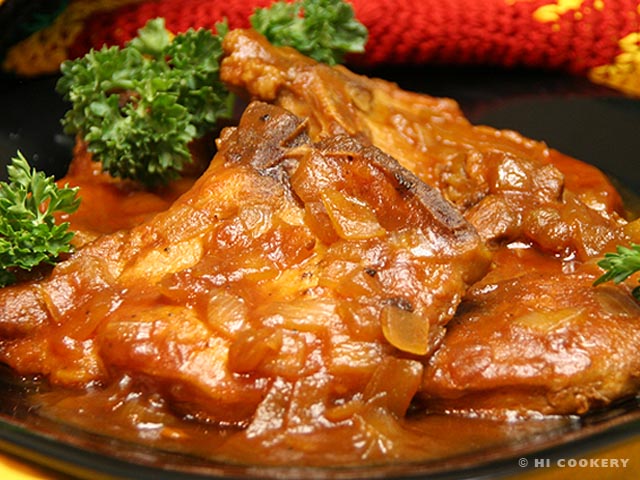
July 25: Feast Day of St. James the Greater
Many recipes associated with St. James the Greater include scallops, such as Coquilles Saint-Jacques. St. James, the elder brother of St. John the Apostle with whom he became one of the 12 disciples of Jesus, labored by the Sea of Galilee (see the biblical reference of Matthew 4:21-22). So seafoods are typically prepared for his feast day. But there are other recipes to honor St. James, such as fruit cups, almond cakes, tomato soufflés and pork chops. We chose the latter for our blog post today and will try the others next time.
Recipe
(Adapted from Cooking with the Saints by Ernst Schuegraf)
Ingredients
- 4-6 thick pork chops
- 1 tablepoon oil
- 1 small onion, choped
- 2 tablespoons rum
- 3 tablespoon soy sauce
- ½ cup ketchup
- 1 cup chicken stock
- 1 teaspoon black ground pepper
Directions
In a large skillet, brown the pork chops in oil. Transfer to a plate and keep warm. In the same skillet, saute the onions. Remove from the skillet and set aside. In the same skillet, pour in the rum and scrape any brown bits. Add the soy sauce, ketchup and chicken stock, stirring until well blended. Season with pepper. Return the onions and pork chops to the skillet, immersing the pork chops in the liquid. Cover the skillet, lower the cooking temperature and simmer for about an hour. Check within 30 minutes to see if the sauce needs thinning with a little water. When the pork chops are tender and cooked through, serve with the thickened sauce and onions.

Notes
- This non-jerk dish is originally from Jamaica and is like stewed meat with barbecue sauce. The recipe book author recommends serving St. Iago pork chops with rice.
- St. Iago is one of the Spanish names for St. James. He is the patron saint of Chile and its capital city of Santiago is named after him.
July 22, 2010
Magdalenenstriezeln
(St. Mary Magdalene Fingers)

July 22: Feast Day of St. Mary Magdalene
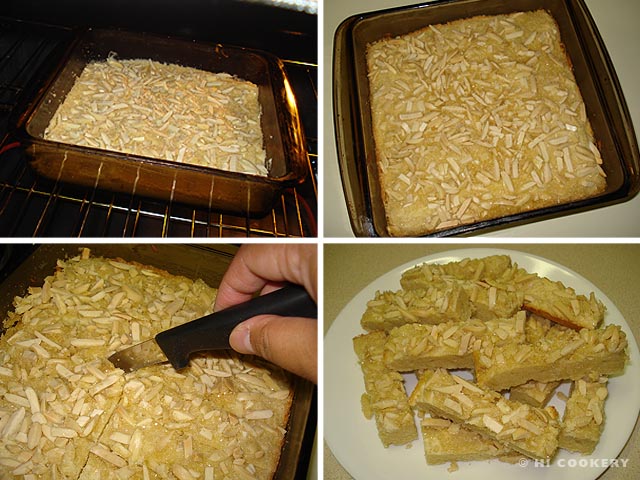
There is a mystery about St. Mary Magdalene—not from the fiction film and book, “The DaVinci Code” by Dan Brown, but from what her feast day food represents. Magdalenenstriezeln (St. Mary Magdalene Fingers) is a coffee cake cut into strips like “fingers.” In various artwork (paintings, statues and engravings) depicting the saint, her fingers are curiously crossed. Crossed fingers were a secret symbol used by the early Christians to identify each other when their religion was illegal. Now it has become a superstitious symbol for hoping for good luck. But it is not a mystery that this traditional German recipe is a good choice to make on the Feast Day of St. Mary Magdalene.
Recipe
(Adapted from Cooking with the Saints by Ernst Schuegraf)
Ingredients
- ½ cup (1 stick) butter, softened
- ½ cup sugar
- 3 eggs
- 3 tablespoons sour cream
- 2 cups flour
- ½ cup almonds, blanched and slivered
- ¼-½ cup coarse sugar (we used Sugar In The Raw brand)
Directions
Cream the butter with sugar until smooth. Beat in the eggs. Mix in the sour cream. Gradually add the flour and blend well.

Spread the dough in a buttered 8×8-inch baking dish (the dough should be no more than an inch thick). Sprinkle the almonds and sugar on top of the dough.

Bake in a preheated oven at 350 degrees F for about 35 minutes or until golden brown. Remove from the oven. Cool for about five minutes. Cut into strips like “fingers” and serve “crossed” on top of each other.
Notes
July 20, 2010
Margariten Lebkuchen

July 20: Feast Day of St. Margaret of Antioch
One of the patron saints of nurses, St. Margaret of Antioch, has a nutritious recipe, Margariten lebkuchen, associated with her feast day. Her “cake” contains spelt flour, which comes from a non-wheat grain. The ancients believed spelt can cure many ailments, probably because it is easily digested and contains more protein than wheat flour. Because of its health properties and biblical references, spelt is considered a wonder for one’s body and soul.
Making Margariten lebkuchen gave us a good reason to search for spelt flour at our local specialty health food stores/organic markets. We have enjoyed trying new recipes and ingredients to cook for our blog as well as learning about the history of these ethnic and eclectic dishes.
Recipe
(Adapted from St. Hildegard’s cookbook cited in Maggie’s Kitchen)
Ingredients
- 2 cups spelt flour, sifted
- ¾ cup sour cream
- ¾ cup plain yogurt
- ¾ cup sugar
- pinch of salt
- 1 ½ teaspoons ground coriander
- 1 ½ teaspoons cinnamon
- ½ teaspoon allspice
- ½ teaspoon cardamom powder
- ½ teaspoon ground cloves
- ½ teaspoon nutmeg
- 2 teapoons baking soda
- 3 tablespoons milk
Directions
In a large mixing bowl, combine the sour cream, yogurt, sugar and salt until creamy. Mix in the coriander, cinnamon, allspice, cardamom powder, cloves and nutmeg. In a small cup, dissolve the baking soda in milk and stir well. Blend the baking soda-milk mixture into the batter. Gradually add the spelt flour and mix until a dough is formed.

Spread the dough into a greased, 10-inch round cake or springform pan. Bake on the bottom rack of a preheated oven at 350 degrees F for 35-45 minutes. Remove from the oven and transfer to a wire rack to cool completely. Slice into wedges and serve with a sprinkling of powdered sugar (optional).

Notes
- St. Hildegard von Bingen, creator of the Margariten Lebkuchen recipe, was a multi-talented Benedictine nun in the medieval period who believed in the holistic and natural approach to healing. She was a prolific composer and writer, and she published a cookbook from which the above recipe is adapted.
- The original recipe calls for one cup whole-meal spelt flour and 2 ¼ cups spelt flour. If spelt flour is unavailable, whole wheat flour may be substituted.
- Spelt is mentioned in Ezekiel 4:9: “Take thou also unto thee wheat, and barley, and beans, and lentils, and millet, and spelt, and put them in one vessel, and make thee bread thereof …”
- This aromatic spice “cake” had the consistency of a loaf or coarse gingerbread with a smidgen of sweetness.
« Previous Page — Next Page »
 HI COOKERY