September 2012
Monthly Archive
September 17, 2012
Hildegardplätzchen
(St. Hildegard Spice Cookies)
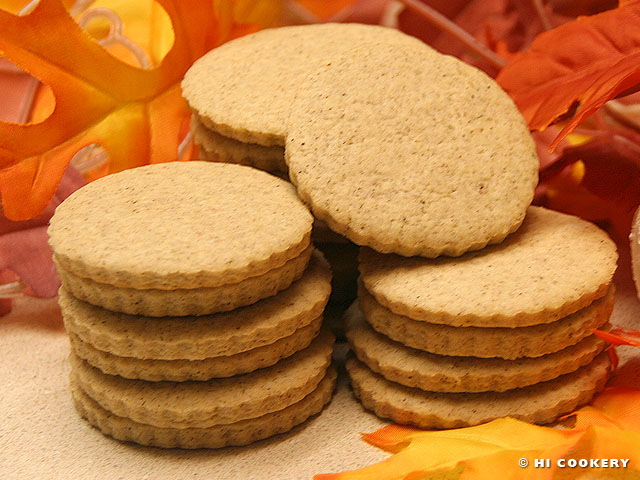
September 17: Feast Day of St. Hildegard of Bingen
Food bloggers and chefs may appreciate St. Hildegard of Bingen, a 12th century German saint who wrote her own cookbook. The multi-talented nun believed in the holistic and natural approach to healing. So her recipes included organic ingredients, such as spelt and spices. Below is an adaptation of her spice cookies which she believed will improve one’s outlook in life. Have a happy Feast Day of St. Hildegard and bake these ancient biscuits called “Hildegardplätzchen.”
Recipe
(Adapted from Cooking With the Saints by Ernst Scheugraf)
Ingredients
- ½ cup (1 stick) butter
- ¾ cup sugar (granulated white or brown)
- 2 eggs
- 3 ½ cup flour
- 1 teaspoon baking powder
- 2 teaspoons cinnamon
- 2 teaspoons nutmeg
- ½ teaspoon ground cloves
Directions
In a large mixing bowl, cream together the butter and sugar. Beat in the eggs. In a separate bowl, combine the flour, baking powder, cinnamon, nutmeg and ground cloves.
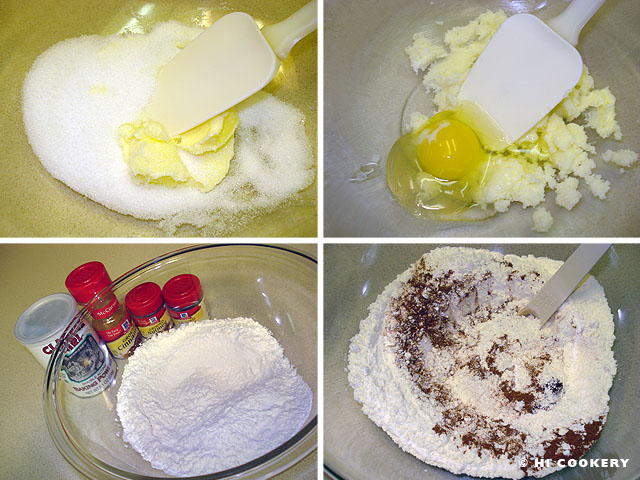
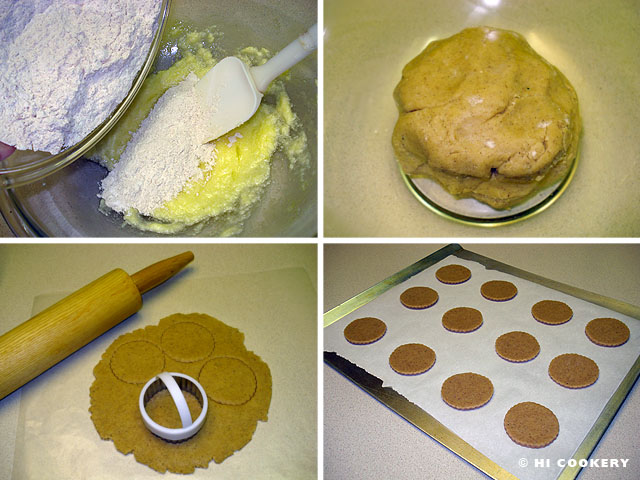
Gradually add the flour mixture and blend until a soft dough is formed. Add a little water if it is too dry. Make into a ball and flatten into a disc. Roll out into about ¼-inch thick and cut out 3-inch circles. Place on a cookie sheet.
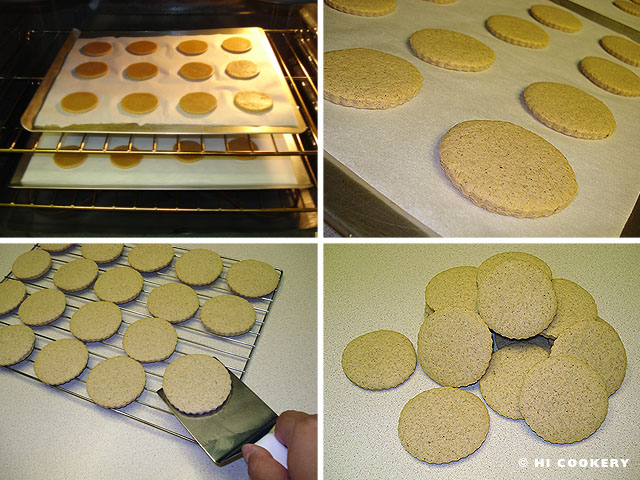
Bake in a preheated oven at 350 degrees F for 12-15 minutes or until golden. Remove from the oven and transfer to a wire rack to cool completely. Yield: Approximately 3 dozen cookies.
Notes
- A mixture of all-purpose and spelt flours may be used in this recipe. St. Hildegard advocated the use of spelt over other wheat-based flours because the former is easier to digest and contains more protein.
- St. Hildegard developed a spice cake version of her cookies for another saint. We made “Margariten Lebkuchen” on the Feast Day of St. Margaret of Antioch on July 20.
- Learn more about St. Hildegard of Bingen from Catholic Online.
September 12, 2012
Mystical Rosette Ombré Cake

September 12: Feast Day of the Most Holy Name of the Blessed Virgin Mary
Our Lady inspires us to create special cakes in her honor. Last year, we posted our version of a “Stella Maris (Mary, Star of the Sea) Cake.” This year, we made a “Mystical Rosette Ombré Cake,” since one of Mary’s nicknames is the “Mystical Rose.” The name is meaningful to us as we were married at the Mystical Rose Chapel, which overlooks iconic Diamond Head, in Honolulu, Hawaii.
For this particular cake, we used two techniques that are quite trendy today—ombré to create color gradations inside of the cake and rosette piping to decorate and texturize the outside of the cake. The cake has a pretty presentation on its own but when sliced, it reveals the subtle surprise of a blue hue!
Make a “Mystical Rosette Ombré Cake” for the Feast Day of the Most Holy Name of the Blessed Virgin Mary.
Recipe
For the blue ombré cake
- 2 boxes of white cake mix (for 3 8-inch round cakes) or 3 boxes (for 3 12-inch round cakes)
- egg whites
- oil
- water
- blue food coloring
- rose water flavoring (optional to taste; see Notes)
Directions
Grease and flour 3 round cake pans. Prepare the cake mix according to the package instructions, adding a few drops of rose water to flavor the batter (optional). Divide the batter into 3 equal portions. Use the food coloring for each portion, doubling or tripling the amount of the drops to create distinct color gradations.

Pour the batter into the pans (be sure to remember which pan contains light, medium and darker colors). Bake according to the package instructions. Remove from the oven and allow the cakes to cool completely.

For the frosting
(Adapted from Wilton)
- 1 cup vegetable shortening (we used Crisco brand all-vegetable shortening baking sticks)
- 1 teaspoon vanilla (we recommend clear vanilla extract)
- pinch of salt
- 4-6 cups powdered sugar, sifted
- 4+ tablespoons of cream, milk or water
Directions
Make 2-3 quantities of the frosting recipe (enough to frost the 3-layered 8- or 12-inch round cakes). In a large mixing bowl, cream the shortening with the vanilla and salt. Gradually add the powdered sugar and beat until smooth. Pour a little bit of liquid to thin it out until the frosting reaches spreadable and piping consistency. Smear a little frosting on the bottom of a cake board and invert the darkest color cake onto it to secure in place. Generously spread frosting on top of this cake.

Layer with the medium color cake on top. Spread frosting on top of this cake. Finally add the lightest color cake on top. Spread frosting on top of this cake and crumbcoat the sides until completely covered.

Outfit a pastry bag with Wilton tip 1M. About an inch from the bottom of the cake, make a rosette by swirling a circle from the center outward. Space an inch apart and repeat until the bottom row of the cake is covered with rosettes. Continue making rosettes on the side of the cake and on top. Refrigerate to set the frosting. Bring the cake to room temperature about half an hour before serving.

Place on a cake pedestal and top with a Mary figurine (optional). Slice to reveal the ombré coloring inside the cake. Use a sharp knife to make the first cut deep into the cake. Wipe the frosting off the knife. Make a second cut into a wedge shape. Serve on plates. Always wipe the frosting off for each cut to make clean slices and showcase the ombré.

Notes
- Rose water may be found in the specialty baking aisle of grocery stores or at Indian and Middle Eastern food markets. Be careful not to add too much to the cake batter or else the floral flavor will be overpowering.
- We actually made a “Mystical Rosette Ombré Cake” for a student prayer social to celebrate the Vigil of Mary, Queen of the Apostles (September 5). We made another one for a parish potluck at our church to observe the Nativity of the Blessed Virgin Mary (September 8).
- Make a Mary cake for her birthday or one of her many feast days. Search our blog for other cake recipes for inspiration and ideas.
September 7, 2012
Kalbscoteletten à la Saint Cloud
(Veal Cutlets St. Cloud)
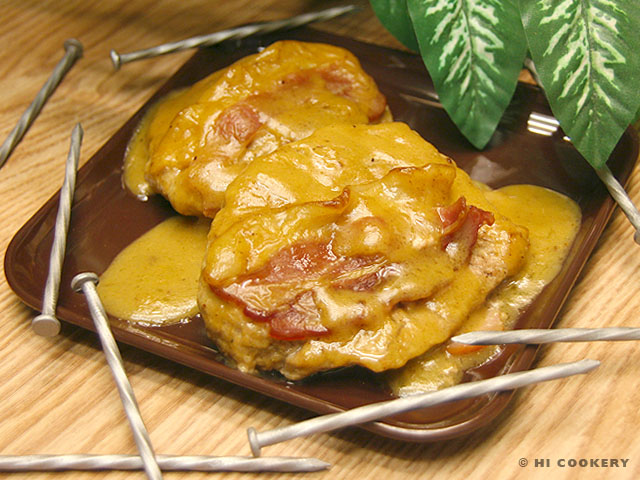
September 7: Feast Day of St. Cloud
We do not have an association with Saint Cloud except for Islander’s college classmate, Barbara D., who was from St. Cloud, Minnesota. Even long after graduation, Islander, Barbara and a few of their other classmates would run into each other at national conferences, where they caught up with their career and life’s paths. We later learned that Barbara and her husband, John, had also honeymooned in Scotland like we did!
For the feast day of Barbara’s hometown patron saint, we cooked veal cutlets with gravy (Kalbscoteletten à la Saint Cloud). Now this traditional German dish will always remind us of Barbara and John, their hometown and St. Cloud.
Recipe
(Adapted from Cooking With the Saints by Ernst Scheugraf)
For the veal cutlets
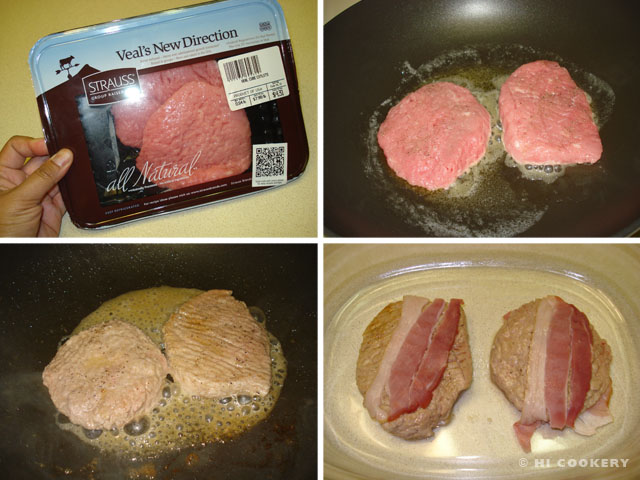
- 4 veal cutlets, about 5 ounces each
- salt and pepper to taste
- 2 tablespoons butter
- 4 bacon strips
Directions
Tenderize the veal cutlets by pounding them thin with a meat hammer. Season with salt and pepper. In a skillet, melt the butter and brown each side of the veal cutlets but do not cook through. Transfer to a baking dish and top with a bacon strip. Make the gravy.
For the gravy
- 3 tablespoons butter
- 3 tablespoons flour
- 1 cup chicken stock
- salt and pepper to taste
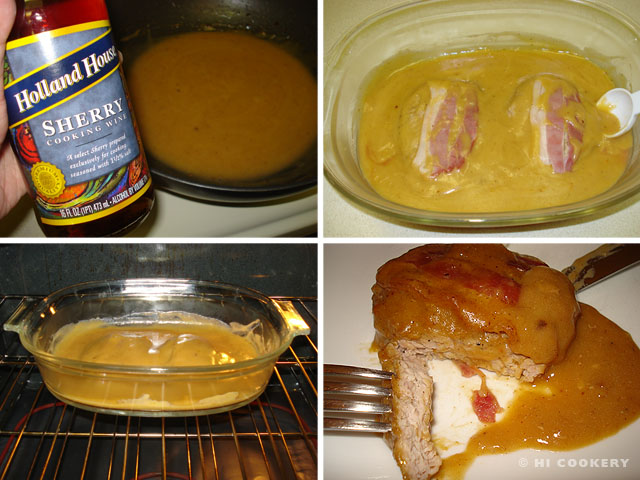
- 2 tablespoons sherry
Directions
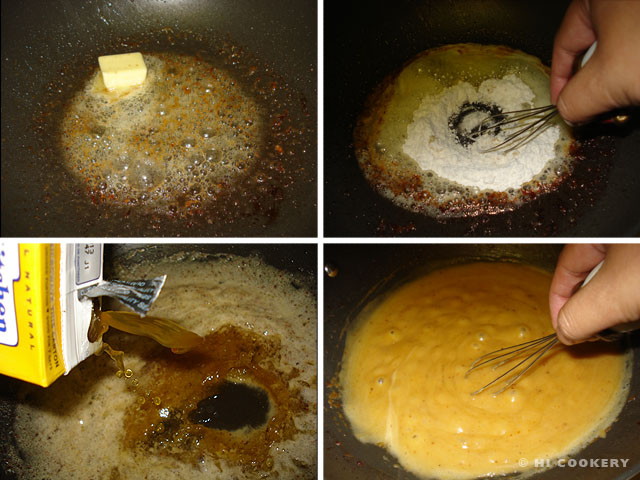
In the same skillet where the veal cutlets were browned, melt the butter. Stir in the flour. Pour in the chicken stock, scraping the brown bits from the sides. Keep stirring until thick. Season with salt and pepper.
Mix in the sherry. Pour the gravy over the veal cutlets. Bake in a preheated oven at 350 degrees F for 20-25 minutes or until the veal cutlets are cooked through yet tender. Serve the veal cutlets immediately with a side of rice or potatoes, spooning the gravy over them.
Notes
- We halved the original recipe to feed just the two of us. But we followed the original measurements of the gravy because we like sauces with our meats.
- The author suggests inserting small pieces of truffle or a flavorful mushroom into the cutlets for a unique taste. However, truffles are expensive and not readily available in most areas like ours.
- St. Cloud is the patron saint of nail makers in France. So our final food photo above features the large nails that Highlander used to build our backyard deck.
« Previous Page — Next Page »
 HI COOKERY