May 2018
Monthly Archive
May 11, 2018
Brownie Mocha Torte

May 11: National Mocha Torte Day
Now that we do not live in the same Texas city anymore as Islander’s brother Kahuna, we try to visit whenever we can and stay over at each other’s homes—except he lives in a religious community of priests and brothers, whereas our house is just the Highlander and Islander Inn. Fortunately there are guest rooms at their house and we are always welcome to stay there and join them for prayers and meals. So what is the compensation for our free room and board? Merely show up with something sweet, such as brownie mocha torte, and we are greeted at the door with big smiles from everyone! Kahuna’s community loves chocolate and this delicious dessert pays fits the bill with its nutty crunch and fudgy layers sandwiched between a coffee-and-cream flavored filling. We confess that this brownie mocha torte is both sinfully rich but heavenly tasting (but we can do some penance at the in-house chapel and campus gym across the street later).
Brownie mocha torte is a nice dessert to share with family and friends and perfect for observing National Mocha Torte Day.
Recipe
(Adapted from Taste of Home)
Ingredients
- 2 family size (13 x 9 inch) package chocolate brownie mix
- ¼ cup water
- 2 eggs
- 6 tablespoons vegetable oil
- ½ cup chopped nuts (we used macadamias), toasted and chopped
- 2 teaspoons instant coffee (we used Kona coffee granules)
- ½ cup brown sugar (we used C&H brand)
- 2 cups heavy whipping cream
- 1 teaspoon vanilla
- chocolate curls or chips (optional garnish)
Directions
Toast the nuts and cool them. Set aside. In a large bowl, stir the water in the brownie mix. Blend well.
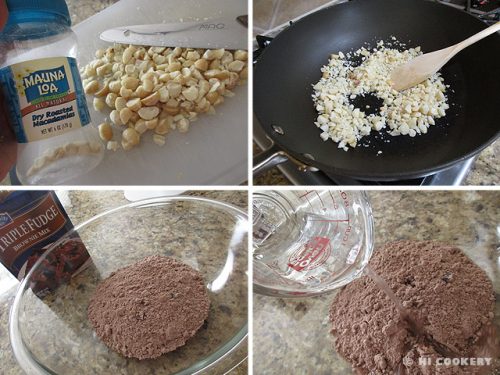
Beat in the eggs and oil. Add the chopped, cooled nuts. Divide the brownie batter into two greased 8-inch round pans. Bake in a preheated oven at 350 degrees F for 25 minutes. Remove from the oven and cool completely. Horizontally slice the brownies in half to make four layers. Place the bottom layer on a cake plate, board or platter. Set aside the three other layers.
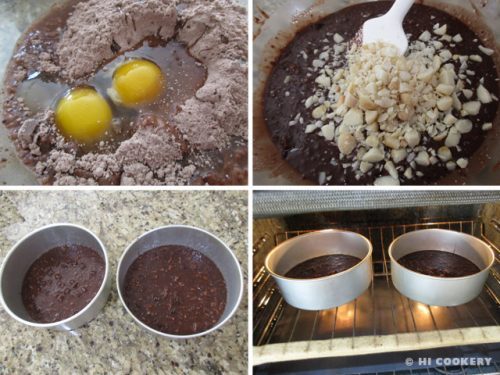
In a small bowl, combine the instant coffee granules with brown sugar. In a large mixing bowl, beat the whipping cream until stiff peaks form. Stir in the vanilla. Fold in the coffee-sugar mixture. Beat again until stiff.
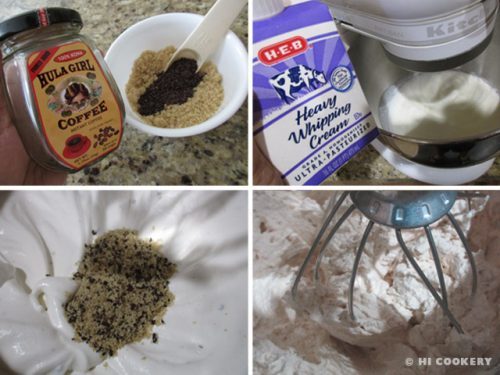
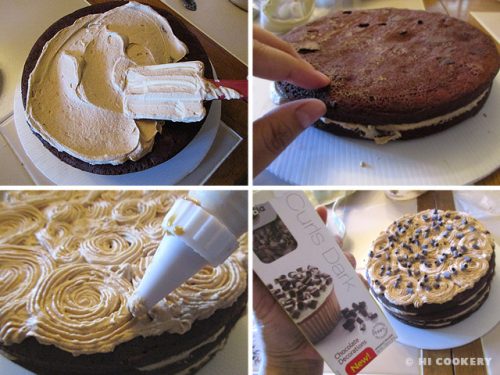
Spread a quarter of the filling mixture on the bottom layer of the brownie. Place a brownie layer on top. Spread another quarter of the filling mixture onto this layer. Place another brownie layer on top. Repeat with the last layer. Frost the top layer with the remaining filling (or decorate with swirls using a star tip). Sprinkle the top with chocolate curls or chips. Cover and refrigerate to set. Before serving, remove from the refrigerator and let thaw for about 10 minutes. Slice and serve.
Notes
- There are different definitions of torte. As a noun, a torte is a rich European-style cake made with many eggs and little flour and usually containing chopped nuts (this recipe contains just two eggs, some flour mixed with chocolate/cocoa powder and chopped nuts). As an adjective, a torte is a multi-layered cake (this recipe has four layers).
- Search our blog for more chocolate recipes under the Theme Menus option.
May 7, 2018
Beignets

May 7: Founding of the City of New Orleans, Louisiana (1718)
At Islander’s first professional convention in New Orleans, Louisiana, some years ago, event organizers planned a welcome reception with a sampling of the city’s most popular foods. From jambalaya, gumbo, étouffée and po’boys to king’s cakes, bread pudding, pralines and beignets, the host committee showed the best of their southern hospitality.
Since Islander loves donuts (she even gave up Krispy Kremes for Lent once!!!)—malasadas, andagi, pączki, sopaipillas, cronuts, etc.—she immediately loved the beignets. Many cultures have deep fried dough (donuts) sweetened with a topping or filling. Beignets are typically covered in a blizzard of powdered sugar, although she has tried mini versions with a honey dipping sauce.
Beignet boxed mixes are sold at some grocery stores now but these fabulous French-style fritters can be made at home anytime. We make them for Mardi Gras but they can be prepared to commemorate the founding of NOLA! Bon appétit!
Recipe
(Adapted from What’s Cooking America)
Ingredients
- 1 cup water, lukewarm
- ¼ cup sugar, white granulated
- ½ teaspoon salt
- 1 egg, room temperature, beaten
- ½ cup evaporated milk
- 2 tablespoons butter, room temperature
- 4 cups flour (all-purpose or bread)
- 3 teaspoons yeast, instant active
- vegetable oil for frying
- powdered sugar for the topping
Directions
In a mixer bowl, dissolve the sugar into the lukewarm water. Add the salt, beaten egg and evaporated milk.
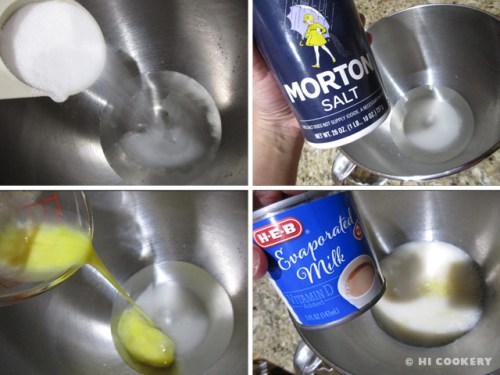
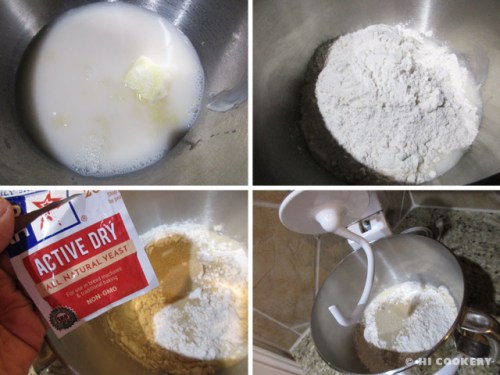
Stir in the butter. Add flour and yeast. Use the dough hook attachment to mix until smooth.
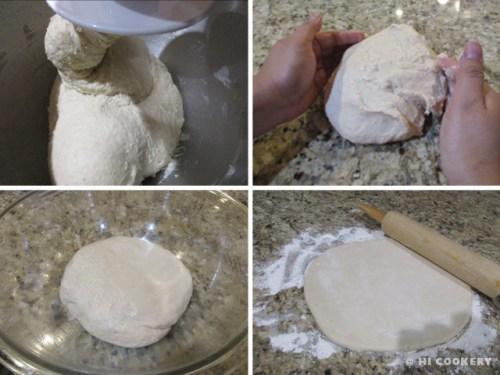
On a lightly-oiled, clean surface, turn out the dough and shape into a ball. Place in a large, lightly-oiled bowl. Cover with plastic wrap and chill the dough in the refrigerator for 3-4 hours. On a floured, clean surface, turn out the dough and roll out to ½-inch thickness.
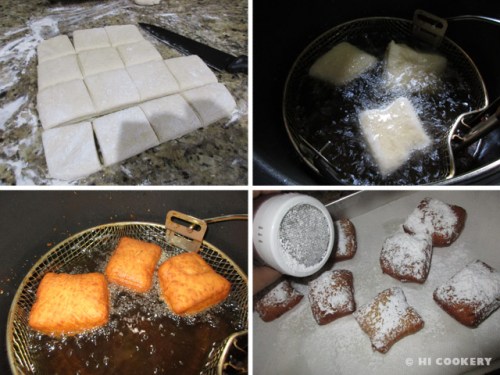
Cut the flattened dough into 3-inch squares. Deep fry in vegetable oil at 350 degrees, browning both sides until it rises to the surface and puffs up (about 3 minutes). Transfer the beignets to drain on paper towels. While still warm, sprinkle powdered sugar on top. Serve immediately. Yield: Approximately 1 ½ – 2 dozen beignets.
Notes
- The dough can be kept in the refrigerator for up to one week. Before rolling out, punch down again before cutting into squares for frying. The dough can also be frozen. Roll and cut into squares then freeze between parchment or wax paper and place flat in plastic zipper bags.
- Search our blog for other donut and Mardi Gras recipes.
May 5, 2018
Carnitas de Puerco
(Mexican Tender-Crisp Pork)

May 5: Cinco de Mayo
Many cultures have their version of slow-cooked shredded/pulled meat. Islander grew up eating kalua pua’a in Hawaii, so she already liked the similar carnitas de puerco when we moved to San Antonio, Texas. This Mexican recipe uses spiced pork that is slow cooked until tender, shredded or pulled, then fried to a crisp.
For our simple Cinco de Mayo celebration, we made carnitas for soft tacos. But the meat is versatile in many Mexican dishes—as a filling in tamales, burritos or empanadas or as an entrée with rice and beans.
Cook up some carnitas de puercofor a fun and festive food for Cinco de Mayo.
Recipe
(Adapted from Food Network)
Ingredients
- 2 pounds boneless pork butt/shoulder
- salt and pepper to taste
- 2 teaspoons dried oregano (we used Mexican oregano)
- 1 teaspoon ground cumin
- 1 tablespoon olive oil
- 1 onion, chopped
- 4 cloves garlic, minced
- 1 jalapeno pepper, chopped (seeds and ribs removed)
- 1 orange, cut in half
- 3 tablespoons vegetable oil
Directions
Line slow cooker with cooking bag (optional). Rinse the pork and pat dry with paper towels. Generously salt and pepper all over. In a small bowl, mix the oregano and cumin with the olive oil. Rub the oil mixture over the pork. Place in a slow cooker.
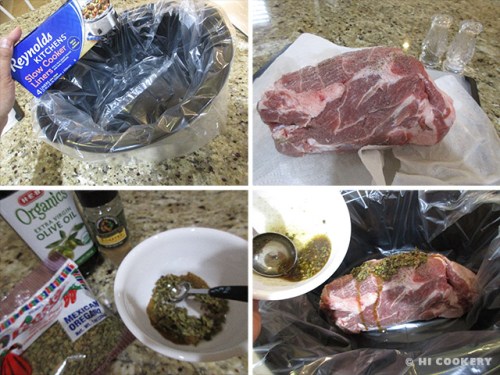
Chop the onions, mince the garlic, chop the jalapeno and cut the orange. Squeeze the juice of the orange into the slow cooker over the pork. Place the orange halves in the slow cooker.

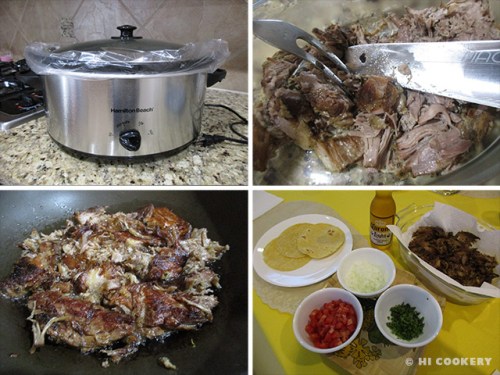
Cover and cook on low for 8-10 hours or on high for 4-6 hours. Remove from the slow cooker and place on a deep plate. Cool slightly and then shred/pull with fork. In a large skillet or pan, heat the vegetable oil on high. Press a few chunks of shredded pork in the oil and fry until crispy on one side. Drain on paper towels. Serve as a filling or as main dish.
Notes
- Cinco de Mayo is a minor Mexican holiday commemorating the Mexican army’s defeat of the French army during the Battle of Puebla in 1862. Although some Mexicans and Mexican-Americans celebrate May 5, it is September 16 that is more significant as Mexico’s Independence Day. Many Americans, however, enjoy fiesta foods and the commercialized culture of Cinco de Mayo but this holiday can be a teachable moment about Hispanic history.
- Traditionally, pork is stewed in its own lard to maintain the moistness in the meat. The fat in the pork butt/shoulder is not trimmed so it can do the same in the slow clooker.
- Search our blog for more Mexican recipes under the Theme Menus category.
« Previous Page — Next Page »
 HI COOKERY