01 January


Brickle Drop English Toffee Cookies
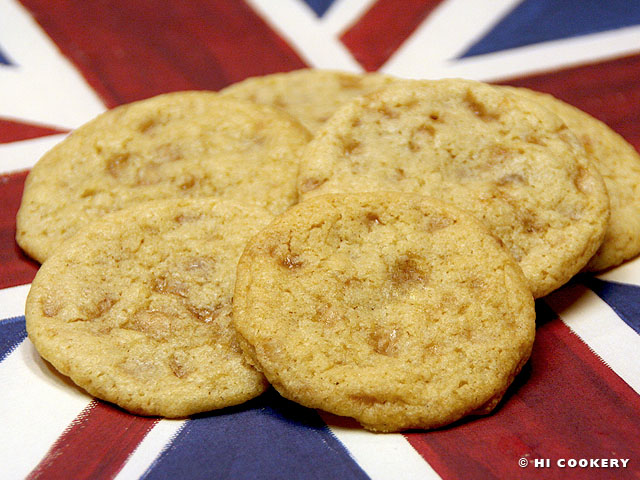
Brickle Drop English Toffee Cookies

January 8:  English Toffee Day

When browsing through the British Isles food booths at cultural and Celtic festivals and fairs in the states, we like to sample different sweets, such as cookies, tablets and toffees. Sometimes the latter is too sweet even for our sweet tooth. But a little bit ‘o brickle in biscuits is delicious. For an even tastier toffee treat, we dip chewy cookies in chocolate and sprinkle the crunchy pieces on them. Either way, Brickle Drop English Toffee Cookies are great for observing English Toffee Day!

Recipe

(Adapted from Hershey’s)

Ingredients

  • 1 cup (2 sticks) butter, softened
  • 1 cup sugar, granulated white
  • 1 cup brown sugar
  • 1 teaspoon vanilla
  • ½ teaspoon salt
  • 3 eggs
  • 3 ½ cups flour
  • 2 teaspoons baking soda
  • 2 teaspoons cream of tartar
  • 1 1/3 cups (8-ounce package) English toffee bits (Heath Bits ‘O Brickle)

Directions

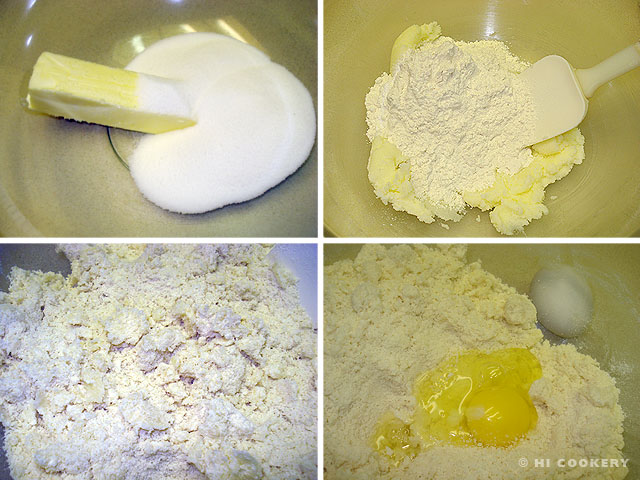
In a large bowl, cream the butter with the sugars. Stir in the vanilla. Sprinkle the salt. Beat in the eggs.
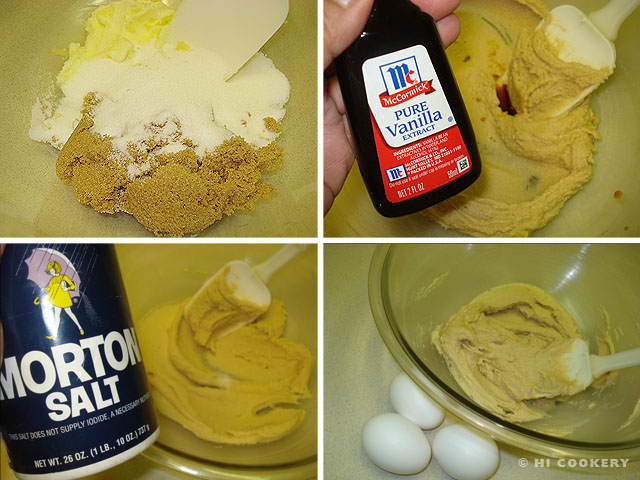
Brickle Drop English Toffee Cookies

In another bowl, combine the flour, baking soda and cream of tartar. Gradually add this to the butter mixture and blend well until a sticky dough forms. Fold in the English toffee bits.
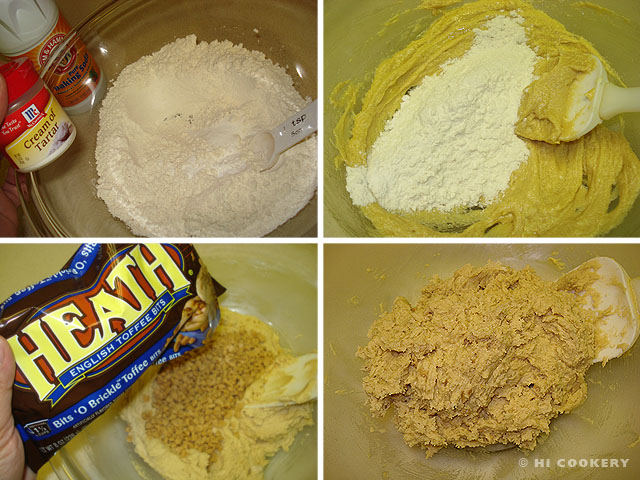
Brickle Drop English Toffee Cookies

Roll the dough into one-inch balls and place on a foil-lined, lightly-greased cookie sheet. Space the balls about two inches apart to allow the cookies to spread while baking. Bake in a preheated oven at 350 degrees F for 10-12 minutes. Remove from the oven and let cool on the cookie sheet for about five minutes before transferring to a wire rack to cool completely. Yield: Approximately 6 dozen cookies.
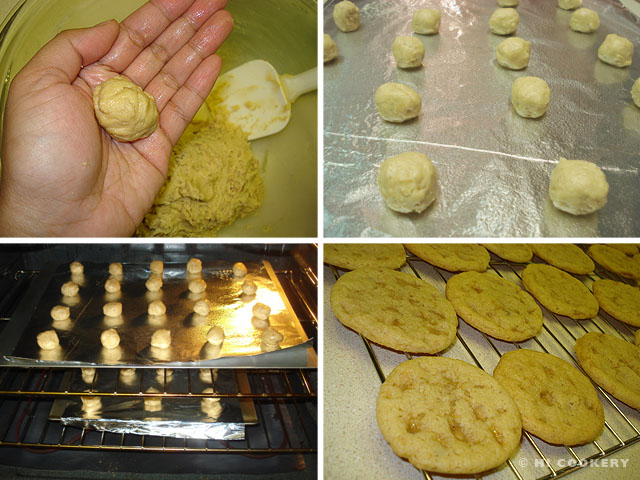
Brickle Drop English Toffee Cookies

Notes

  • Cookies may be dipped partly in melted chocolate. Sprinkle some English toffee bits on it before the chocolate hardens. Lay on waxed paper (but do not stack the cookies) to allow the chocolate to set. Arrange on a platter to serve.
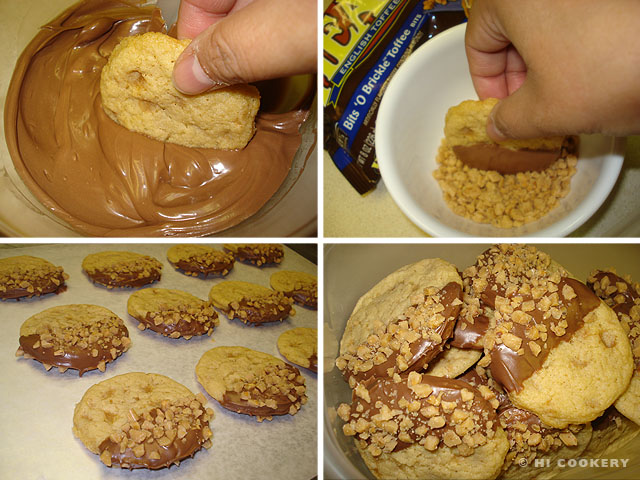
Brickle Drop English Toffee Cookies

Vasilopita

Vasilopita

January 2: Feast Day of St. Basil

Long before we started blogging, Highlander gave Islander the cookbook “Cooking with the Saints” as a Christmas gift. Vasilopita was the very first recipe she made in the new year and for the Feast Day of St. Basil. Now we can blog about the traditional Greek cake that we bake for a simple new year’s celebration at home.

According to the author, Ernst Schuegraf, “different recipes (for Vasilopita) exist, (but) they all include the hiding of a silver coin in the cake, which is supposed to bring luck to the person who finds it. The head of the family slices the cake and distributes the pieces in a very precise order. The first piece is for St. Basil, the second one for Christ, the third one for the oldest member of the family and on down to the youngest.”

The hiding of the coin represents Baby Jesus hiding from King Herod. Different cultures make cakes with hidden coins, beans or trinkets around this time of the year. Include Vasilopita in your recipe repetoire during the 12 days of Christmas, which come to a close on Epiphany (January 6), and celebrate the new year and the Feast Day of St. Basil with this special cake.

Recipe

(Adapted from Cooking with the Saints by Ernst Schuegraf)

For the cake

  • ½ cup (1 stick) butter
  • 1 cup sugar
  • 1 ½ cups flour
  • 3 eggs
  • ½ cup milk
  • 1 teaspoon baking powder
  • ¾ tablespoon lemon juice
  • ½ teaspoon baking soda

For the topping

  • 1/3 cup nuts, chopped (we used walnuts)
  • 2 tablespoons sugar

Directions

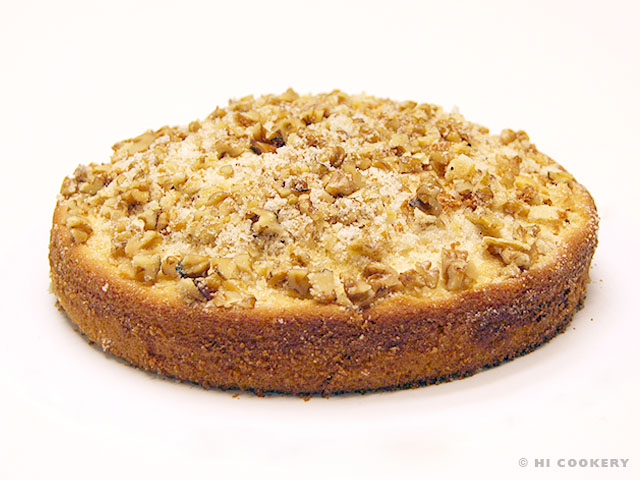
Line an 8-inch round pan with waxed paper. Lightly grease the bottom and sides with cooking spray or vegetable oil. Set aside. In a large bowl, cream the butter with the sugar. Add the flour and mix until it resembles coarse crumbs. Beat in the eggs one at a time until well incorporated.

Vasilopita

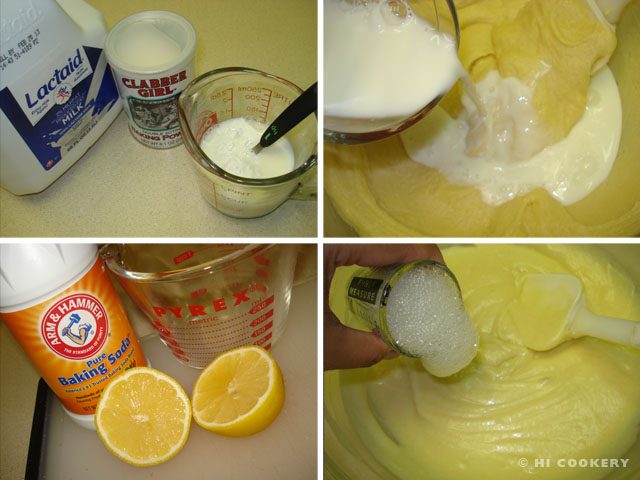
In a measuring cup, pour the milk then stir in the baking powder. Add this to the flour mixture and blend until smooth. In another small cup or shot glass, mix the lemon juice with the baking soda (it will be fizzy). Add this to the cake batter.

Vasilopita

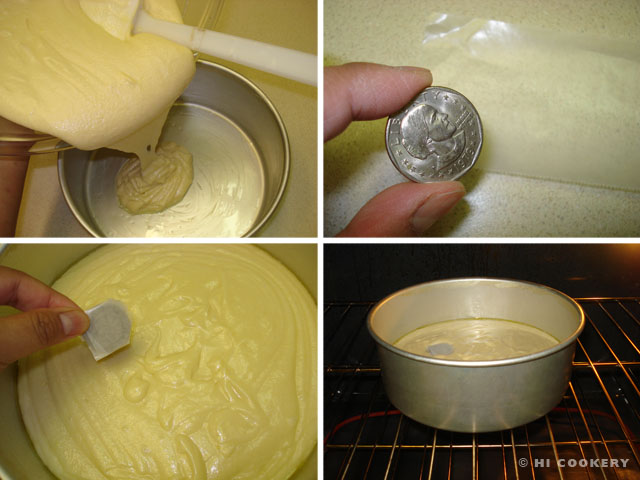
Pour the batter into the prepared baking pan. Place a clean coin (optional) in the batter. Bake in a preheated oven at 350 degrees F for 20 minutes.

Vasilopita

Meanwhile, prepare the topping by mixing the chopped nuts and sugar. When the 20-minute baking time is up, remove the cake from the oven and sprinkle the topping over the cake. Return to the oven and continue to bake for 20-30 minutes until the cake is done. Remove from the oven and cool completely. Remove from the pan and transfer to a cake plate or serving platter.

Vasilopita

Notes

  • If there is a coin hidden in the cake, let others know about the symbolism—and safety!—before they eat their slice. We usually wrap a silver dollar in waxed paper or foil before including it in the cake batter.
  • The cake may be decorated with numbers representing the new year.
  • Serve Lakror as the main dish, followed by Vasilopita for dessert, for a full meal on the Feast Day of St. Basil. The recipe for Lakror is included in an earlier blog post.
  • The Feast Day of St. Basil is observed on January 1 in the Eastern Orthodox Church; January 2 in the Roman Catholic, Anglican and Lutheran churches; January 15 in the Coptic Christian and Ethiopian Orthodox churches; January 30 in the Byzantine Rite; and June 14 in the Episcopal Church.
  • Bake a galette des rois (3 Kings Cake) a few days later with a hidden bean (instead of a coin) to celebrate Epiphany.

Leek and Tattie Soup

Leek and Tattie Soup

January: National Soup Month

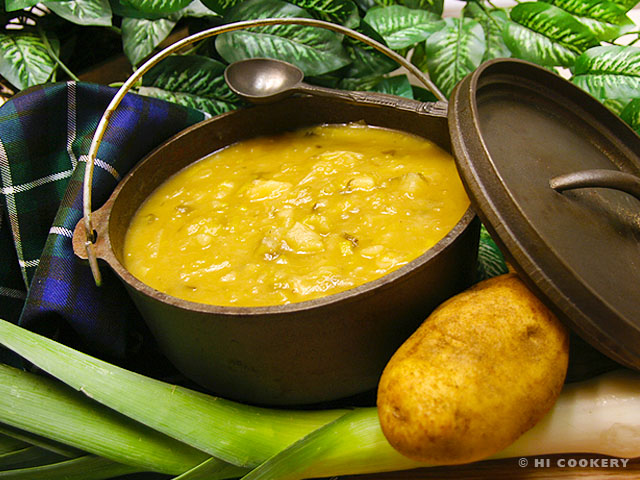
We warm up in the wintertime with a traditional Scottish soup. Leeks and tatties (potatoes) are cheap and chunky to make a filling first course. Though this soup is simple, it is served at even the finest Burns Suppers. This is when the Scots get together on January 25 to celebrate the birthday and life of their national poet Robert Burns (1759-1796). Traditional Scottish food is served, such as soup, haggis, oatcakes, whisky and dessert. Guests enjoy poetry readings, bagpipe music and Highland dancing.

We like leek and tattie soup straight from the stock pot when we cook it at home. But sometimes we add milk and cream and puree everything in the blender to make a fancy French version of this soup called Vichyssoise. Savor the soup made with leeks and tatties during National Soup Month or on Burns Night on January 25.

Recipe

(Adapted from “Scottish Heritage Food and Cooking” by Carol Wilson and Christopher Trotter)

Ingredients

  • 1 small onion
  • 2 leeks
  • 3 large potatoes
  • ¼ cup butter, divided use
  • 4 cups chicken or vegetable stock
  • salt and pepper to taste

Directions

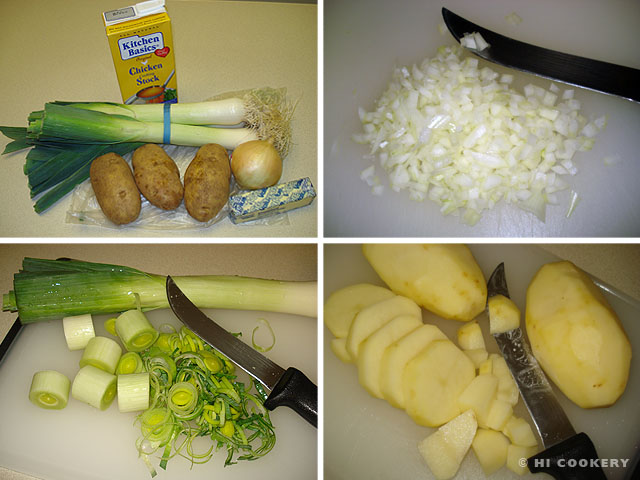
Chop the onions. Wash and slice the leeks, discarding the thread-like ends on the white part. Wash, peel and chop the potatoes.

Leek and Tattie Soup

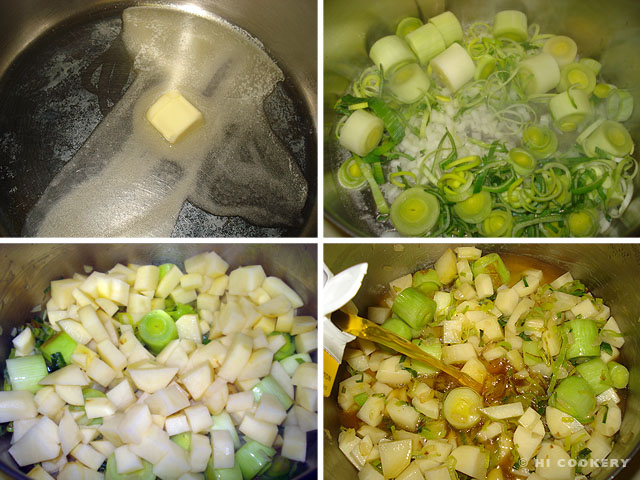
In a large pot, slowly melt 2 tablespoons of butter. Saute the onions and the leeks until soft (about 5 minutes) but do not brown. Stir in the potatoes and mix with the onions and leeks. Cook for about 2 minutes. Pour in the chicken or vegetable stock. Salt and pepper to taste. Cover the pot and simmer on medium heat for 30 minutes. Remove from heat and stir in the remaining 2 tablespoons of butter. Ladle into soup bowls and serve hot.

Leek and Tattie Soup

Notes 

  • Happy New Year and Hogmanay to our blog readers! Robert Burns wrote the traditional new year’s anthem “Auld Lang Syne”.
  • Thanks to our neighbors across the street, Glenn and Anna Maria B., who are pioneer settlement re-enactors, for letting us borrow their rustic clad iron soup kettle as a prop for the final food photo.
  • Search our blog for more Scottish and other soup recipes.

« Previous PageNext Page »