08 August


Cornmeal Fufu (Ugali)

August 11: National Fufu Day

We served as marriage preparation sponsors for a Nigerian couple at our church during the pandemic. They had to delay and reschedule their Catholic wedding and massively scale down the celebration. But the intimate ceremony (strictly a 25-people limit, according to CDC social gathering guidelines at the time) followed by an at-home reception (in the bride’s family mansion!) was a much more personalized and lovely experience, focusing on the couple more than a traditionally and typically extravagant event itself.

We witnessed the bride’s father, who is revered like a chief in the ex-pat Nigerian community, preside over the kola nut ceremony to welcome everyone to his family’s home and the marriage celebration. Highlander got to taste the bitter nut while Islander was offered a Coca-cola instead of the kola (see Notes). 

After prayers, speeches and libations/toasts, we were already hungry after a long day. The colorfully-clad ladies had prepared a delicious buffet of favorite and festive foods. We were not familiar with the menu items but we enthusiastically enjoyed trying Nigerian food. 

The ladies were also so gracious to pack us leftovers so we could enjoy them the following day. In our takeaway containers, we found a spongy-white dough wrapped in plastic. Fufu is a starchy staple found not just in Nigerian cuisine but all over Africa and the Caribbean. It is made with ingredients commonly found in the area (yams, cassava, plantains and cornmeal). It is a little bland but fufu is a great complement to the flavorful stews and soups.

For National Fufu Day, which is a relatively new holiday, we tried a cornmeal fufu recipe. It goes well with the West African shrimp in peanut sauce stew recipe. Rie nke oma.

Recipe
(Adapted from African Bites)

Ingredients

  • 4 cups water
  • 1 teaspoon salt
  • 2 cups white fine cornmeal
  • Vegetable oil

Directions

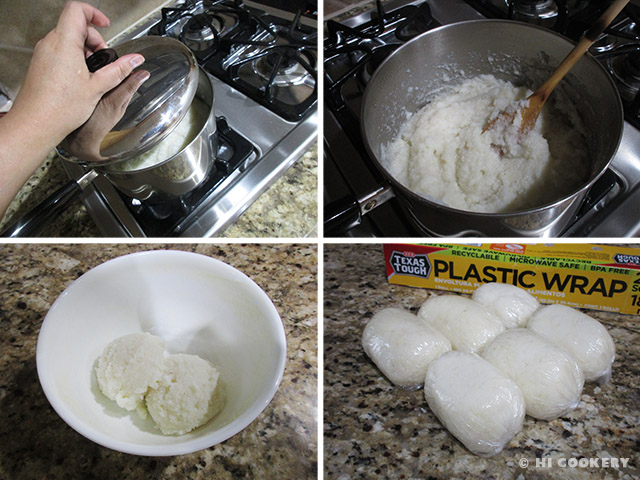
In a large, heavy saucepan, boil the water. Add salt. Remove one cup of the water and set aside. Reduce the heat to medium. Gradually stir in the cornmeal a little at a time, mixing until well blended. Reduce the heat to low. Mash any lumps and keep mixing until smooth, adding a little of the reserved water at a time. 

Cover and simmer for another 10 minutes, making sure that the bottom of the pan does not burn. Remove from heat. Stir the mixture. Grease a small bowl with a little oil. Scoop out about ¾ – 1 cup of the mixture and place it in the greased bowl. Swirl the bowl around until it forms a smooth round or oblong shape. Repeat with the remaining mixture. Transfer to a serving platter. Or package them in plastic wrap for individual servings when needed.
Notes

  • Fufu is known as ugali in east and central Africa. Learn more about the different types of fufu from OkayAfrica.com’s “Quick Guide to Fufu.” 
  • Fufu is fungee in Antigua. See the recipe we made with bits of okra here.
  • Read more about the cultural significance of kola nuts of the Nigerian Igbos from the Face2Face Africa website. 
  • Although we were offered utensils, we ate with our hands at the Nigerian house reception. We assured our hosts we were comfortable doing so, as we had participated in a similar Filipino “boodle fight” (kamayan).
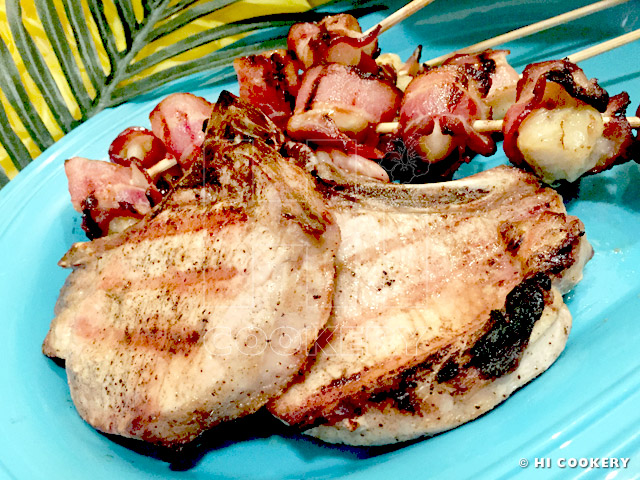
Antigua Pork Chops and Bacon-Wrapped Bananas

August 27: National Pork Chop Day

In more than a decade of blogging, we have tried to cook recipes to match certain national holidays or months. Within that time of 10 years, there seems to be new food holidays coming up, like National Pork Chop Day. 

So as we continue to “cook our way through the calendar/countries,” we decided to try a pork chop recipe from Antigua and Barbuda. They seem to be regular pork chops seasoned with the usual salt and pepper with the addition of lemon juice and cumin. The savory meat is complemented by its sweet accompaniment, the bacon-wrapped bananas, which turns this basic recipe into a unique tropical treat. 

For this food holiday, National Pork Chops Day, try cooking a Caribbean-inspired dish: Antigua pork chops and bacon-wrapped bananas.

Recipe
(Adapted from Food.com)

For the pork chops

  • 4 pork chops
  • 2 tablespoons butter, softened
  • ¾ tablespoon cumin
  • Salt and pepper, to taste

For the bacon-wrapped bananas

  • Slices of bacon, cut into segments
  • 2 bananas, cut into 1-inch chunks (or width, not length, of bacon)
  • 1 lemon, juiced

Directions

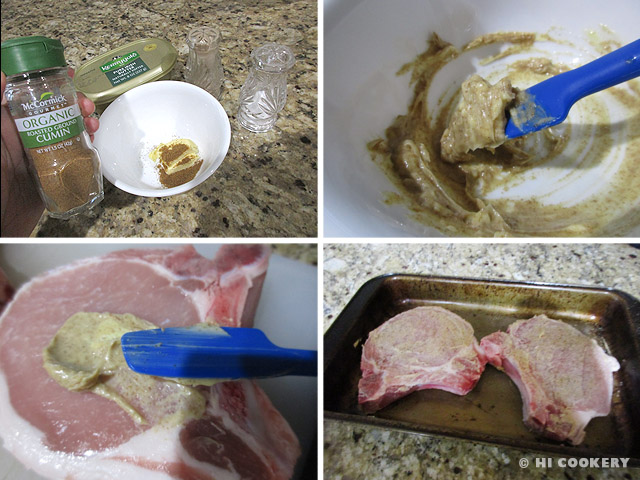
In a small bowl, cream the butter with the cumin, salt and pepper.  Rub the mixture over both sides of all the pork chops. Set aside.

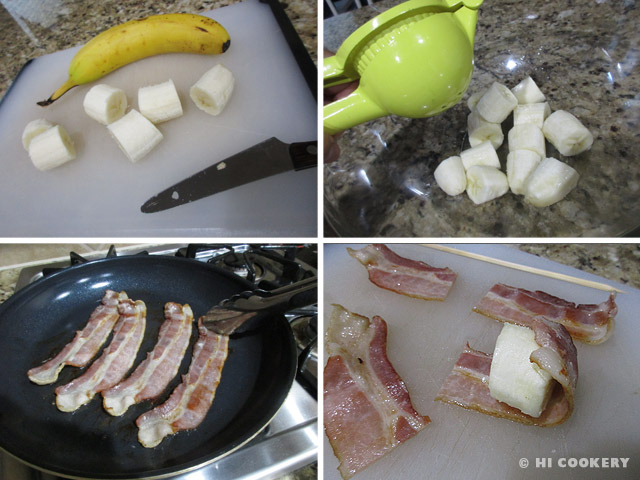
Cut the bananas and put the chunks in a bowl. Squeeze the lemon juice over them to prevent from browning. In a skillet, fry the bacon for a few minutes just to render out the fat. Do not cook all the way so the slices are still bendable. Drain on paper towels and cool slightly. Wrap the bacon around each banana chunks. 

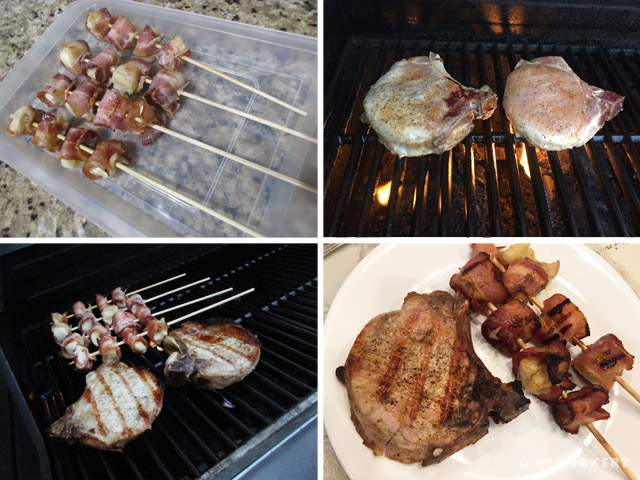
Put the bacon-wrapped shrimp on four skewers (one for each pork chop). Meanwhile, fire up the grill and cook the pork chops for around 7-8 minutes per side, allowing for good char marks. After about 15 minutes, lower the grill heat to medium low and place the bacon-wrapped banana skewers on the grill. Turn the pork chops and skewers occasionally and make sure that the chops and bacon are cooked through. Be careful not to overcook the chops of they will dry out. Transfer the cooked chops and bacon-wrapped bananas to a plate to rest for a few minutes before serving.

Notes

  • Be sure to pick harder bananas for this recipe. Softer fruit can turn mushy when wrapping the bacon around the slices and may fall off the skewers when grilling.
  • Search our blog for other pork chop recipes.

Rose Water Panna Cotta

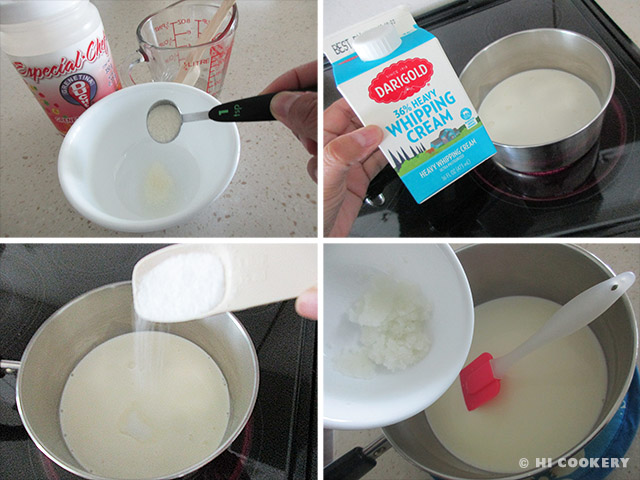
  • 1 teaspoon gelatin powder
  • 1 tablespoon cold water
  • 1 cup heavy whipping cream
  • 2 tablespoons sugar, granulated white
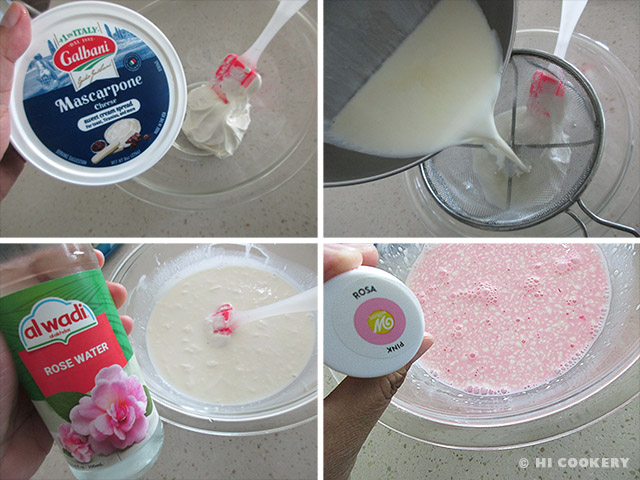
  • 2-3 teaspoons rose water
  • Pink or red food coloring
  • 1/3 cup mascarpone cheese
  • Rose water is not the same as rose extract (which has a stronger flavor profile). Find rose water at the Mediterranean/Middle Eastern/Indian aisle of major grocery or specialty stores or online.
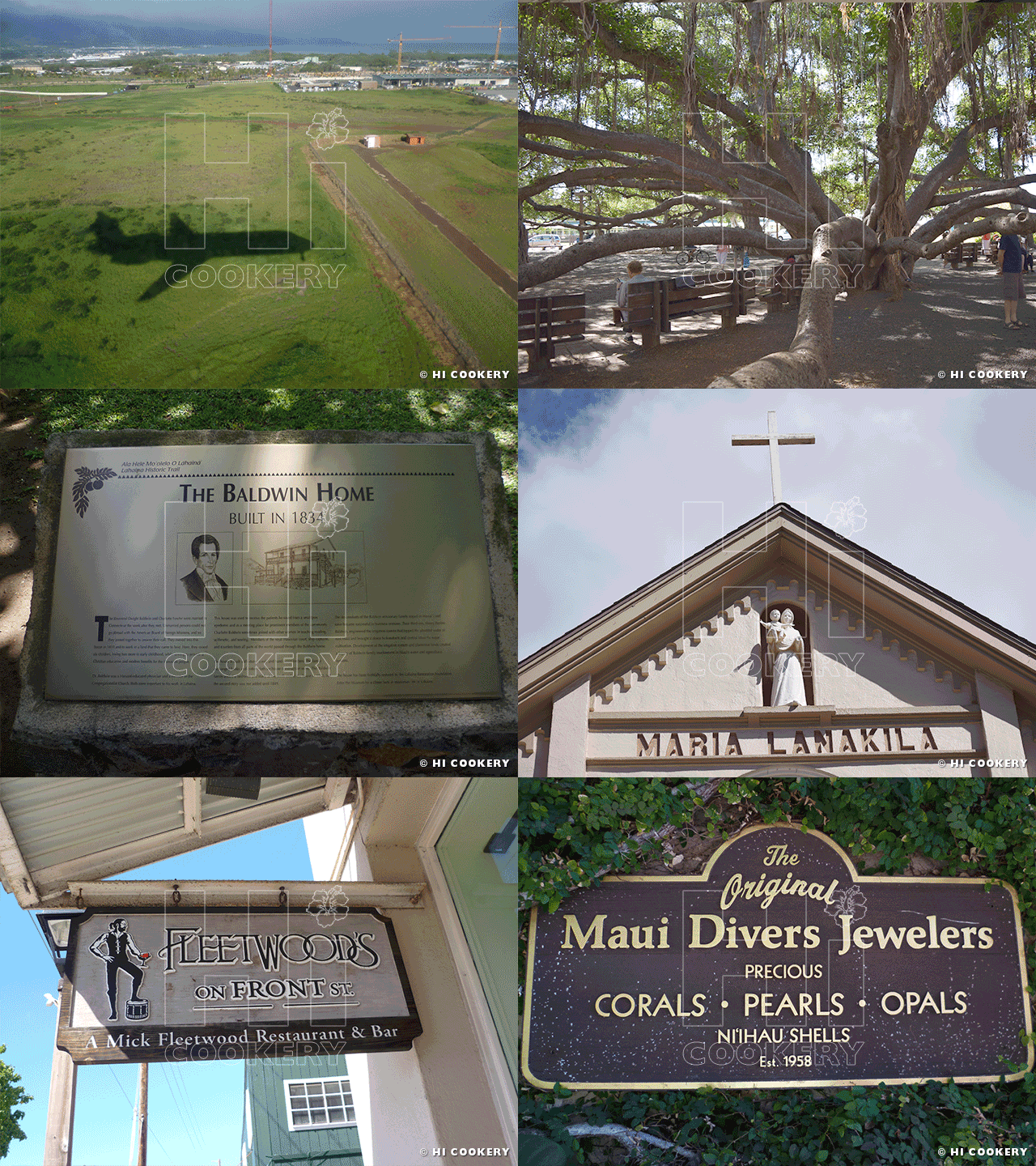
  • Islander lived in Hale Lokelani dormitory during her freshman-sophomore years at Chaminade University of Honolulu. Her alma mater has ties to Maui by hosting the annual basketball invitational and using the Haleakala ‘ahinahina (silversword plant) in its logo.
  • Please help Maui recover and rebuild by donating to the Hawaii Community Foundation (Maui Strong Fund): https://www.hawaiicommunityfoundation.org/maui-strong.  Mahalo!

Next Page »