Hot Cross Buns

September 11: National Hot Cross Buns Day
Hot cross buns are traditionally associated with Good Friday. But they could be appropriate for September 11, too, coincidentally National Hot Cross Buns Day. The 2001 date is one of history’s darkest moments, when terrorists destroyed the World Trade Center in New York City. Many turn to the cross as a symbol of comfort and hope in times of tragedy—and also in times of triumph (good over evil…life over death…reconstruction over destruction).
Hot cross buns typically mark the end of the Lenten period and beginning of the Easter weekend. But some bakeries offer them year-round because the sweetly spiced bread with the special markings are distinctive and delicious. The cross represents the crucifixion of Jesus and the spices symbolize those used for his embalming and burial. The buns were especially popular in England that there was a short song that vendors would sing along the street:
‘Hot cross buns, hot cross buns!
One ha’penny, two ha’penny, hot cross buns!
If you have no daughters, give them to your sons,
One ha’penny, two ha’penny, hot cross buns!’
We make hot cross buns at home on Good Friday, starting in the morning cheating by using our bread machine to make the dough. After dividing them into buns, letting them rise again, baking them and decorating the tops with crosses, these labors of love are finally ready to snack on in the afternoon (before and after attending Good Friday 3 p.m. mass). They last us through the Easter weekend, although some legends state that they can last a whole year, even throughout a long sea voyage.
Be inspired to bake some hot cross buns, whether on Good Friday or on National Hot Cross Buns Day, and in honor of those who perished on Sept. 11, 2001, and those who worked the front lines to keep us safe and informed. God bless them all!
Recipe
(Adapted from Pillsbury)
For the hot cross buns
- ¾ cup water
- 2 tablespoons milk
- 3 tablespoons sugar
- 1 tablespoon grated orange peel
- ¼ cup butter, cut into small pieces
- 3 cups all purpose flour
- 1 teaspoon salt
- ¼ teaspoon nutmeg
- 2 teaspoons bread machine dry yeast or active dry yeast
- 1 package (6 ounces) dried apricots, chopped (about 1 cup) – mix in
Directions
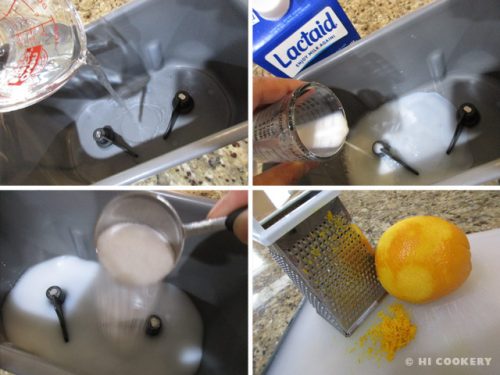
In the container/well of the bread machine, place the ingredients in order. Mix the water and milk. Pour in the sugar. Grate the orange peel and add it in the container.
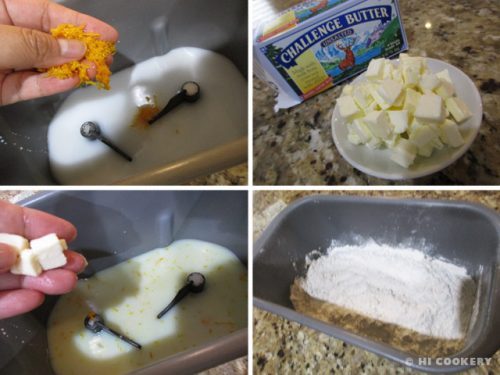
Cut up the butter and place it in the container. Layer the flour over it.
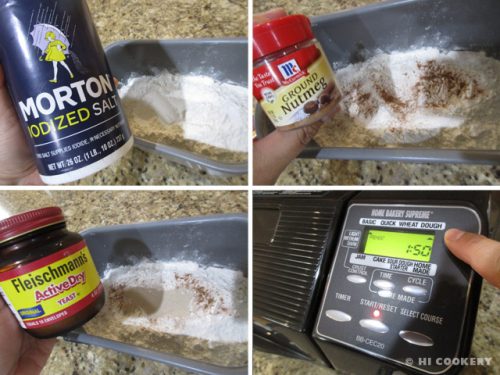
Add the salt and nutmeg. Sprinkle the yeast over it. Place the container in the bread machine. Set to dough only cycle (do not use the delay cycle).
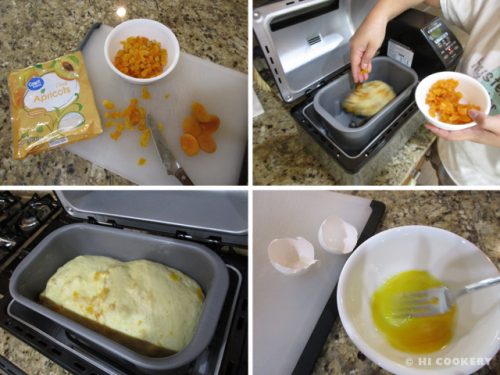
When the machine beeps for the mix in, open the lid and scatter the dried apricots on the dough. Close the lid of the machine and let the machine run through its dough course. Meanwhile, make the egg wash.
For the egg wash
- 1 egg, beaten (reserve 1 tablespoon)
- 2 teaspoons water
Directions
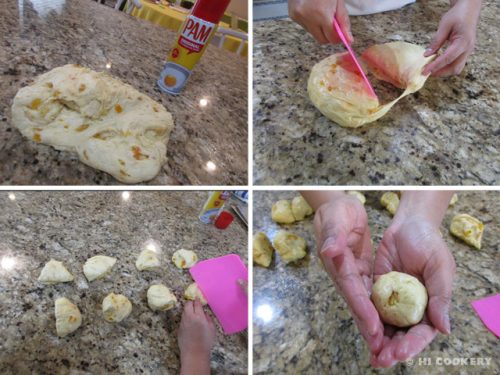
In a small bowl, beat the egg and remove a tablespoon to a small ramekin or cup. Stir in the water. Refrigerate while the bread machine is finishing its dough only cycle. When the dough is done, transfer to a lightly greased clean surface. Cut into 16 pieces. Grease hands with butter, oil or cooking spray and roll each piece into a ball. Place on a greased baking sheet about two inches apart.
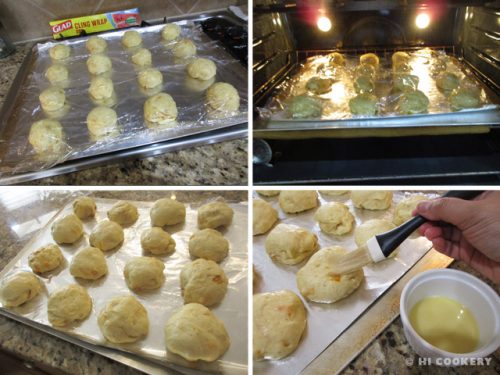
Cover with greased plastic wrap. Place in a warm oven (80-85 degrees F) and let rise until doubled in size (about an hour). Remove from the oven and discard the plastic wrap. Brush the tops with reserved egg wash.
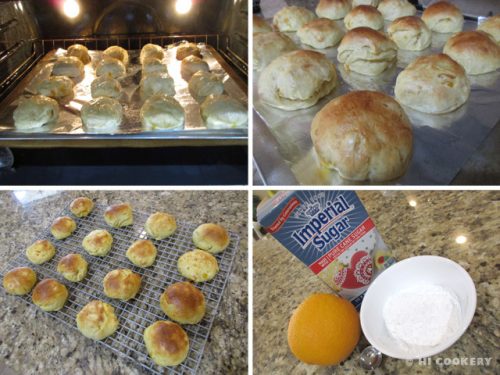
Bake in a preheated oven at 350 degrees F for 16-18 minutes or lightly browned. Remove from the oven and transfer immediately to cool on a wire rack for about 20 minutes. Meanwhile, make the frosting for the crosses.
For the frosted crosses
- ½ cup powdered sugar
- 1-2 teaspoons orange juice
Directions
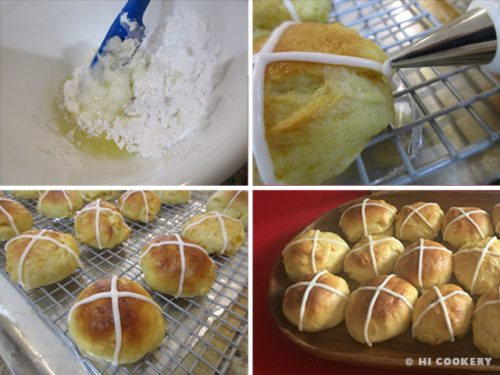
In a small bowl, mix together the powdered sugar with the orange juice, a teaspoon at a time, until it has a pasty consistency. Place in a piping bag with a small round tip (we used Wilton round tip #5); alternatively, place frosting in a zipper top plastic bag and snip a small hole from the bottom corner. Squeeze out crosses on top of each bun. Let the crosses set and serve. Store hot cross buns in a tightly covered container for three days.
Notes
- Learn more about the origin, legends and variations of hot cross buns from Wikipedia.
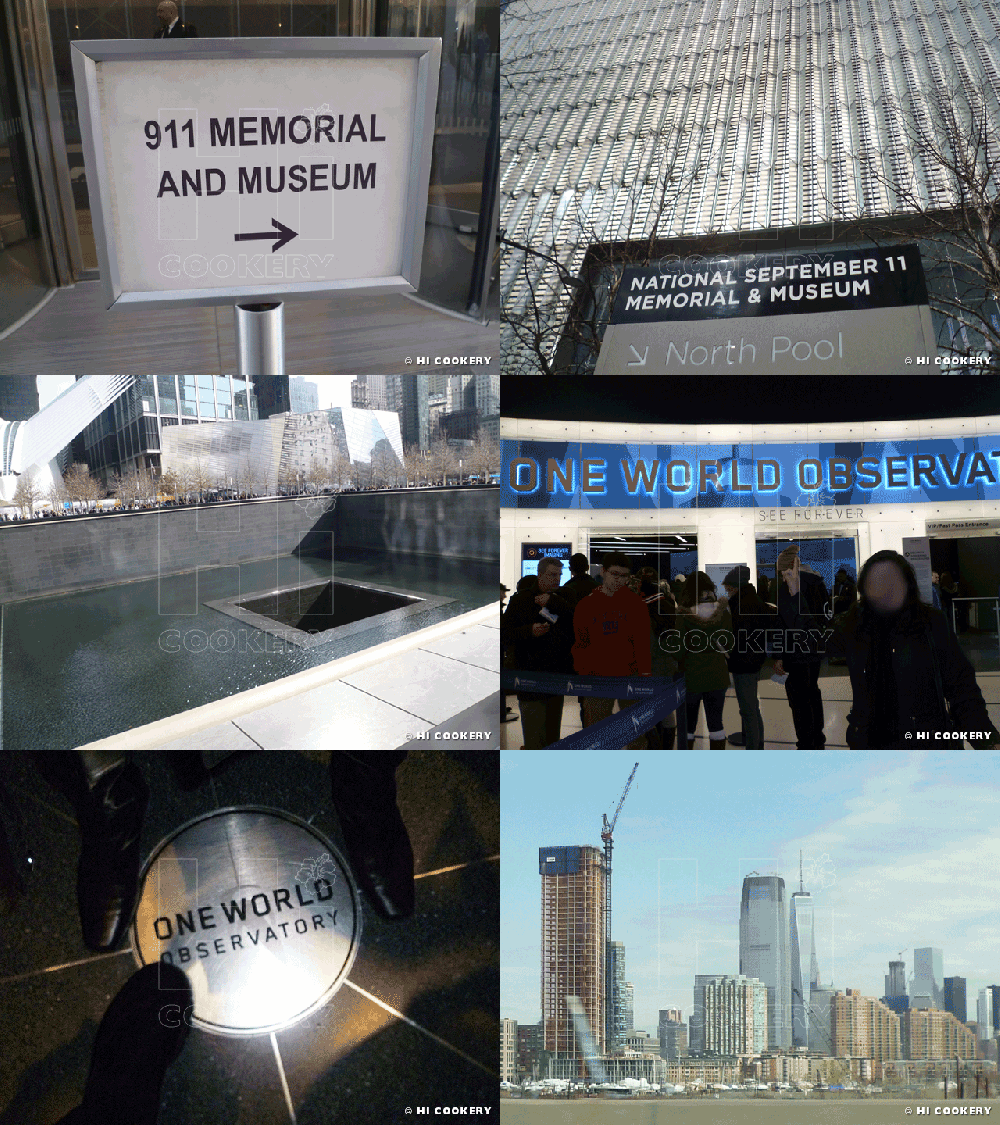
- Prior to that fateful date of Sept. 11, 2001, we resided in New Jersey and toured the Twin Towers and Manhattan on the weekends when the weather was nice. On the day of infamy, a horrified Highlander, whose field office was across the river, witnessed billowing smoke coming clearly from the World Trade Center. Months later, on Christmas break, we solemnly went to see the remains of mangled pieces of metal of Ground Zero in New York City. We viewed various anniversary memorials in different museums throughout the years since then. In 2016, during a visit with our old friends in New Jersey, we were able to visit One World Trade Center. Pray for peace, please.


 HI COOKERY