10 October


Pierogi (Vareniki)

Pierogi

October 8: National Pierogi Day

Hi, this is Olga, and I’m a guest from Ukraine on HI Cookery.  Today, October 8, is Pierogi Day and we are making traditional pierogis filled with potatoes and cheese. Pierogis are crescent-shaped dumplings made with a flour-based dough and stuffed with a variety of savory or sweet fillings. In Ukraine, pierogis stuffed with potatoes and cheese are called vareniki.

Thank you (дуже дякую) for viewing our cooking tutorial. On behalf of Highlander, Islander and myself at HI Cookery, Happy Pierogi Day!

Recipe

(Adapted from Olga W.)

For the dough

  • 1 beaten egg
  • 1/2 cup of warm water
  • 3 tablespoons sour cream
  • 1/2 teaspoon of salt
  • 2 to 3 cups of flour

For the potato and cheese filling

  • 2 medium potatoes, boiled and mashed
  • 1/2 chopped onion, sautéed until transparent
  • 1/2 cup of grated cheddar cheese
  • salt to taste

Directions

To make the dough, combine the egg, water, sour cream, salt and flour in a large bowl. Knead the ingredients until a stiff dough is formed. Let the dough rest in a covered bowl for 30 minutes.
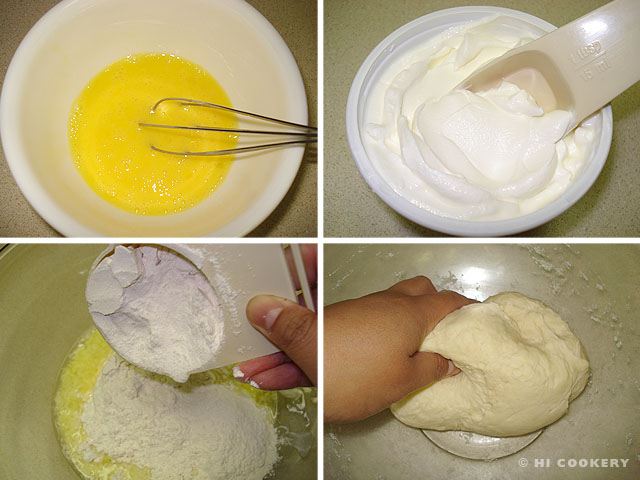
Pierogi

Roll out the dough about 1/8-inch thick on a floured surface. Then, using a 2-inch cookie cutter or glass rim, cut out the dough and set aside for the filling.
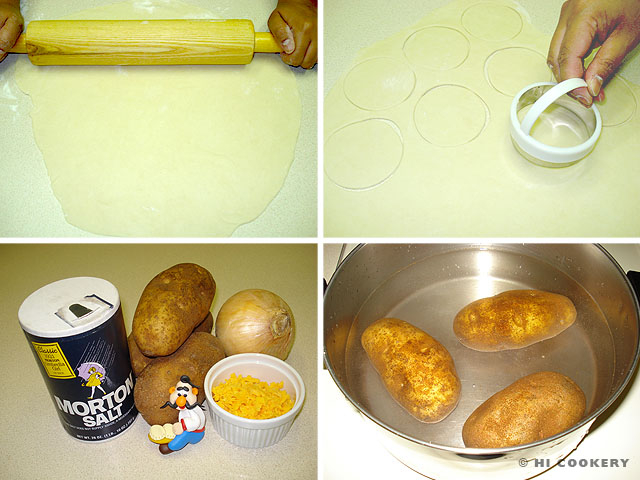
Pierogi

To make the filling, combine the mashed potatoes with the onions and cheese until smooth. Add salt to taste.
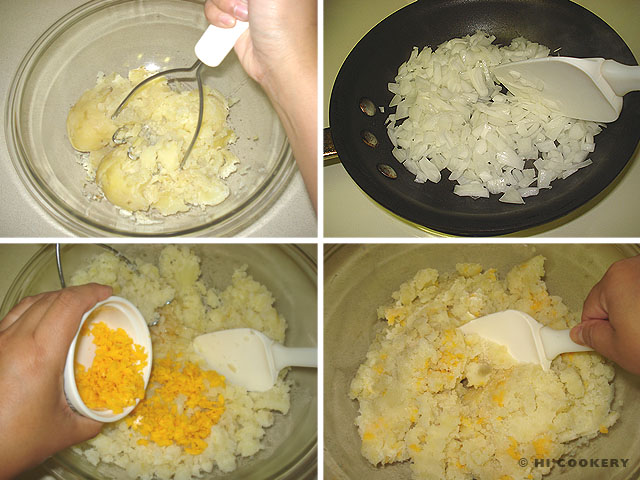
Pierogi

Assemble the pierogis.  On the center of the dough, place 1 teaspoon of filling. Fold over and pinch the edges shut. Use a little water to moisten and seal the pierogis. Continue to make all the pierogis.
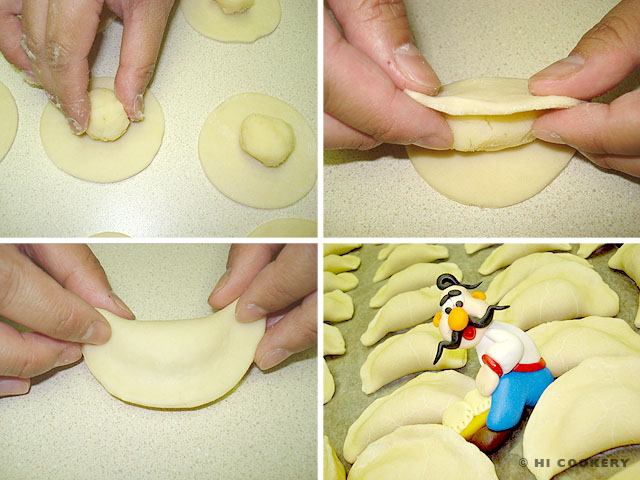
Pierogi

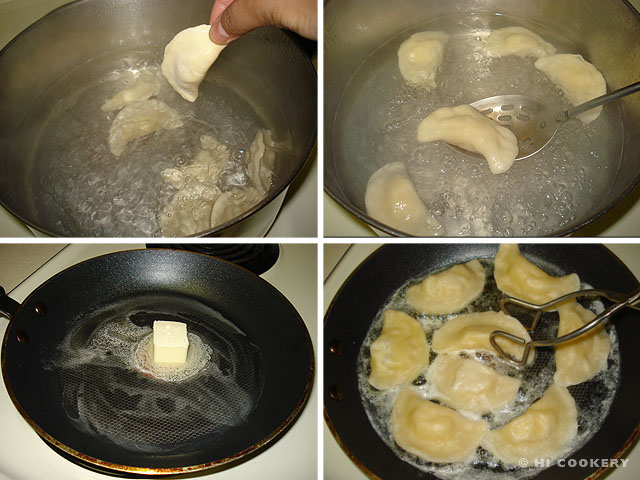
To cook the pierogis, boil them in a large pot of slightly salted water. They will float to the top when cooked. After boiling, brown both sides of the pierogi in a skillet with a little butter. Drain them on paper towels before serving. Serve the pierogis with a side of sour cream and crumbled bacon (optional). Yield: About 3 dozen pierogis.
Pierogi

Notes

  • Please enable the audio setting on your computer to listen to our Ukrainian friend, Olga W., narrate this blog recipe post. We originally wanted to embed a video instead of audio but experienced technical difficulties during production, so we reverted to our usual photo tutorials.
  • The uncooked pierogis may be saved in the freezer until they are ready for boiling.
  • Thanks to Olga W. for the “pierogi man” clay magnet from her country—it is the perfect prop for the final food photo above!
Pancit Bihon

Pancit Bihon

October 6: National Noodle Day

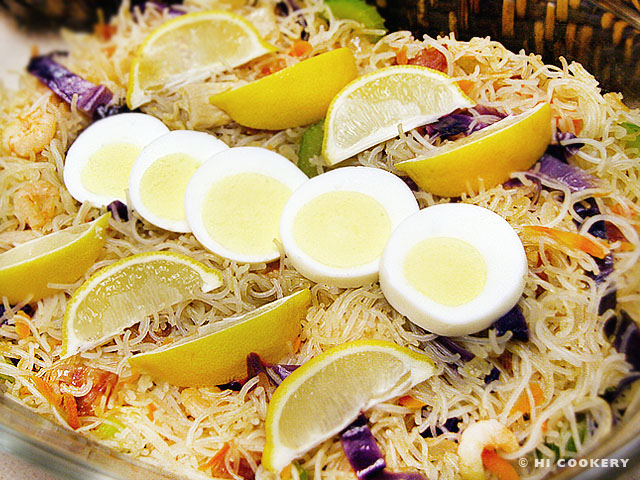
Pancit bihon is often referred to as “birthday noodles” on Chinese restaurant menus in the Philippines. This rice vermicelli dish, stir-fried with shrimp and a mix of meat and a variety of vegetables, is frequently found at Filipino fiestas, especially at birthday parties, because the noodles symbolize “long life”.  It also looks colorful like the confetti at a celebration.

Pancit is derived from the Chinese pian i sit (translated as “something conveniently cooked fast”). Bihon (rice noodles) is the Filipino term used to distinguish the type of noodles used in the recipe, such as canton (egg), palabok/luglug (thicker noodles), etc.

Islander’s parents always prepared pancit for her family’s birthdays and continue to cook it for special occasions because of its symbolism. We eat different kinds of pancit at Filipino and Chinese friends’ events in the Philippines and Hawaii as well as on the mainland. We make it at home, too, when we just crave cultural cuisine for a change.

Although it takes some time to get the ingredients ready, the process for cooking it is really fast. Prepare pancit bihon for birthdays, special occasions and National Noodle Day—and have oodles of noodles and good luck for a “long life”.

Recipe

(Inspired by Mommy and Daddy)

Ingredients 

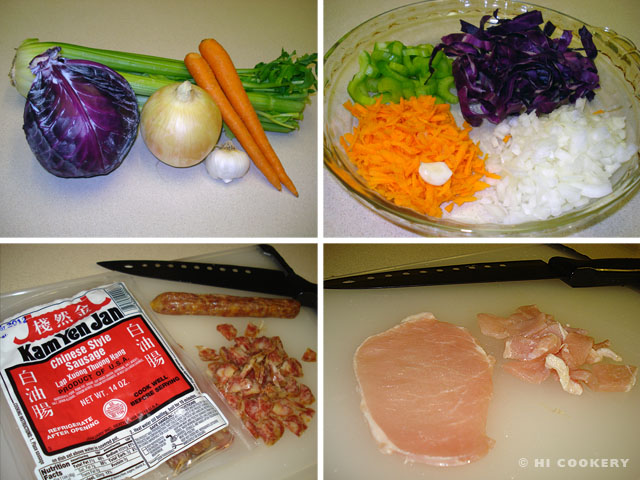
  • 1 package (8 ounces) rice noodles (vermicelli)
  • 1 clove garlic, crushed
  • 1 small onion, chopped fine
  • 1-2 medium carrots, julienne
  • 2 celery stalks, sliced thin
  • 1 red or green cabbage, shredded to 1 cup
  • ½ cup pork or chicken meat, sliced thin
  • ½ cup Chinese sausage (lap cheong), sliced
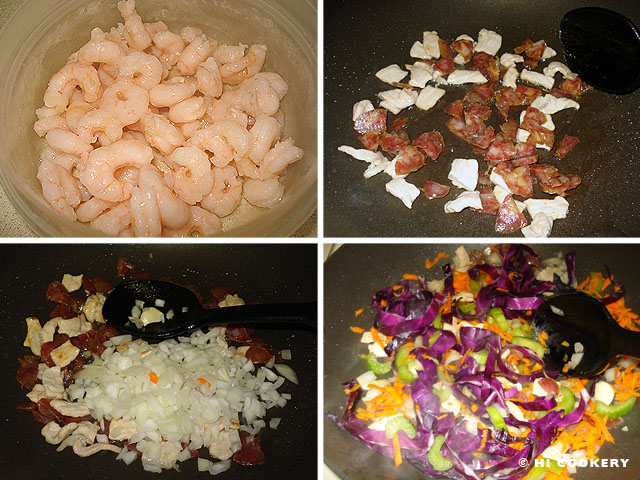
  • ½ cup shelled shrimp
  • 1 tablespoon vegetable oil
  • salt and pepper, to taste
  • 1 tablespoon oyster sauce
  • 2 tablespoons soy sauce
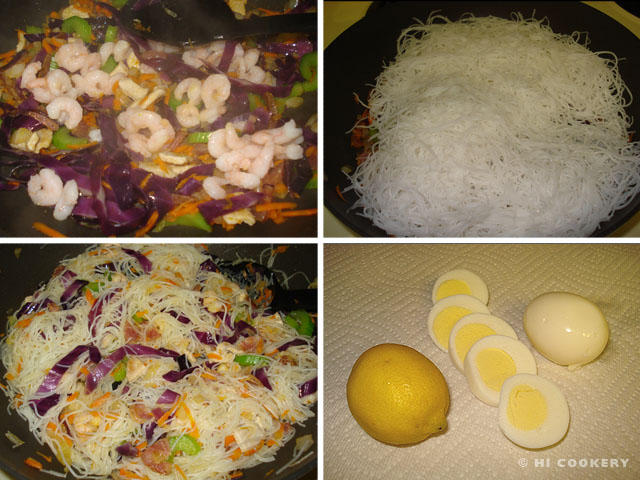
  • 1 boiled egg, sliced
  • calamansi or lemon wedges

Directions

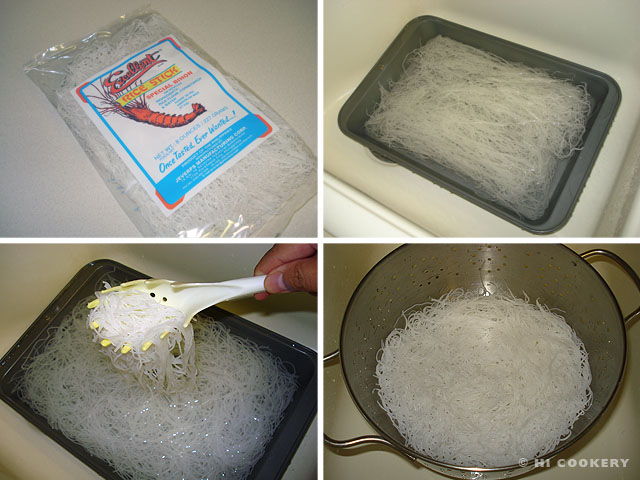
Soak the dried noodles in hot water for about an hour or until softened. Drain well.

Pancit Bihon

Prepare all the vegetables. Peel and crush the garlic clove, chop the onion, julienne or roughly grate the carrots, thinly slice the celery stalks and shred the cabbage. Also, slice the sausage and meat thinly.

Pancit Bihon

Shell the shrimps, if necessary. Heat the oil in a wok or large pot. Saute the pork or chicken meat until no longer pink. Add the sausage and cook well. Mix in the garlic and onions and stir until softened. Add the carrots, celery and cabbage and mix well.

Pancit Bihon

Stir in the shrimp. Season with salt, pepper and oyster sauce. Add the drained noodles. Gently mix until blended with the other ingredients. Stir in the soy sauce to add a little color and taste. Transfer to a serving platter and garnish with sliced boiled egg and calamansi or lemon wedges.

Pancit Bihon

Notes

  • This dish is also named pancit bihon guisado. Guisado is derived from the Spanish guisar, which means “to saute”. Filipino foods are influenced by colonial Spain and neighboring China.
  • Avoid overmixing the noodles or they will break into short pieces. Keep the strands long for the symbolism.
  • Squeeze the juices from the calamansi or lemon wedges before eating to bring out the flavor of the pancit bihon.
  • Leftover pancit, if there is any remaining, tastes great, too, because the ingredients have blended well together. As a time-saver, this dish can be made a day before the party then reheated and garnished with fresh slices of boiled egg and calamansi or lemon wedges. People enjoy taking home plates of leftover pancit after a party for another meal at home and for sharing in the “long life” lucky symbolism.

Sweet and Sour Pork

Sweet and Sour Pork

October: National Pork Month

Chinese take-out is a fast and easy meal option when life gets too busy and hectic for us to cook at home. Sometimes, we are disappointed in the sweet and sour pork we usually order because 1) there seems to be more coating covering less meat, 2) the sauce is a super-saturated and unnaturally fluorescent red color and 3) the vegetables tend to have lost their crispness and fresh flavors. Homemade sweet and sour pork is tastier yet a tad time-consuming. But it is worth the effort when “going gourmet instead of take-away.” Try cooking this classic Chinese recipe when time allows and when observing National Pork Month.

Recipe

(Adapted from “Taste of Hawaii” by The Honolulu Advertiser)

For the marinade

  • ½ pound pork shoulder or butt, cut into 1-inch cubes
  • ¼ teaspoon sugar
  • ¼ teaspoon sesame oil
  • ¼ teaspoon salt
  • 2 teaspoons sherry
  • 1 teaspoon oyster sauce
  • 1 teaspoon soy sauce
  • 1 egg
  • dash pepper

Directions

Cut the pork into 1-inch cubes. Make the marinade by combining in a large bowl the sugar, sesame oil, salt, sherry, oyster sauce, soy sauce, egg and pepper. Soak the pork for at least an hour. Reserve the marinade to mix with the batter.

Sweet and Sour Pork

For the batter

  • 1 egg
  • ½ cup cornstarch
  • 1 teaspoon water

Directions

Remove the pork from the marinade. In the marinade bowl, add the egg, cornstarch and water. Mix well and return the pork to the marinade. Deep fry in hot oil until the pork pieces are cooked through and the batter becomes golden brown. Drain on paper towels and keep warm.

Sweet and Sour Pork

For the sweet and sour sauce

(Adapted from Chinese Cooking by Drake Publishers Inc.)

  • ½ cup sugar
  • ½ cup vinegar (we use cane sugar vinegar)
  • 2 tablespoons soy sauce
  • 2 tablespoons sherry
  • 3 tablespoons ketchup
  • 2 tablespoons constarch
  • ½ cup water or pineapple juice, drained from the can
  • 1 teaspoon oil
  • 1 clove garlic, crushed
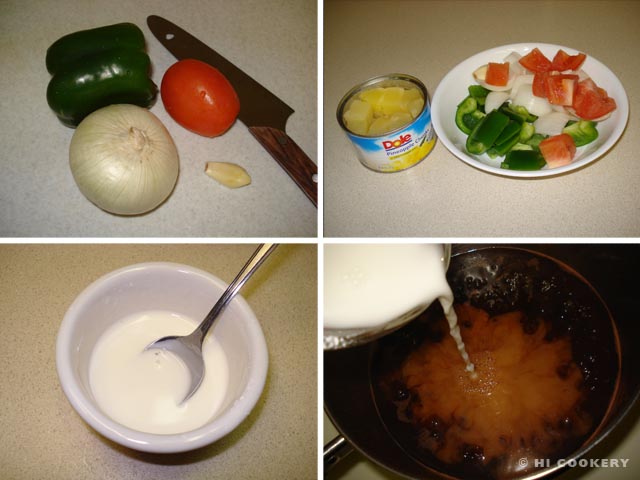
  • 1 bell pepper, cut into 1-inch pieces
  • 1 small onion, quartered
  • 1 large tomato, cut into 1-inch pieces
  • 1 (8 ounce) can of pineapple chunks, drained (reserved)

Directions

Prepare the vegetables. Set aside with the drained pineapple chunks. Bring to a boil over the stove top the sugar, vinegar, soy sauce, sherry and ketchup. Reduce the heat to simmer. In a cup, mix the cornstarch with the water or pineapple juice to make a smooth paste. Stir into the sauce until thickened. Remove from heat.

Sweet and Sour Pork

In a separate skillet, heat the oil. Saute the garlic, then gently mix in the bell peppers onions, tomatoes and pineapple for 3-4 minutes. Do not overcook to retain the freshness of the vegetables. Discard the garlic. Add the vegetable and pineapples to the sauce until everything is well coated. Arrange the fried pork pieces on a platter. Pour the sauce mixture over them. Serve hot with steamed white rice or noodles.

Sweet and Sour Pork

Notes

  • Thanks to Sister Durie K. for giving us her “antique” cookbooks, “Taste of Hawaii” (1985), compiled by Mary Cooke, former food editor at The Honolulu Advertiser, and “Chinese Cooking” (1973), published by Drake Publishers Inc.
  • Plan ahead for each step in this recipe. Marinate the pork early in the cooking process. The sauce can be made beforehand and reheated before adding the fresh vegetables and pineapples to save time.


« Previous PageNext Page »