Ube Bibingka

(Filipino Purple Yam Sweet Sticky Rice Cake)

January 1: New Year’s Day

Islander’s Auntie Laarni C., who once had a small catering business in Hawaii, would sometimes drop by our house to wish us a Happy New Year in person. Fortunately for the family, she would also bring her signature pancit palabok (noodles are a lucky new year food as they represent long life), lumpia (egg rolls or spring rolls in the winter months mean hope for the coming spring season) and bibingka (sweet sticky rice cakes are also auspicious, symbolizing luck “sticking” around in the new year). 

One year, she showed up with ube bibingka instead of the usual butter mochi cake. Auntie Laarni’s favorite color is purple—and Filipino purple yam yields a vibrant hue in the batter of this dessert. Now that she has grandkids, she no longer caters or cooks as much. So HI Cookery is continuing her tradition of making bibingka (sometimes with ube flavoring) for the new year. Happy New Year! Manigong Bagong Taon!

Recipe

(From Auntie Laarni C.)

Ingredients

  • 4 eggs
  • 2 cups milk
  • 1 can (13.5 ounces) coconut milk
  • 1 teaspoon vanilla
  • 2 teaspoons ube flavoring or extract
  • 1 box (16 ounces) sweet rice flour (mochiko)
  • 2 teaspoons baking powder
  • ½ teaspoon salt
  • 1 ½ cups sugar, granulated white
  • ½ cup unsalted butter, melted

Directions

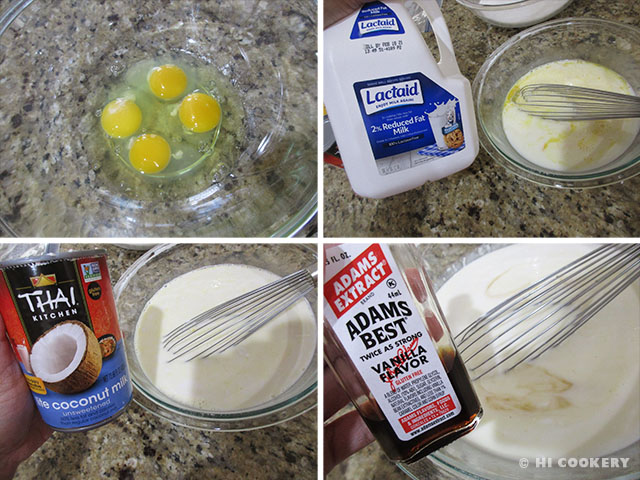
In a medium bowl, stir together the eggs, milk, coconut milk and vanilla. 

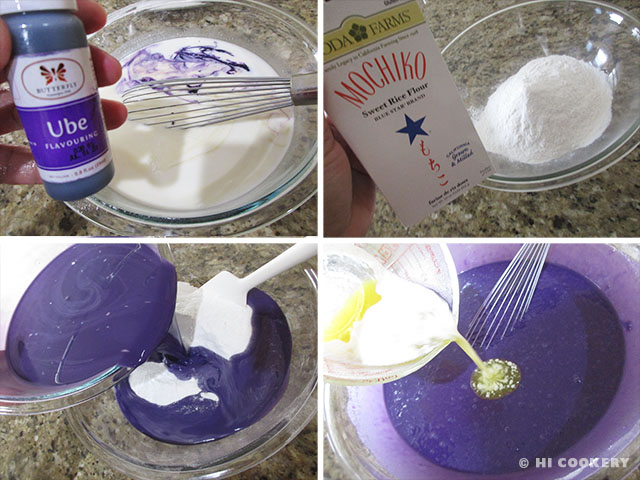
Add the flavoring/extract. In a large bowl, combine the mochiko, baking powder, salt and sugar. Pour the egg mixture into the flour mixture. Stir well until it is evenly bright purple. Add the melted butter. Mix well.

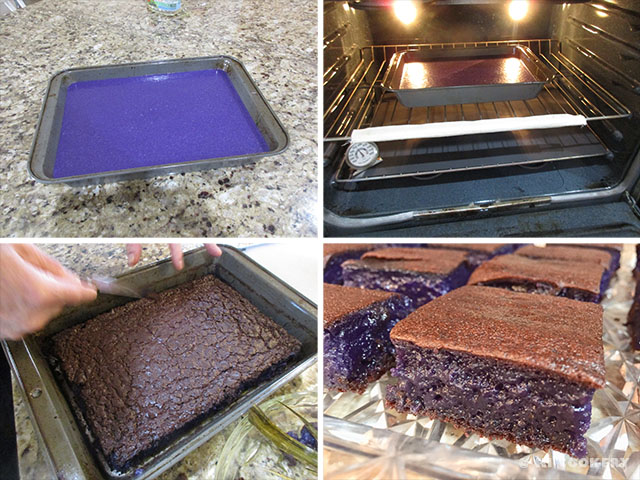
Pour into a 9×13 baking pan lined with parchment paper or oiled banana leaf. Bake in a preheated oven at 350 degrees F for 50-60 minutes or when the top is browned. Remove from the oven and let cool completely. Invert onto a cutting board. Peel off the parchment paper or banana leaf. Slice into squares and serve.

Notes

  • We sometimes line our baking pan with a clean banana leaf to give it a distinct flavor (Auntie L does this with her other Filipino baked goods).
  • Ube bibingka is similar to our baked poi mochi. Though both are made from root vegetables, ube is purple yam and poi is from taro. 
  • Search our blog for other New Year’s foods by clicking on the Theme Menus tab.

It’s a Wonderful Life Cocktail

December 25: Christmas

All throughout the month, Christmas movies have been playing on TV. One classic that we watch is “It’s a Wonderful Life” (1947). Read the synopsis from the Turner Classic Movie channel

Instead of the usual hot cocoa or spiked eggnog, we tried a drink named like the movie since we already had the ingredients on hand in our little pantry. Now whenever the movie comes on and we can finally sit and relax after the hustle and bustle of the holiday season, we can sip on a new classic cocktail. Merry Christmas and cheers to a wonderful life for all!

Recipe

(Adapted from Parade.com)

Ingredients

  • Ice cubes
  • 1 ½ ounces (3 tablespoons) Irish crème liqueur 
  • 3 ounces (6 tablespoons) crème de menthe (see Notes)
  • Ground cinnamon
  • Cinnamon stick or fresh mint leaves (optional garnishes)

Directions

In an old-fashioned glass, fill halfway with ice. Set aside. In a shaker, add a couple of ice cubes. Pour in the Irish crème liqueur and crème de menthe.

Shake vigorously then pour into the glass. Sprinkle some cinnamon on top. Garnish with a cinnamon stick or fresh mint leaves (optional). Serve immediately.

Notes

  • The original recipe used green crème de menthe, which is a festive color for the season. However, we just had clear crème de menthe. When mixed with the Irish crème liqueur, it looked like a sweet, snowy slushy—also appropriate for the winter season.
  • Search our blog for more Christmas recipes.

Rindsgulasch (Austrian Beef Stew)

December 13: National Beef Stew Day

At our library culinary club meetings, members were able to bring food to share and we enjoyed a variety of dishes that we could see and taste. But the pandemic forced everyone to show-and-tell (and not taste) on Zoom from home. When in-person meetings resumed, the library staff did not allow potluck items anymore. So members now have to bring photos of our food. 

Well, at the “soups and stews” theme meeting, someone made goulash (and unfortunately it looked ghoulish in the picture). Although it appeared unappetizing, we are sure it tasted fine—not everyone, including us, is a professional photographer. We use a small old digital camera to take pictures of the process of cooking and then our camera phone to snap the final food photo. Our backgrounds are table linens, bed sheets, scrapbook paper and even clothes (the burgundy background above is actually an apron)! Just photograph the food in natural light, get close up to show details of the dish, accessorize with utensils/napkins/garnishes and have a simple background. Our camera phone is able to do minor edits to the photo to make the colors a little brighter. Since that “soups and stews” theme meeting, members have been trying to improve their food presentation as well. We are all a work in progress!

Here is an Austrian beef stew recipe, rindsgulasch, that we—neither professional chefs nor photographers—made for National Beef Stew Day. We hope culinary club members and our blog readers think it looks as good as it tastes. 

Recipe
(Adapted from Chef Franco Lania)

Ingredients

  • 2 pounds beef stew meat, cut into bite-sized pieces
  • 2-3 tablespoons olive oil
  • 1 large onion, roughly chopped 
  • 4 garlic cloves, minced
  • 4 tablespoons sweet paprika
  • 2 tablespoons tomato puree (see Notes)
  • 5 cups beef stock
  • 3 tablespoons red wine vinegar
  • 1-2 teaspoons ground caraway seeds (see Notes)
  • 1 teaspoon marjoram
  • Salt and pepper to taste
  • 1 bay leaf

Directions

Rinse beef and pat dry with paper towels. Season with salt and pepper to taste. Heat Dutch oven with oil to medium high. Brown the beef and set aside to a plate. To the same pot, saute the onions and garlic, scraping up any bits from the bottom.

Mix in the paprika. Pour in the beef stock, red wine vinegar and tomato puree. Add the reserved beef and its juices. Stir well. Bring to a boil then reduce heat to simmer.

Add the caraway seeds, marjoram, salt and pepper to taste and bay leaf. Remove from the stove. Cover the pot and cook in preheated oven at 350 degrees F for an hour or until beef is tender. Discard bay leaf. Ladle into bowls. Serve hot with slices of crusty bread.

Notes

  • We cut up and put a small Roma tomato in our Nutribullet/blender and pureed it for this recipe.
  • Caraway seeds give this Austrian dish its unique flavor. The original recipe uses ground caraway seeds. We used them whole.
  • Search our blog for other beef stew recipes.