Mini Meat (Forfar) Bridies

Meat Bridies April 8: National Empanada Day

Twa bridies, a plen ane an an ingin ane an a.

(Two meat pasties, a plain one and an onion one as well.)

~Scots Dundee Dialect

We have blogged before about empanadas, pierogis, turnovers and dumplings from different cultures. This particular post focuses on the Scottish savory version—a meat bridie.

We usually snack on meat bridies at the Scottish festivals that we attend across North America. Those portable pies are convenient and filling while roaming around the fairgrounds. Though they look like a casual cuisine, meat bridies are also served at weddings, as they are appropriately named for the “bride” (a word possibly derived from the Celtic Saint Brigid). Moreover, its horseshoe shape is considered lucky—especially if it is in the up or U position—and is symbolic of the woman’s womb (bridal fertility).

We also make and serve mini meat bridies to the brides and grooms we sponsor from our church during marriage preparation meetings with them. They appreciate the trivia of this traditional treat associated with the Scottish snack from Highlander’s heritage.

Make some mini meat bridies for bridal showers, teatime, picnics and National Empanada Day.

Recipe

(Adapted from Chef James Martin/BBC)

Ingredients

  • 2 tablespoons olive oil
  • 1 small onion, finely chopped
  • 3 sprigs fresh thyme leaves, finely chopped
  • 12 ounces lean ground beef
  • 1 teaspoon mustard powder
  • 3 tablespoon beef stock
  • salt and pepper to taste
  • 2-3 packages frozen puff pastry, thawed (we used Pepperidge Farms brand)
  • 1 egg, beaten

 Directions

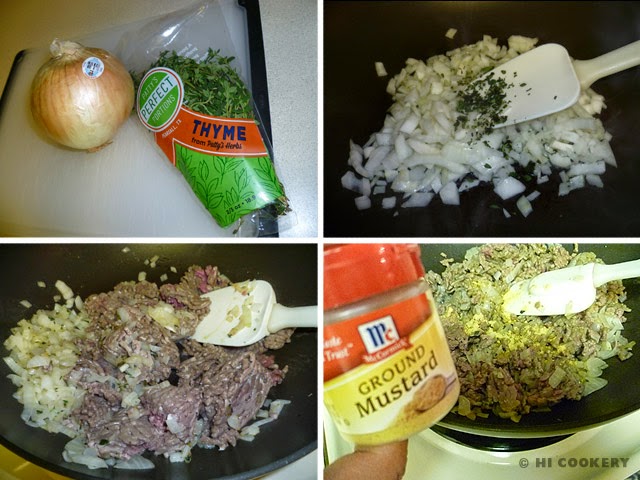
In a skillet, heat the oil and brown the onions with thyme leaves for about 2-3 minutes or until the onions are soft and golden. Add the ground beef and cook until no longer pink. Mix in the mustard powder.
Meat Bridies

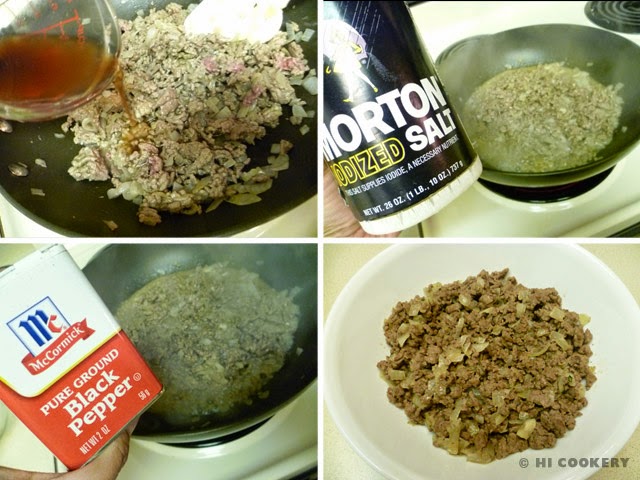
Stir in the beef stock and cook until the liquid is absorbed. Salt and pepper to taste. Remove from the stovetop, drain any grease and allow the mixture to cool.
Meat Bridies

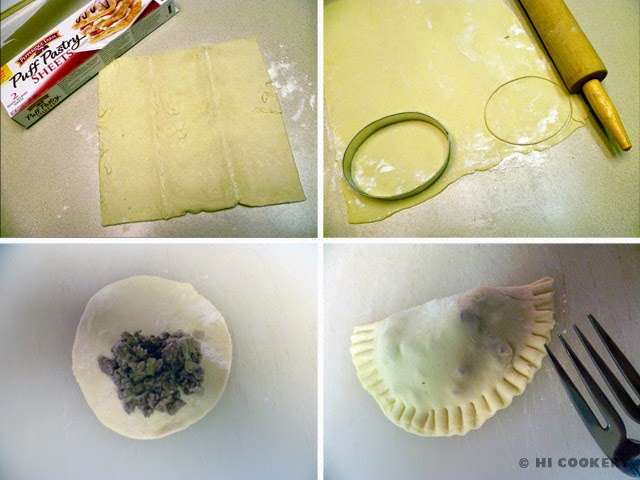
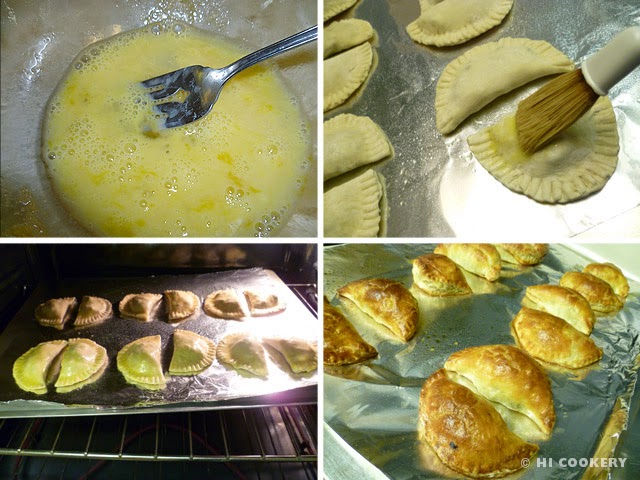
On a clean, lightly floured surface, unroll the thawed puff pastry sheets. Flatten to 1/4-inch to smoothen out the seam of the folds. Cut into 3-inch rounds. Flatten into a horseshoe shape (optional). In the middle of the pastry, place a spoonful of filling. Moisten the edges with a little water. Fold over and press the edges together. Use the tines of a fork to crimp and seal.
Meat Bridies

Place on a lightly greased baking sheet, leaving a few inches apart to allow the pastry to puff up and expand in the oven. Continue making the rest of the mini meat bridies. Beat the egg(s). Brush the tops of each meat bridie with the egg wash. Bake in a preheated oven at 350 degrees F for 20-30 minutes, or until they are golden brown. Carefully remove from the oven. Place on a platter and serve hot.
Meat Bridies  

Notes

  • Similar to the meat-and-potato-filled Cornish pasties, Forfar bridies are traditionally made with minced steak, with or without onions, encased in a shortcrust pastry, although flaky (puff) pastry is preferred nowadays. The original recipe uses raw meat before filling the dough, but we sauté our ground beef in seasonings to make sure the filling is cooked through, which saves baking time and prevents the pastry from overbrowning.
  • Some bakers mark the bridies with a hole before baking to indicate the filling—one hole for plain (meat only) and two holes for meat-and-onions; hence, the Scots Dundee dialect statement above.
  • Unbaked meat bridies may be frozen first, then baked at a later time.
  • The origins of meat bridies are uncertain. But one account is that they originated in Forfarshire (now Angus County) and are called Forfar bridies. Another story is that they were named after Margaret Bridie, also from Forfarshire (then Glamis, Scotland), who sold them at the Buttermarket in the 1850s.
  • J.M. Barrie, author of “Peter Pan”, mentioned Forfar bridies in “Sentimental Tommy”. He was born in Kirriemuir near Forfarshire.
Celery Soup

celery soup

March: National Celery Month

March 31: National Celery Day

The month of March is associated with the color green since the Emerald Isle’s patron saint, Patrick of Ireland, is honored on March 17.

This reminds us of when Islander used to work in retail at a bridal shop. She had to put tags on the new shipment of bridesmaids’ gowns in the trendiest colors of the time: aubergine and celadon. What exactly were those hues? Aubergine is French for eggplant and sounded more chic for a deep purple. So she figured that celadon meant celery since the color was close to that of the vegetable, too. Wrong. Celadon is a shade of green commonly used in Asian pottery. But Islander will remember the word association for celadon and celery.

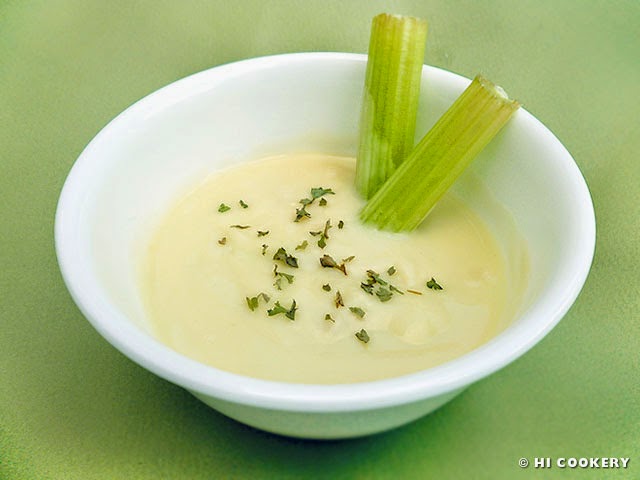
That brings us to a celery soup recipe, which barely even cooks to the color of celadon! Even with the help of leeks as an ingredient, the white sour cream dilutes the whole green color of this dish. Although the color was disappointing, the soup was delicious.

Get some green gourmet going on and cook some celery soup during the month of March, National Celery Month, especially on the last day, March 31, National Celery Day.

Recipe

(Adapted from Food and Wine)

Ingredients

  • 4 tablespoons unsalted butter
  • 3 leeks, thinly sliced
  • 2 onions, chopped
  • 3 garlic cloves, thinly sliced
  • salt and pepper, to taste
  • 12 celery ribs, thinly sliced
  • 6-8 cups of water
  • ½ cup sour cream

Directions

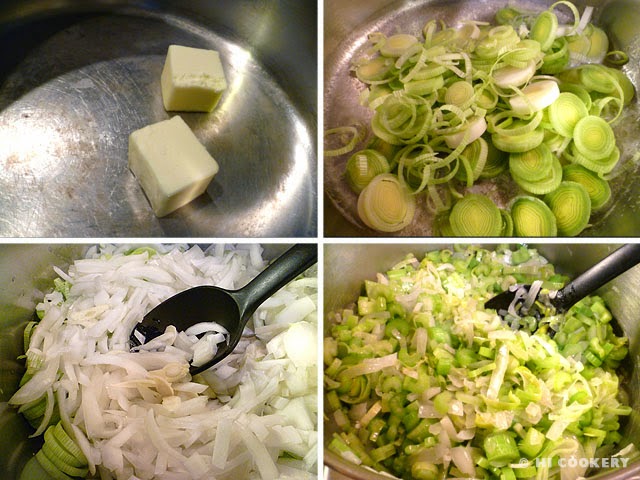
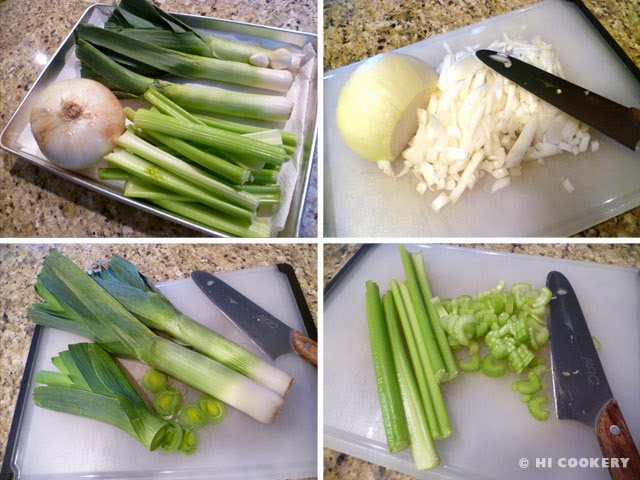
Prepare the vegetables by chopping and slicing the leeks, onions, garlic and celery.

celery soup

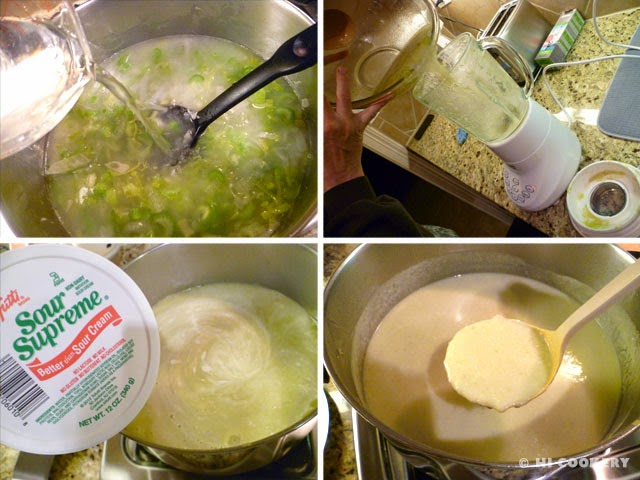
In a large pot, slowly melt 4 tablespoons of butter. Add the leeks, onions and garlic. Season to taste with salt and pepper. Cook over medium heat until softened but not browned (about 10 minutes). Add the celery and sauté until softened (about 3 minutes). Add 6-8 cups of water. Bring to a boil, then lower the heat to simmer for about 40 minutes. Stir occasionally.

celery soup

Transfer the soup in batches to a blender. Puree until smooth. Return the puree to the pot and heat through. Stir in the sour cream and adjust the seasonings. Ladle into soup bowls. Serve hot with garnishes of celery sticks and sprinkles of parsley flakes.

celery soup

Notes 

  • At her oft-mentioned friend Lisa L.’s wedding in Germany, as the maid of honor Islander wore a light green gown. Although there are subtle differences in the hue’s shade, this particular dress manufacturer labeled it in a more understandable color instead of celadon: sage.
  • We like our celery soup thicker so only added 6 instead of 8 cups of water. Add more water to make a thinner soup.


Sfinge di San Giuseppe

(Cream Puffs of St. Joseph)

Sfinge di San Giuseppe

March 19: Feast Day of St. Joseph

In our nearly 19 years of marriage (since 1996), we have moved five times (excluding the time we lived apart for a year when Islander took a temporary job back home in Hawaii while Highlander stayed in New Jersey for his job). We are aware of the legend of the St. Joseph statue to sell a house—and we do have such a statue. But we have not followed tradition by burying it upside down in the front lawn when we put our homes on the market. We just relied on God for His timing and His care whenever we moved.

St. Joseph is known as the patron saint of real estate and home sales. The earthly father of the Jesus was a good role model to the Christ Child, providing a happy and stable home life to Jesus and his wife Mary. We admire the virtues of St. Joseph and are honoring him on his feast day by making an Italian-style cream puff called Sfinge di San Giuseppe.

Recipe

(Adapted from Recipe Goldmine)

For the filling

  • 2 cups ricotta cheese
  • ½ cup powdered sugar
  • ¼ teaspoon cinnamon
  • ½ teaspoon vanilla
  • 1/3 cup chocolate, grated (we used mini chocolate chips)
  • 2 tablespoons pistachios, finely chopped

Directions

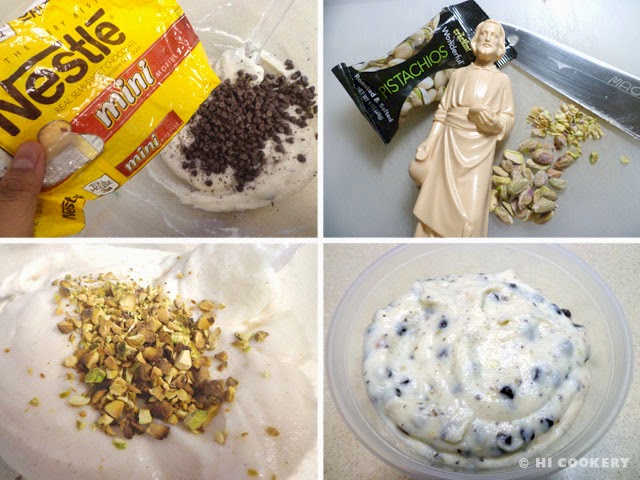
In a bowl, cream the ricotta cheese with the powdered sugar and cinnamon. Stir in the vanilla.

Sfinge di San Giuseppe

Mix in the grated chocolate or mini chocolate chips and chopped pistachios. Cover and chill to thicken.

Sfinge de San Giuseppe

For the cream puffs

  • 1 cup water
  • 1/3 cup butter, unsalted
  • 1 tablespoon sugar
  • zest of 1 lemon
  • pinch of salt
  • 1 cup flour, sifted
  • 4 eggs, room temperature
  • 1 tablespoon vanilla

Directions

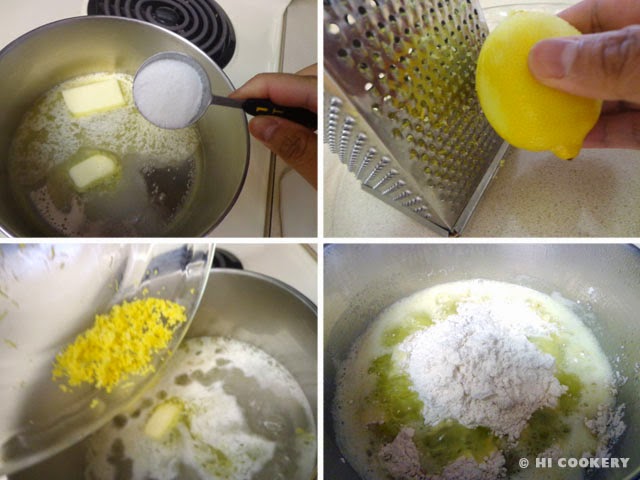
In a large pot, boil the water with the butter, sugar, lemon zest and salt. When the butter is melted, remove from heat. Add the flour and quickly stir until the mixture forms a ball and pulls away from the sides of the pot.

Sfinge de San Giuseppe

Return to the stovetop on medium heat and beat in the eggs one at a time until well blended. Stir in the vanilla. Remove from heat and let the dough rest in the covered pot for 15 minutes. Line a baking sheet with buttered parchment paper. Scoop a tablespoon of the dough onto the baking sheet about two inches apart. Bake in a preheated oven at 400 degrees F for 20-25 minutes or until golden brown. Remove from the oven and let cool.

Sfinge de San Giuseppe

For the topping

  • Powdered sugar
  • Maraschino cherries, drained

Directions

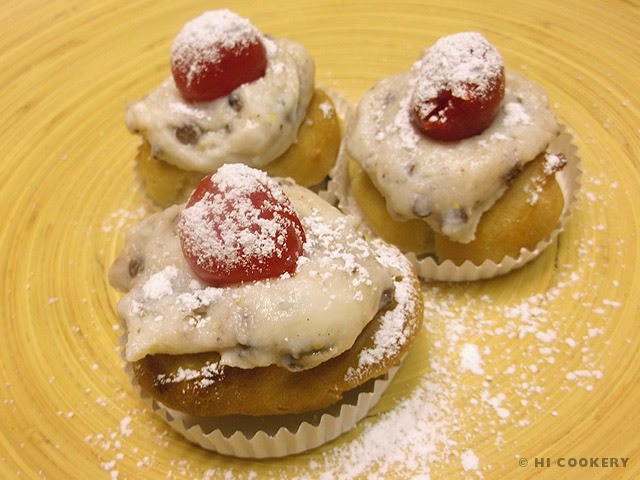
When ready to serve, slice each puff and sandwich the filling between it. Or spoon the filling over the top of each puff. Arrange on a platter and sprinkle powdered sugar over the puffs and top each with a maraschino cherry. Serve immediately so the puffs do not get soggy.

Sfinge de San Giuseppe

Notes

  • Various versions of the St. Joseph cream puff recipe are called sfinge/sfingi and zeppole/zeppola. Some deep fry the pastry balls/fritters, some are star-piped into circles, some are drizzled with chocolate and some have a custard-like cream filling piped inside.
  • Joseph has another feast day on May 1, which honors him as the patron saint of labor workers.