Fa’apapa

(Samoan Coconut Bread)

November 17: National Homemade Bread Day

Islander was just in elementary school when her cousin Roxanne got engaged to Billy T. He is of Samoan-German descent and was a baseball player in Hawaii. As a little girl, Islander enjoyed all the engagement festivities leading up to the wedding, with many opportunities for the ‘ohana (family) to gather and prepare for the upcoming nuptials. Food was always featured at the get-togethers and it was one of the first times Islander got to eat Samoan and Polynesian cuisine (not just at the luau). Coconut bread was commonly served, as it was an affordable and easy side staple to make. It was also a favorite among the keiki (children) because of its simple sweetness.  

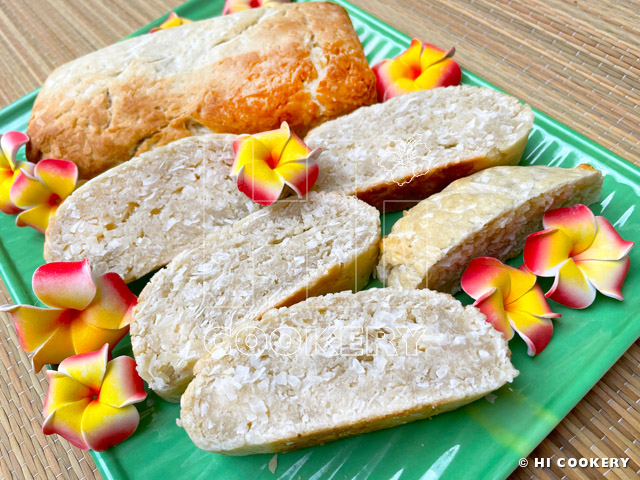
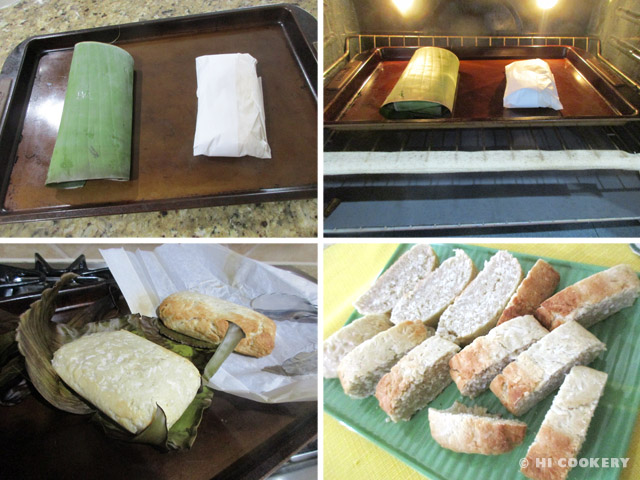
It has been decades since Islander ate Samoan food. So National Homemade Bread Day was a good excuse to make fa’apapa that she remembered nibbling on as a kid. We made it with fresh banana leaves. But it can also be made with the more readily available baking/parchment paper. La manuia le tausamiga.

Recipe

(Adapted from TheCoconet.TV)

Ingredients

  • 2 cups flour, all purpose
  • 1/3 cup sugar, granulated white
  • 1 1/3 cup unsweetened coconut flakes
  • ¾ cup canned coconut milk
  • Butter 

Directions

Preheat the oven to 400 degrees F. In a large mixing bowl, combine the flour, sugar and unsweetened coconut flakes. Stir in the coconut milk. Mix well until a sticky dough is formed.

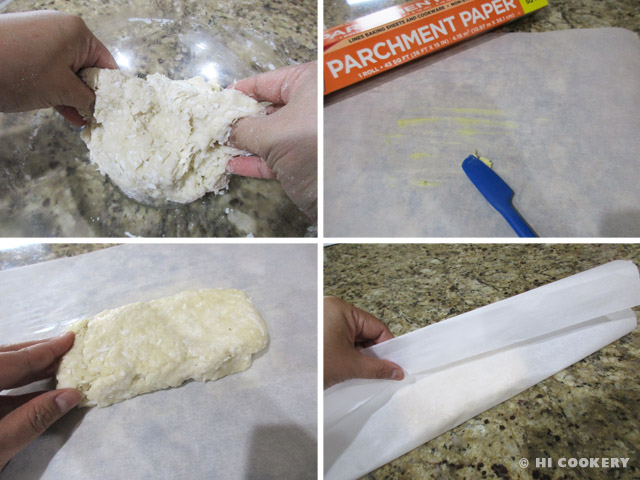
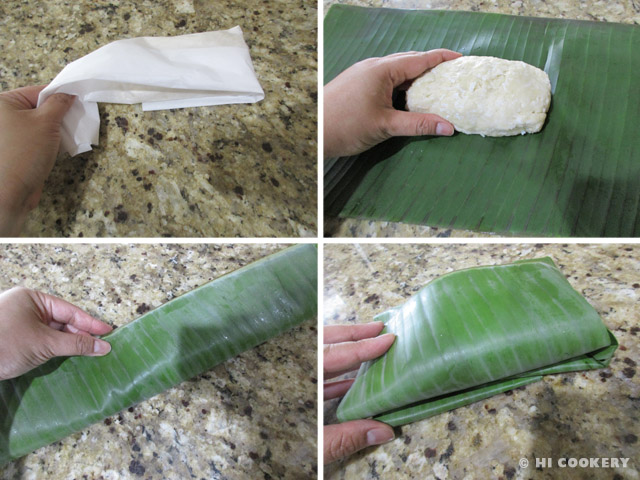
Separate the dough into two halves. Generously butter one side of a sheet of parchment paper that is large enough to wrap the dough. Place the dough in the middle of the parchment paper. Shape into a loaf about an inch thick and 2 ½ inches wide. Fold down the top of the paper loosely to cover the dough and tuck the sides underneath. Repeat for the other dough. Alternatively, butter a portion of a clean banana leaf and wrap around the dough.

Place both wrapped loaves on a baking sheet. Bake for 40-45 minutes. Remove from the oven and let cool in the parchment paper to keep the inside of the bread moist. If using banana leaves, unwrap carefully and put the loaf back in the oven to brown for another 5-10 minutes. Slice the loaves and serve with extra butter.

Notes

  • Samoan coconut bread is traditionally wrapped in banana or taro leaves and steamed in an umu, an above-ground oven heated with hot volcanic rocks.
  • We preferred the slight tropical taste from the banana leaf wrapper.
  • Store leftover bread slices in an airtight container. Reheat in a toaster for a little coconut-crunch.
  • Search our blog for other bread recipes.

Corn and Rice Bread

November 17: National Homemade Bread Day

Cornbread is a staple in the south and southwest of the United States. We have eaten and baked different variations of cornbread since we have lived in Oklahoma and Texas. But as we “cook our way through the calendar/countries,” we wanted to try a cornbread recipe from Angola. This one has rice in the mixture, which is a good way to use up any leftover grains, but it bakes up subtly in this cornbread. Instead of American-style cornbread, change it up on National Homemade Bread Day and make African-inspired corn and rice bread from Angola. 

Recipe
(Adapted from Edible U.N.)

Ingredients

  • 3 ½ cups ground white cornmeal
  • 1 tablespoon baking powder
  • 1 teaspoon salt
  • 3 eggs
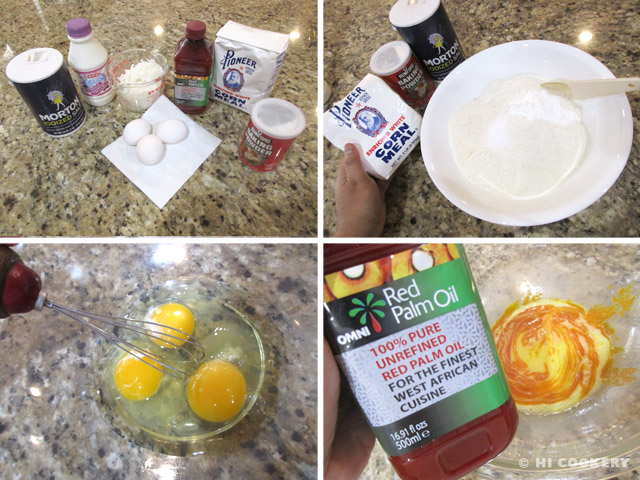
  • 2 tablespoons red palm oil
  • ½ cups milk
  • 1 cup cooked rice

Directions

In a bowl, sift together the cornmeal, baking powder and salt. Set aside. In a larger bowl, beat the eggs with the red palm oil.

Stir in the milk and rice. To this mixture, add the dry ingredients. Mix well until mushy but moist.

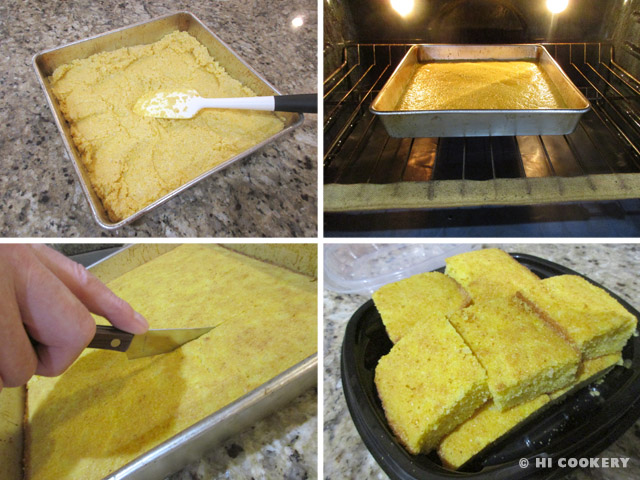
Spread the mixture into a well-greased baking pan (we used 10×10 inches but a 9×13-inch pan works well, too). Bake in a preheated oven at 375 degrees F for 30 minutes, testing for doneness. Remove from the oven. Cool then cut into squares. 

Notes

  • Serve this corn and rice bread with Angola chicken stew, muamba de galinha, as it is especially good for sopping up the bright broth. We bought red palm oil for our African cooking so this recipe also makes use of it.
  • Search our blog for other homemade bread recipes.

Perok (Armenian Apricot Jam Cake)

October 14: National Dessert Day 

A culinary club friend told us about an Armenian apricot jam cake recipe that was circulating on the Internet during the height of the pandemic. Well, our humble blog just did not catch on the food trend right away. We eventually tried a different recipe and finally posted it here for National Dessert Day. We liked the apricot jam flavor over the crusty cake, and the cute criss-cross topping made this a unique looking dessert. It is never too late to try a food trend, especially if it is delicious and appropriate on National Dessert Day.

Recipe
(Adapted from Aashpazi.com)

Ingredients

  • 4 eggs, divided use
  • 1 cup sugar, granulated white
  • 1 cup (2 sticks) butter, softened
  • 5 ¼ cups flour, all purpose
  • ¼ – ½ teaspoon cardamom powder
  • 1 cup apricot jam or marmalade

Directions

Beat three eggs until frothy. Mix in the sugar and continue beating until pale. Add the softened butter and mix until smooth. Gradually add the flour and cardamom powder.

Mix until a sticky dough forms. Transfer to a clean, lightly floured surface and gently knead into a ball. Roll out into an oblong shape and divide into three parts. Press one part into a lightly floured baking pan (10×10 inches or 9×13 inches).

Stir the apricot jam or marmalade until smooth and spread it over the crust. Set aside. Use the second part of the dough and roll into long strips. Place them over the jam/marmalade in a diagonal direction.

Use the last and third part of the dough and roll into long strips. Place them over the other diagonal strips to make a criss-cross pattern on top of the cake. Beat the last egg and brush over the strips. Bake in a preheated oven at 350 degrees F for 40 minutes or until the top is golden brown. Remove from the oven and cool to room temperature. Slice into squares. Serve.

Notes