Posca

(Roman Beverage)

March 15: Ides of March

Highlander’s Mum is nearly 90 as of this blog post date. Her elixir for longevity is apple cider vinegar. She drinks that stuff to stay healthy and feel youthful. We tried to drink it daily like her but it is a strong taste that we just did not personally acquire. This ancient Roman beverage called posca is less harsh, with its simple yet healthy 3-ingredient mix—water, honey and red wine vinegar—which we made to mark the Ides of March.

Thanks to her vinegar drink (plus prayer, good genes and healthy habits), Highlander’s Mum is considered lucky with longevity. The Roman general and politician Julius Caesar was not so fortunate as his fate was being stabbed to death in 44 B.C. In high school literature class, we read about him in the classic Shakespeare tragedy (for those who forgot or do not know the story, do a simple search online for short summaries).

Try posca on the Ides of March. But beware of its briny-sweet mix taste.

Recipe
(Adapted from The Hamilton Spectator)

Ingredients

  • 1 cup water, room temperature
  • 1 tablespoon honey
  • 1 tablespoon red wine vinegar

Directions

In a measuring cup, pour water. Stir in honey until dissolved. Stir in the red wine vinegar. Pour into glasses. Serve. 

Notes

  • Honey is harder to dissolve in colder water (ancient Romans did not have refrigerators or ice so we guess that they drank posca at room temperature).
  • Try other Roman recipes in our blog, such as saltimbocca alla Romana (veal Roman-style) and in ovis opalis (Roman boiled eggs).

Borscht

March 2, 2022: Ash Wednesday (Worldwide Day of Prayer and Fasting for Ukraine)

This post is dedicated to our friend Olga W. whose family is fighting for survival in Ukraine. Olga was Islander’s classmate when we lived in Illinois. We join others around the world in praying for peace in her country. We also pray for the Russians who do not support their government’s war with their neighbor; sometimes hatred is misplaced on the people because of their political leaders’ actions.

Borscht, which is believed to have originated in Ukraine (see Notes), is a vibrantly colored vegetable soup made with beets, cabbages, carrots, onions and potatoes. It was a dish that Olga would cook when Islander came to visit and stay with her in Indiana during spring break, which often fell on Lent Fridays. This budget-friendly soup is suitable as a meatless meal on Ash Wednesday as well. As the season of Lent begins, cook borscht as a sign of solidarity and support for Ukrainians and continue to pray for peace around the world.

Recipe

Inspired by Olga W.

Ingredients

  • 1 tablespoon vegetable oil
  • 1 cup shallots, chopped finely (may substitute for onion)
  • 2 large red beets, peeled and grated
  • ½ head of green cabbage, sliced finely
  • 2-3 carrots, peeled and grated
  • 2 large potatoes, peeled and cut into cubes
  • Salt and pepper to taste
  • 6-7 cups water
  • Sour cream 
  • Dill, chopped (optional garnish)

Directions

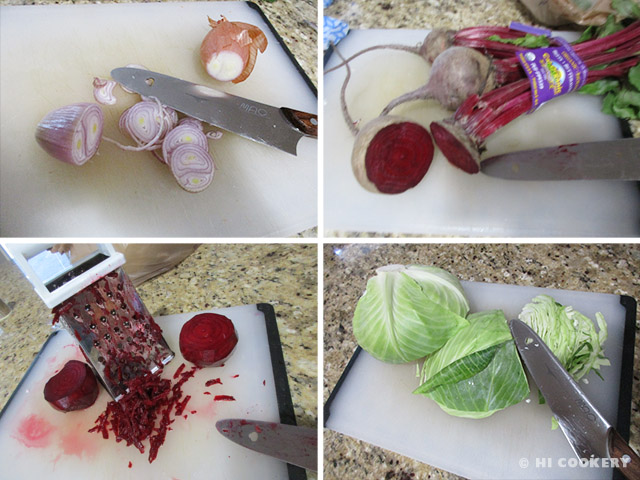
Chop the shallots, grate the beets and slice the cabbage.

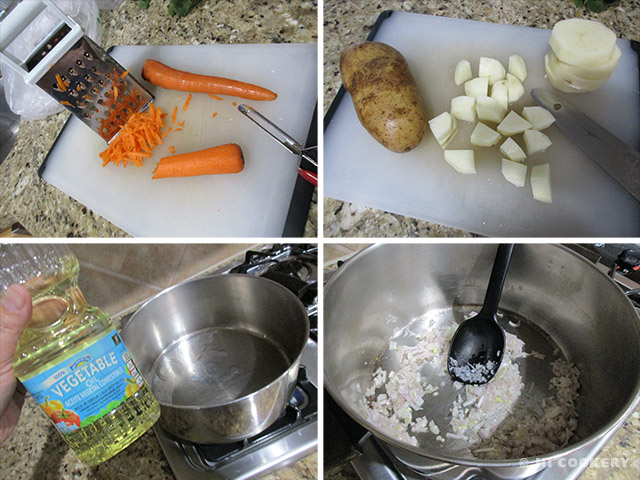
Grate the carrots and cube the potatoes. Heat the oil in a large pot over medium high heat. Sautee the shallots until softened, around 5 minutes, being careful not to burn the bottom of the pot.

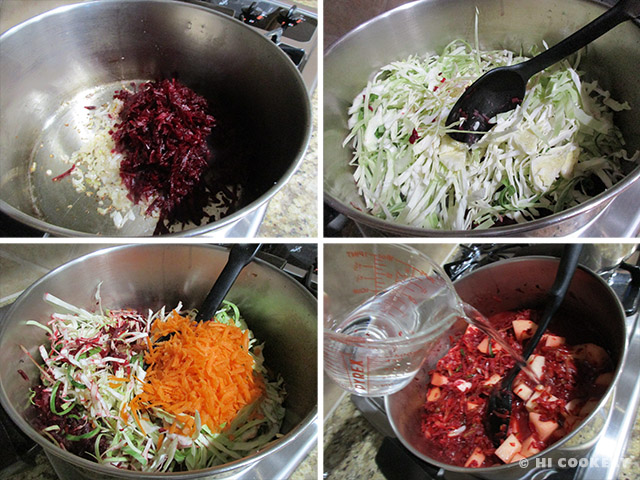
Stir in the beets, cabbage and carrots. Season with salt and pepper. Cook until the vegetables are softened, around 15 minutes. Stir in the potatoes. Season again with salt and pepper. Pour in the water, bring to a boil, stir then simmer over low heat for 30 minutes. Ladle into soup bowls and serve hot with a dollop of sour cream and dill.

Notes

Roasted Turkey Tails

November: Thanksgiving

What foods may be frowned upon in one culture may be a favorite in another! Such is the case of roasted turkey tails. The fatty butts of the big birds were once considered an undesirable part for most Americans who discarded it on Thanksgiving. Not wanting to waste the tails, turkey food companies shipped the “pope’s nose” (also known as “parson’s nose” or “sultan’s nose”) to other countries as a way to make some easy profit. Turkey tails have become a cheap delicacy in places like Ghana and Samoa. Because they are unhealthy, governments have tried but failed to ban the import of turkey tails.

Turkey tails are popular in Hawaii, too! Islander’s cousin, Roxanne, married a Samoan, Billy T. and they serve several roasted tails along with a traditional turkey on Thanksgiving. Some of her relatives also eat their turkey with ketchup in lieu of gravy (see Notes)! Remember, what tastes may be frowned upon by one person may be a favorite of another!

Try indulging in these tasty roasted turkey tails at least once on Thanksgiving! Happy Turkey (Tails) Day!

Recipe

(Adapted from Polynesia.com)

Ingredients

  • Turkey tails, raw and not smoked
  • Salt and pepper to taste
  • Onion powder to taste
  • Garlic powder to taste
  • Mixture of chopped herbs (rosemary, sage, etc.), optional (we leave them out)

Directions

Wash the turkey tails and pat dry with paper towels. Use tweezers to pull off any visible quill ends of the feathers. Season with salt, pepper, onion powder and garlic powder. Sprinkle with chopped herbs (optional). Place turkey tails on a rack over a foil-lined baking pan. Bake in a preheated oven at 400 degrees F for about an hour. Remove from the oven and let rest for 10 minutes. Transfer to a plate and serve with gravy or ketchup.

Notes