Somen Salad

October 6: National Noodle Day

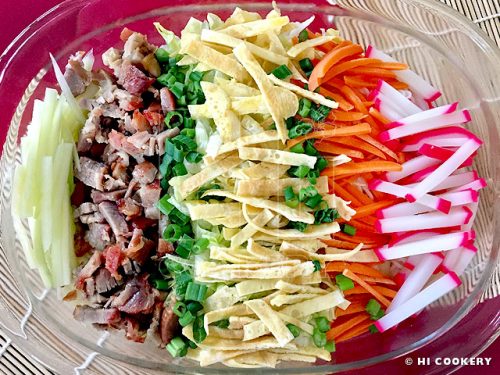
One of the most colorful, attractive and popular potluck dishes in Hawaii is somen salad, a cold wheat noodle dish topped with slivers of fried egg (tamago), meat (char siu, ham or Spam), fish cake (kamaboko) and vegetables. The dressing is a sweet soy-vinegar sauce that complements this salad well. As a side dish, it is light enough to eat with an entrée. As the main meal, it is hearty and satisfying enough but not heavy. Somen salad can be prepared ahead of time and people can assemble the ingredients they prefer for themselves. But it is the presentation of all the toppings that make this a pretty and picture-perfect food.

Hawaii adapted somen salad from a similar Japanese recipe called “hiyashi chuka”, a cold ramen noodle dish translated as “chilled Chinese” food. The Vietnamese also have their tasty noodle bowls. They are all yummy in their own way. So celebrate National Noodle Day with oodles of noodles, colorful toppings and a delicious dressing—and serve up somen salad!

Recipe

(From Mary Ann P. and Phyllis S.)

For the dressing

  • 1 cup chicken broth/stock
  • ¼ cup rice vinegar
  • ¼ cup shoyu (soy sauce)
  • ¼ cup sugar, granulated white
  • 2 tablespoons sesame oil

Directions

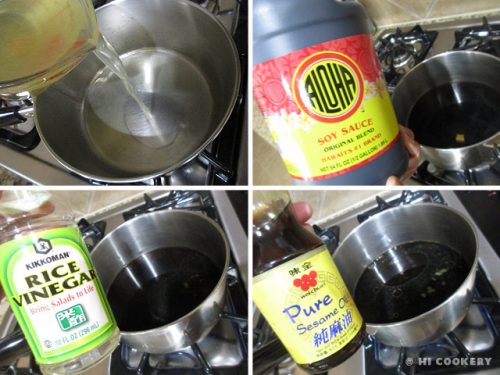
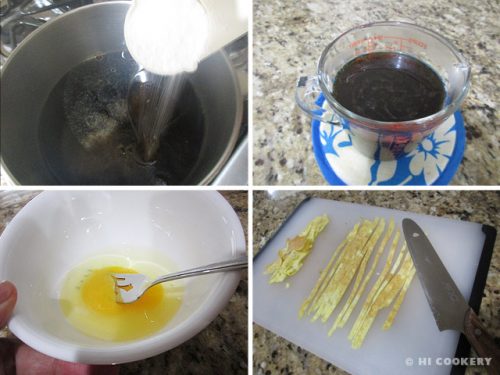
In a saucepan, combine the chicken broth, vinegar, soy sauce and sugar. Add the sesame oil. Bring mixture to a boil and stir until the sugar is dissolved. Remove from heat and let cool. Save for later (we bottle and refrigerate the rest).
For the salad

  • 1-2 eggs, beaten and fried, cut into strips
  • Lettuce, chopped/shredded
  • Cucumber, chopped into strips
  • Carrots, cut into “match sticks”
  • ½ block kamaboko (fish cake), chopped into strips
  • Char siu, ham or Spam, cut into slivers
  • Cilantro leaves and chopped green onion to garnish (optional)
  • 1 package (9 ounces) somen noodles, cooked and drained

Directions

Beat the eggs, fry in a pan and slice into strips.
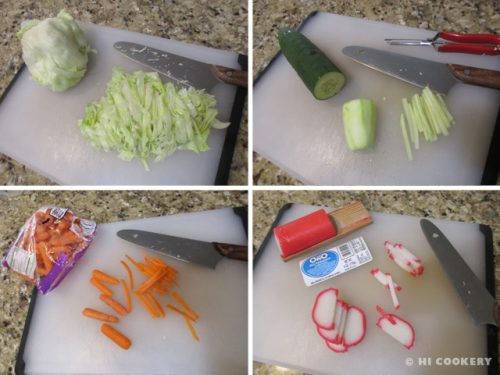
Shred the lettuce. Chop the cucumbers and carrots into strips. Cut the fish cake into strips.
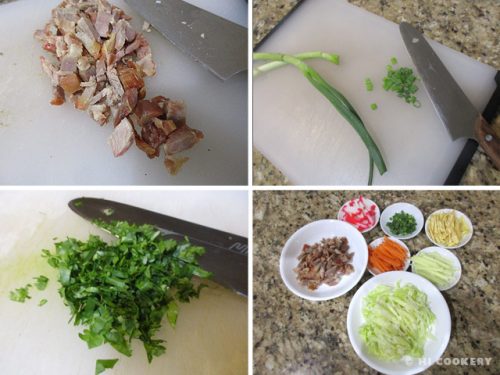
Cut the char siu/ham/Spam into slivers. Chop some green onions and/or cilantro for the garnish (optional).
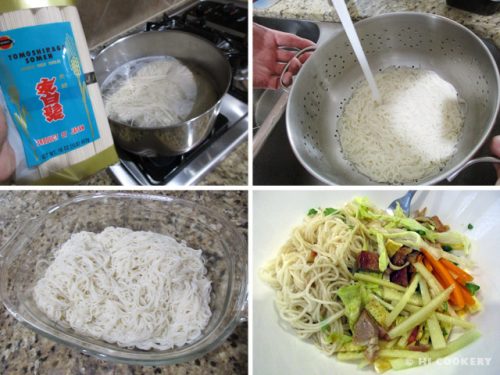
Cook the noodles according to the package, about 2-3 minutes in boiling water. Drain. Rinse with cold water. Arrange the noodles in a tray. Garnish the top with the egg, vegetables and meat. Garnish with green onions and cilantro (optional). Serve with the salad dressing on the side.
Notes

  • Mahalo to our friends Mary Ann B. and Phyllis S. for sharing their somen salad recipes.
  • Substitute the kamaboko fish cake for kanikama crab meat.
  • Search our blog for more noodle recipes, like pancit and pasta.
Moon Cake (Easy)

September/October: Moon Festival/Mid-Autumn Festival

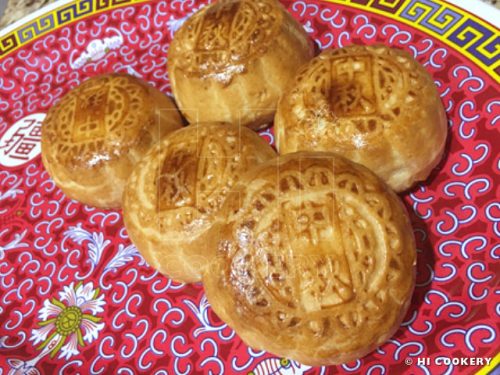
We timed our 20th wedding anniversary trip in 2016 to Taiwan and China around the Mid-Autumn Festival. Monica C., Islander’s former college roommate, said the weather is more pleasant that time of the year in Taiwan and we could celebrate fall together. At the time, she was teaching in Hualien and took us to see her university. She introduced us to her boss who offered us tea and a special snack—a rich pastry filled with red bean/black sesame/lotus seed paste surrounding an egg yolk inside to represent the moon. It was a hospitable gesture to us guests. When we proceeded to tour China with our group, we ended up in Suzhou at the time of the Harvest Moon date. Our tour guide, Kevin Y., gave us mini moon cakes to taste. We also saw them all over the Chinese cities we visited—at grocery stores, at the hotel lobbies and even at Starbucks!

We have eaten our fair share of moon cakes throughout the years in celebration of the Mid-Autumn festival. Whether they have egg yolk centers or not, are made with traditional flour dough or mochi (“snow skins”) and a variety of fillings (even savory ones), we always bought them at the store in pretty packages. They were quite expensive, and we often wondered how long ago they were made before they ended up for sale.  And sometimes we just didn’t like the filling combinations (our favorite is red bean without any egg yolks) that were available.

Fortunately, Islander’s ESL student from Taiwan, YaJu Y., gave her an easy recipe for a moon cake that she demonstrated at her children’s elementary school during the festival. Although not too traditional, these moon cakes are fairly easy to make, tastes great and are not overpriced. The dough is not as soft but has a nice mild crusty texture to offset the sweet red bean paste (from a can). YaJu free forms the dough into balls, but we had fun making these moon cakes together using a special mold with auspicious Chinese character imprints.

Have a happy harvest and make easy moon cakes for the Mid-Autumn Festival.

Recipe

(From YaJu Y.)

Ingredients

  • 1 package (8 ounces) cream cheese, softened
  • 1 cup (2 sticks) butter, softened
  • 3 cups flour
  • 1 can red bean paste
  • 1 egg beaten mixed with 1 teaspoon of water (egg wash)

Directions

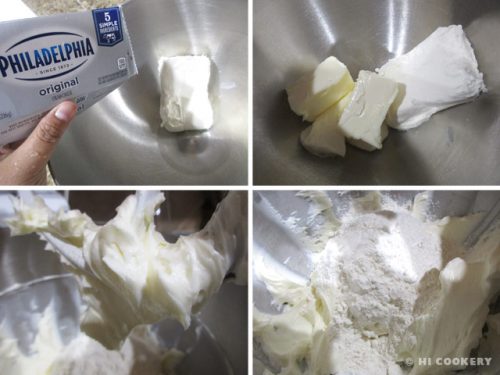
In a large mixing bowl, mix the cream cheese with butter until soft and creamy.

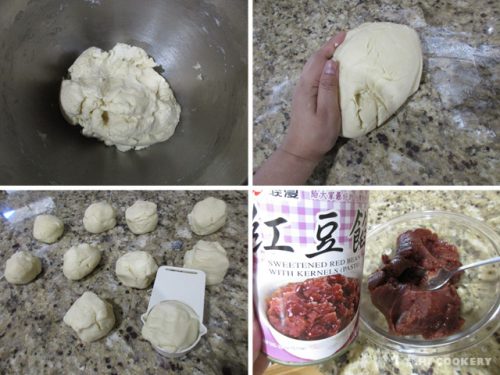
Gradually add the flour until a sticky dough comes together. Roll out dough onto a clean, lightly floured surface. Divide the dough in 1/3 cup balls.

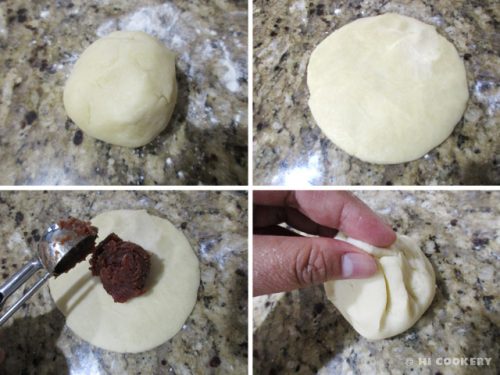
Roll and flatten the dough. Fill each with 2-3 tablespoons of red bean paste. Gather up the edges and pinch the seams to encase the filling. Roll on the surface to smooth it out.

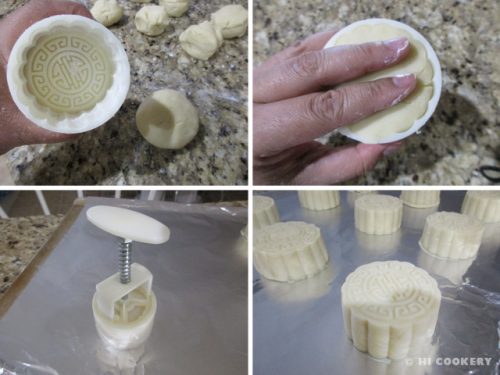
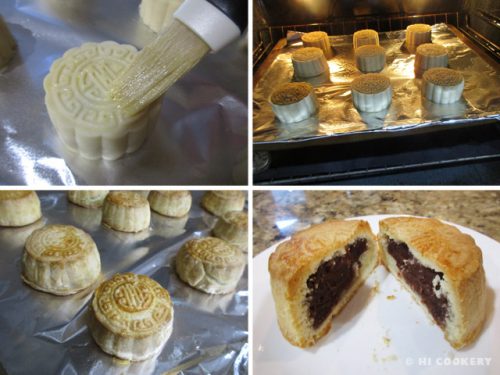
Prepare a baking sheet by lining it with foil and lightly misting it with cooking spray. In a lightly floured moon cake mold, place the filled dough inside, using fingers to spread the dough to the side edges of the mold. Press the mold onto the baking sheet and release.

Brush a little egg wash on top. Bake in a preheated oven at 425 degrees F for 30 minutes. Remove from the oven and let cool. Serve with tea. Store leftovers in airtight container.

Notes

  • Islander’s Mommy used to make a Filipino version of moon cakes called hopia. Some Filipinos put ube (purple yam) or mung bean paste inside. It is similar to Taiwanese style moon cakes because of the proximity of the two countries.

  • For a sweeter crust, add 1-2 tablespoons sugar.

  • We bought our moon cake mold from Amazon.


Filipino BBQ Pork Sticks

October 1: National Pork Month

Whenever Islander’s Daddy had a weekend work party at the beach with his Filipino Pearl Harbor Navy buddies and their families, BBQ pork sticks were always on the menu. Hot off the grill, these petite pork pieces were one of Islander’s favorites! In fact, she would shamelessly leave her playgroup and hang around the grill with her Daddy until he finished cooking the pork sticks. Her Daddy was super shy so cooking for others while they “talked story” was his way of showing that he cared and knowing that everyone was enjoying themselves. And Islander kept him company for some valuable Daddy-daughter bonding time, too.

This recipe brings back happy “hanabata day” memories of Islander’s time at the beach with her family and friends in Hawaii. Pig out Pinoy style and make Filipino BBQ pork sticks, especially during National Pork Month!

Recipe

(Adapted from Asian in America)

For the marinade

  • 2 pounds pork belly or shoulder
  • ½ cup soy sauce
  • ¼ cup calamansi or lemon juice
  • ½ cup lemon-lime soda
  • ½ cup banana sauce or tomato ketchup
  • 1 teaspoon garlic, minced
  • Salt and pepper to taste

For the glaze

  • ½ cup lemon-lime soda
  • ½ cup brown sugar

Directions

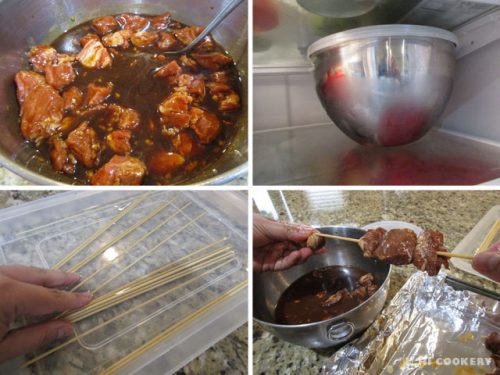
Cut up the pork into 1-inch bite sized pieces. In a large bowl, mix together the soy sauce and calamansi or lemon juice.

Stir in the lemon-lime soda, banana sauce or tomato ketchup and garlic. Season with salt and pepper.

Add the pork pieces and soak. Cover and refrigerate overnight. The next day, soak 14-18 wooden skewers in water. Thread 6-7 marinated pork pieces on the skewer. Discard the marinade.

Fire up the grill. Meanwhile, make the glaze just before cooking by combining the lemon-lime soda with brown sugar. Lay the pork sticks on the hot grill. Baste with the glaze and turn the sticks occasionally. There will be a little char but grill the meat until cooked through. Do not overcook or the pork will be tough and dry. Serve on a long platter.

Notes

  • Make the glaze just before grilling to avoid sugar crystallization which makes the meat harden and not tender.
  • Take care not to overheat/overcook the pork pieces or they will be too dry. Islander’s Mommy liked hers a bit charred, though. Fattier or marble meats are more juicy and flavorful.
  • Search our more Filipino recipes under the Theme Menus.
  • Search our blog for more pork recipes.