Sinigang na Baboy

(Filipino Tamarind Pork Ribs Soup)

October 2: World Farm Animals Day

Islander’s grandma had a farm. E I E I O! And on that farm, she had some poultry and pigs. E I E I O!

When Islander’s family visited the Philippines occasionally during her youth, her late maternal grandmother lived on a farm (now inhabited by her relatives). When her parents went to market, to market (not to buy a fat big or hog, because there were at least two already on grandma’s farm), Islander and her brother would help her with the chores. City slickers/suburbanites that they are, feeding the chickens and pigs did not seem to be such an unpleasant task. They once ventured beyond the boundaries of the farm and into the rice paddy and were frightened by a huge carabao (water buffalo)—and the “chicken” siblings quickly ran back to the chickens!

Islander’s late paternal apong (grandmother) also lived on a property with chickens and goats. Islander was always annoyed when the rooster crowed at the crack of dawn, interrupting her beauty sleep—definitely not a morning person!

Both grandmas would serve us chicken and pork dishes with the staple rice and we often wondered if one of their farm animals sacrificed their lives so that the family could be fed. We only knew of the chicken’s fate from its crazy-then-silent clucks. Chop, chop! But pork pieces were purchased by the parents when they went to market, to market after all!

In observation of World Farm Animals Day, we made a classic Filipino tamarind soup with pork ribs. Sinigang na Baboy is one of the many dishes that reminds us of our time spent in the Philippines with our beloved grandmothers.

Recipe

(Adapted from Filipino Village)

Ingredients

  • 1 – 1 ½ pound pork ribs, individually sliced
  • 10 cups water
  • 1 packet sinigang mix
  • 1 small onion, coarsely chopped
  • 1-2 tomatoes, diced
  • bunch of spinach leaves, baby bok choy or other green vegetables

Directions

In a large pot, boil the ribs in water then simmer for about 1-2 hours to tenderize the meat. Skim off the scum. Mix in the sinigang packet. Chop the onion and dice the tomatoes.

Stir in the onions and tomatoes and cook for 15 more minutes. During the last 10 minutes of cooking, add the green vegetables. Serve hot with rice.

Notes

  • We usually add only half the packet of the sinigang mix as tamarind tastes too sour for us.
  • Search our blog for other Filipino food recipes.


Kālua Pua’a

(Hawaiian Pulled Pork)

October: National Pork Month

Let’s luau, everyone! Whenever we have get-togethers with ‘ohana (family) and friends and need to feed the crowd, we make kālua pua’a (Hawaiian-style pulled pork). Pigs represent a “bounty of blessings” at a buffet because the animal is big and can feed plenty of people, so they are served at many huge celebrations around the world.

In Hawaii, traditionally (and touristically), kālua pig is prepared in an imu, a type of underground oven. A pit is dug in the earth and heated with rocks from fire using sandalwood/mesquite. Meat simply seasoned with sea salt is wrapped in taro or banana leaves and placed in the pit. Then it is buried in a layer of sand or soil and left to cook-steam for several hours until the meat is tender, smoky and juicy. Mmmmm…’ono!

Obviously, it is impractical for us to build an imu without ample space, fire-safe facilities and permission from the strict homeowners’ association to do it in our backyard. A crockpot has become a handy and convenient substitute to cook kālua pig at home for a smaller group. We take a piece of pork shoulder/butt, rub Hawaiian sea salt all over it, place it in a crockpot with liquid smoke flavoring and leave it to cook slowly for several hours. It is so easy to “fix it and forget it”—and the result is tender, smoky pulled pork that tastes almost like the ones served at luaus.

Cook kālua pua’a in a crockpot for a little luau and celebrate National Pork Month. Aloha!

Recipe

Ingredients

  • 5-7 lbs. pork butt or shoulder (boneless)
  • 1-2 tablespoons Hawaiian sea salt (or coarse salt)
  • 2-4 tablespoons liquid smoke (depending on taste)

Directions

Line crockpot with slow cooker bags for easy cleanup (see Notes). Rinse the pork in water and pat dry. Cut slits in the pork (or pierce with the tines of a fork) then rub the sea salt and liquid smoke all over.

Place in a slow cooker/crockpot. Cover and cook on low setting for 8-10 hours or until meat is tender all the way to the center. Shred with fork. Drain off some of the fat and liquid and serve over rice or between slices of Hawaiian bread.

Notes

  • Lining the bottom of the crockpot with clean banana leaves will impart a nice tropical flavor, too.
  • Adding more liquid smoke to the recipe depends on one’s preference for a smokier flavor.
  • Instead of kālua pig at parties, we sometimes serve a whole roast pig.
  • Our Texas friends like to add barbecue sauce on our Hawaiian pulled pork for a Southern-style sandwich (served on Hawaiian sweet bread/buns).
  • Saute some sliced onions and chopped cabbage with leftover kālua pig and serve with steamed white rice for a filling meal.
  • Search our Theme Menus for more Hawaiian and local recipes.


Dutch Baby

September 26: National Pancake Day

Highlander’s family loves Yorkshire pudding. They regularly ate the eggy side dish with roast beef, gravy and potatoes for their Sunday suppers. Now whenever we have a family reunion with them, this meal makes the gathering nostalgic and special.

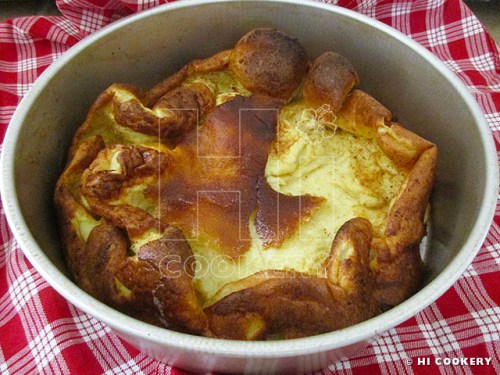
Very similar to the English Yorkie puddings and popovers is a Dutch Baby. It is actually a German (as in Deutsch/sounds like Dutch) pancake. It is easy to make and fun to see how it puffs up when it is baked. Personalize this pancake with various fruits (berries, bananas, cooked apples in cinnamon, etc.) for a delightfully different breakfast. Sweeten with powdered sugar or maple syrup.

Try a puffy pancake—a Dutch Baby—for National Pancake Day.

Recipe

  • 3 tablespoons butter
  • 1 cup flour
  • 1 cup milk, room temperature
  • 4 eggs, room temperature
  • 2 tablespoons sugar
  • ½ teaspoon vanilla
  • powdered sugar
  • berries (optional)

Directions

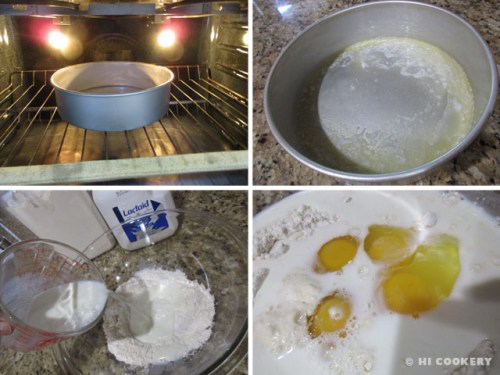
Use part of the butter to generously grease the sides a 10-inch round pan. Put the rest of the butter in the middle of the pan and place it in an preheated oven at 400 degrees. After five minutes, check to see if the butter is completely melted, being careful not to burn or brown it. While the butter is melting in the oven, mix together the flour and milk in a bowl. Beat in the eggs, sugar and vanilla. Blend until the batter is smooth.

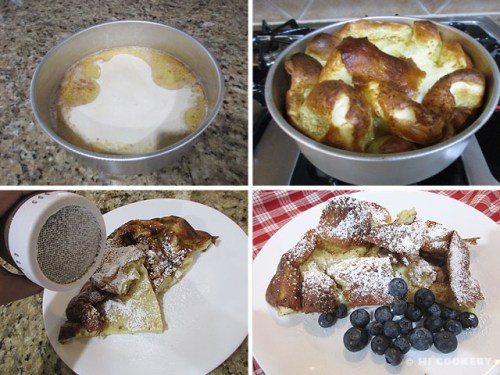
Pour the batter into the pan over the hot melted butter. Bake for 20 minutes until the Dutch Baby is puffed up. Remove from the oven. The Dutch Baby will deflate a bit. Blot out extra butter on top with paper towels. Slice into quarters and put on plates. Sprinkle powdered sugar over it. Garnish with berries.

Notes

  • National Pancake Day is observed in the United States on September 26. International Pancake Day is celebrated in various English-speaking Christian countries around the world on Shrove Tuesday/Fat Tuesday, the day before Ash Wednesday, as part of Mardi Gras festivals, carnivals and pre-Lent celebrations, and is a movable feast day.
  • Thanks to blog reader, Robert R., who suggested trying a Dutch Baby recipe.
  • Try our blueberry and cherry popover recipes.
  • Search our blog for more posts on pancakes.