Eneksa Agaga (Micronesian Red Rice)
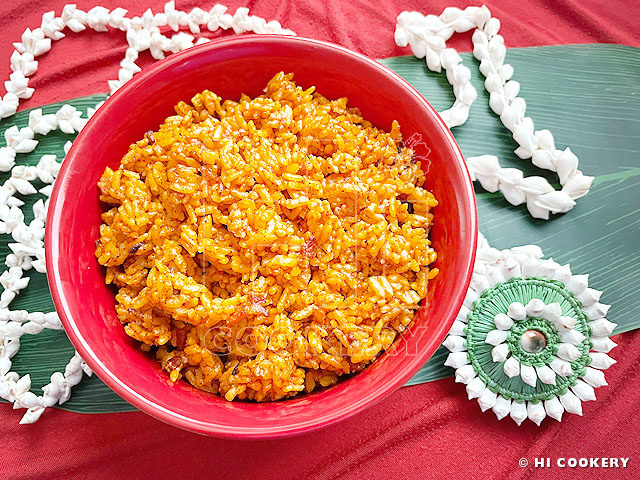
September: National Rice Month
When Islander used to teach a group of international students for summer school in Hawaii, some of them included young adults from Micronesia (Guam, Yap, Palau, Chuuk, Pohnpei and Marshall Islands). They adapted to the Hawaiian culture and climate very well as they came from similar backgrounds.
Everyone looked forward to the last day of class, not only because they would have completed their studies. But it gave everyone an opportunity to taste each other’s foods at a potluck party. The Micronesian students often shared eneksa agaga (red rice) as it contained affordable ingredients to feed a crowd.
Annatto is what gives the rice (the recipe originated in Saipan) its vibrant hue as well as a subtle flavor. Annatto seeds are often soaked with water to cook the rice. But the powder (also known as atsuete or achuete in the Pacific Rim and achiote in Latin America) is more convenient, according to Islander’s students. Red rice is the perfect accompaniment to island barbecues and buffets.
One of her students from Pohnpei presented her with a shell medallion as a teacher appreciation gift. It is one of Islander’s most treasured cultural items and is pictured with the eneksa agaga she cooked to honor her students during National Rice Month.
Recipe
Ingredients
- 1 cup uncooked rice, rinsed and drained
- 1 cup onion, chopped
- 2 strips of uncooked bacon, chopped
- 1-2 cloves garlic, minced
- 2-3 teaspoons annatto/achiote/atsuete powder
- 2 cups water
- Salt and pepper to taste
Directions
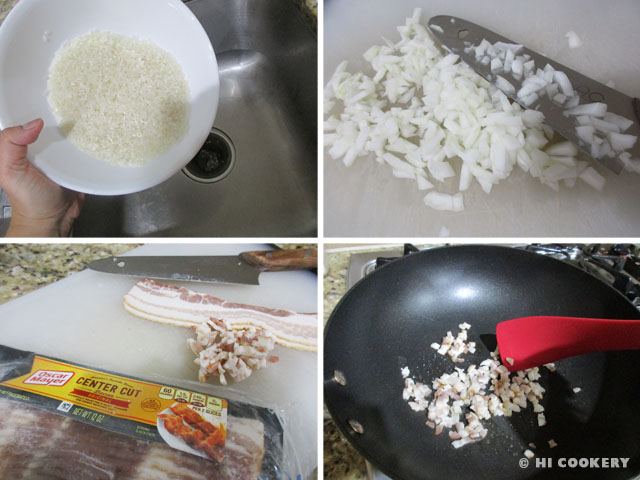
Rinse and drain the rice. Chop the onions and bacon. Heat a pan over the stovetop and saute the bacon to render out the oil (about 2 minutes).
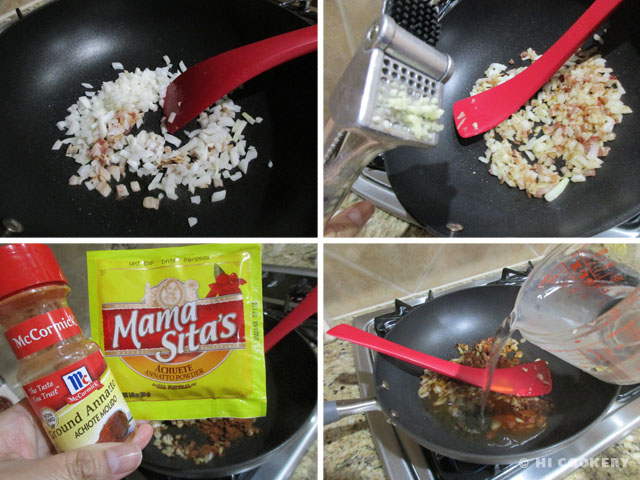
Add the onions and garlic and stir-fry until the onions are softened. Sprinkle the annatto powder over the onions and stir well. Add the water and bring to a boil.
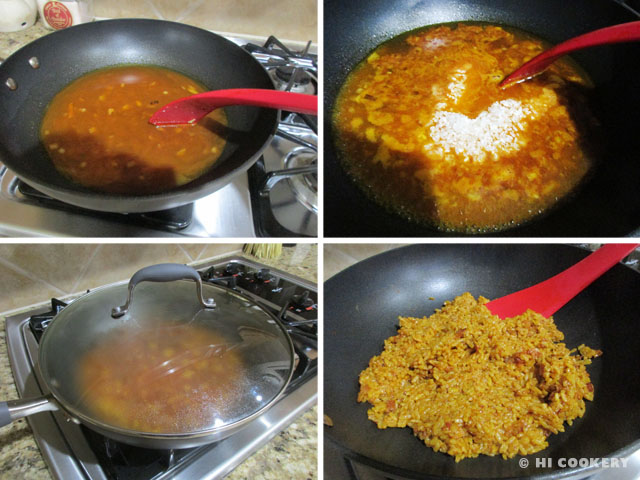
Stir in the rice. Lower the heat to medium low and cover the pan. Simmer for 10 minutes, checking no more than twice to see if the rice has absorbed all the water. Stir to blend the red color evenly and prevent the rice from sticking to the bottom of the pan. Season with salt and pepper. Cover the pan and cook for another 10 minutes. Remove from heat. Stir again and adjust seasonings. Let the rice rest for 5 minutes in the pan before transferring on to a serving platter.
Notes
- Adjust the amount of annatto/achiote/atsuete powder for desired deepness of color. Annatto powder in the spice jar is darker than achiote/atsuete powder in the packets.
- Search our blog for more rice recipes.
 HI COOKERY