Easy Coconut Pie

September 2: World Coconut Day

We are so grateful to our wedding godfather, Marvin L., who did a lot to help us get settled in Oklahoma when we were newlyweds—way back in 1996!!! He would come over to check up on us in our little one-bedroom starter apartment to see if we needed anything, sometimes dropping off some food because we did not yet own a lot of cookware and had not stocked our tiny pantry with staples and ingredients to make our meals.

The first week we had moved in, Daddy called one day from Hawaii and said he missed his baby girl. Islander lost it and was crying because she was super homesick. Marvin was there and saw how sad she was. The next time he came over with food, he brought a comforting coconut dessert. It was an easy recipe, but he hoped that the tropical treat would ease some of Islander’s adjustments to the mainland and marriage. For sure, that caring gesture cheered her up.

Now that we have moved back to Hawaii after all these years and reunited with her parents, Islander found his old recipe and made it for them. It really has the familiar flavor of the islands.

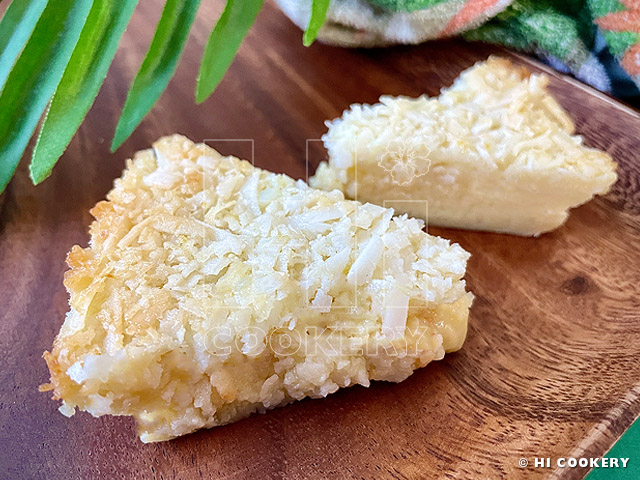
Mahalo to Marvin for his love, prayers and care—and for the recipe of this easy coconut pie. Celebrate the comfort of coconut in this simple pie, especially on World Coconut Day.

Recipe

(Adapted from Betty Crocker)

Ingredients

  • 1 cup flaked or shredded coconut
  • 2/3 cup sugar
  • ½ cup Bisquick brand pancake and baking mix
  • ¼ cup unsalted butter, melted
  • 1 ¾ cup milk (we used lactose free)
  •  1 ½ teaspoon vanilla
  • 4 eggs, lightly beaten

Directions

Grease a 9-inch pie plate and set aside. In a mixing bowl, combine the coconut, sugar and Bisquick.
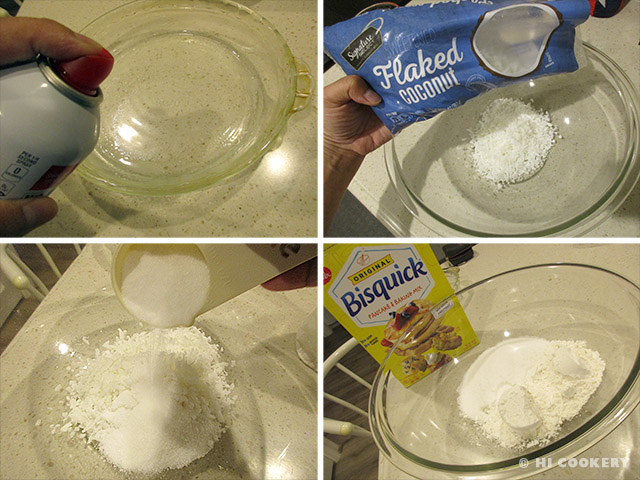
Melt the butter and cool slightly. Pour into the Bisquick mixture. Stir in the milk and vanilla.
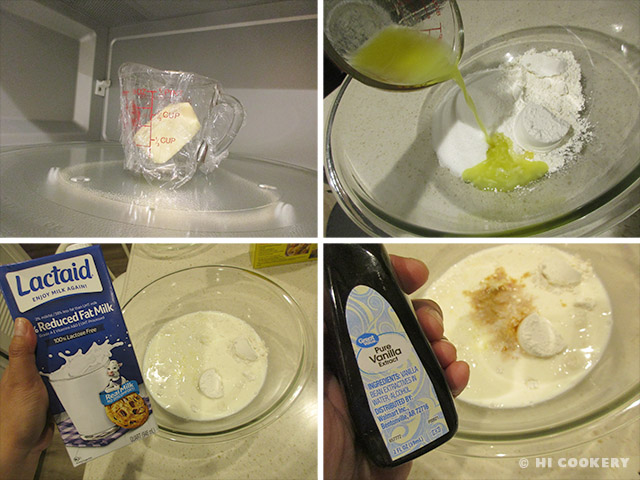
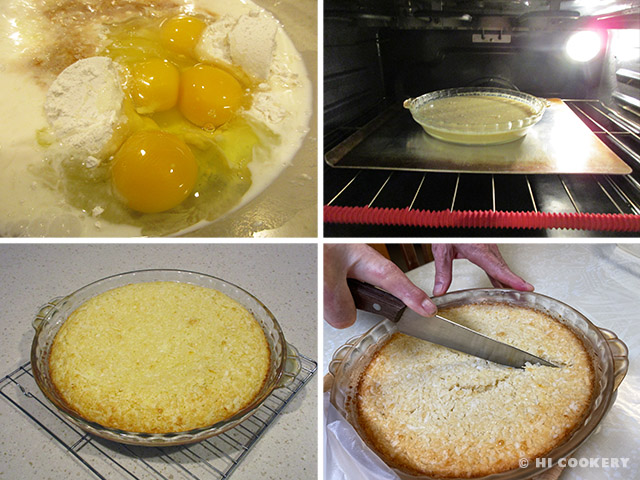
Mix in the eggs until batter is smooth. Set the greased pie plate on a baking sheet. Pour the batter into the pie plate. Bake in a preheated oven at 350 degrees F for 50 minutes to an hour, checking with a toothpick or knife for doneness. Remove from the oven and put the pie plate on a wire rack to cool completely. Sliced into wedges and serve. Cover and refrigerate any leftovers. Reheat for a few seconds on the microwave.
Notes

  • If using sweetened flaked or shredded coconut, reduce the sugar slightly.
  • We like to add a ½ teaspoon of coconut extract or flavor to boost the coconut taste.
  • Search our blog for more coconut recipes.
Buko Pie

Buko Pie

May 8: National Coconut Cream Pie Day

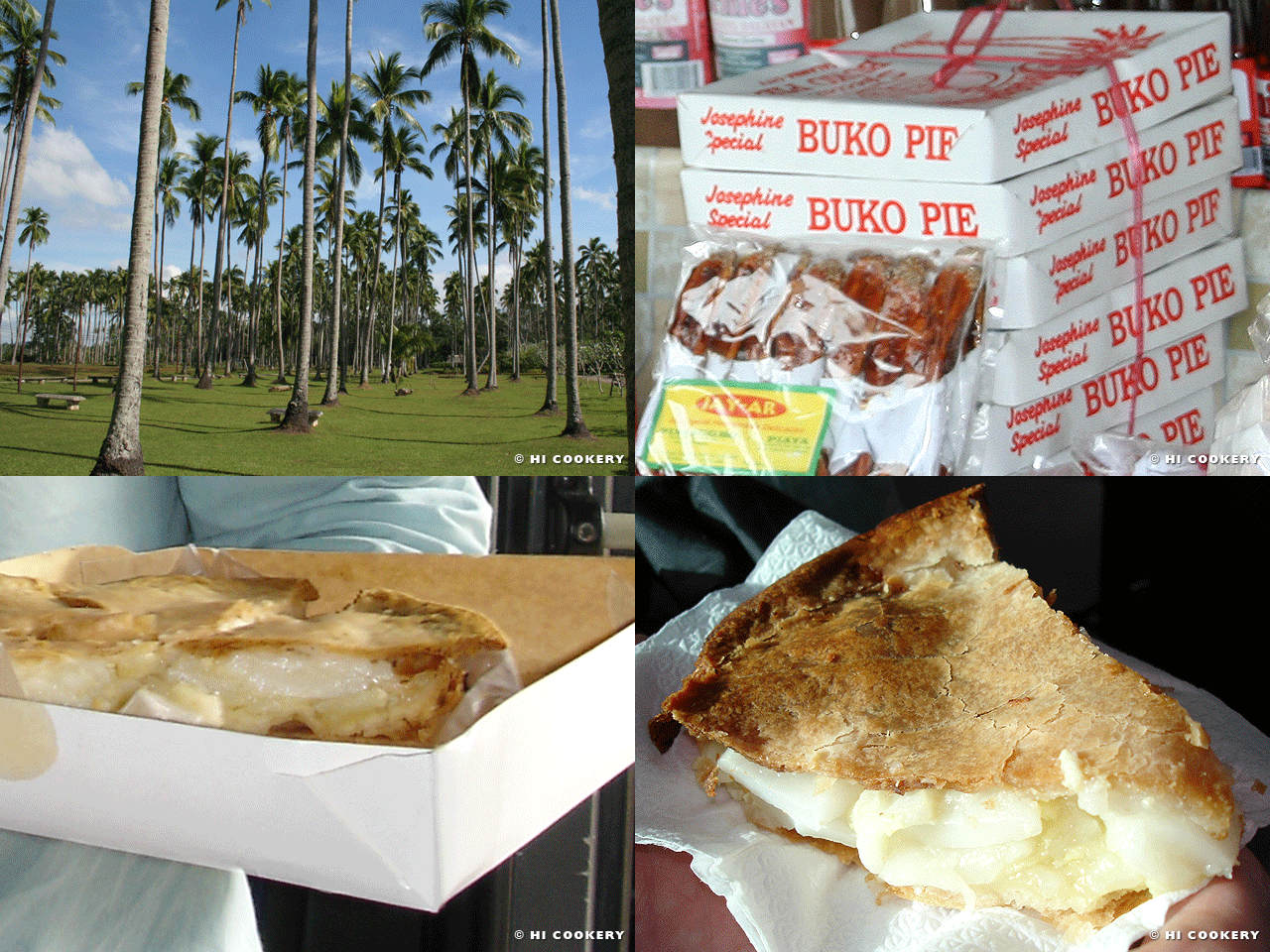
Traveling through the Philippines for a big family event a few years ago, our chartered bus made stops from Bataan through Manila and Tagaytay to get to Villa Escudero, a coconut plantation where we all stayed in bamboo cottages for a real rustic experience. Along the way, through the Laguna province, Auntie Maria B. bought boxes of buko (pronounced “boo-koh”) pie from a roadside stand. Buko pie is the Filipino version of a coconut cream pie made from the tender meat of the young fruit and it is a specialty from the region. Everyone enjoyed slices of this simple and slightly sweet snack to sustain us on our long journey through the countryside. The cuisine and culture certainly left a lasting impression on Highlander on his first trip to Asia.

Buko Pie

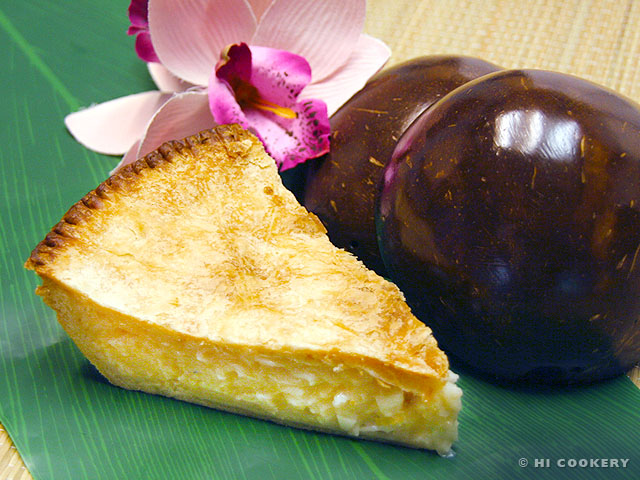
Islander brought back fond memories of the Philippines when she baked buko pie for Highlander. She found frozen shredded buko in the Asian grocery store in South Texas and replicated the recipe. It turned out to be a terrific tropical treat! For Filipino flavor on National Coconut Cream Pie Day, bake a buko pie.

Recipe

(Adapted from Pinoy Recipe)

For the filling

  • 4 cups buko (young coconut meat), shredded or sliced
  • 1 cup coconut water/juice (not coconut milk)
  • 1 can (14 ounces) sweetened condensed milk (we used fat-free)
  • 2/3 cup cornstarch

Directions

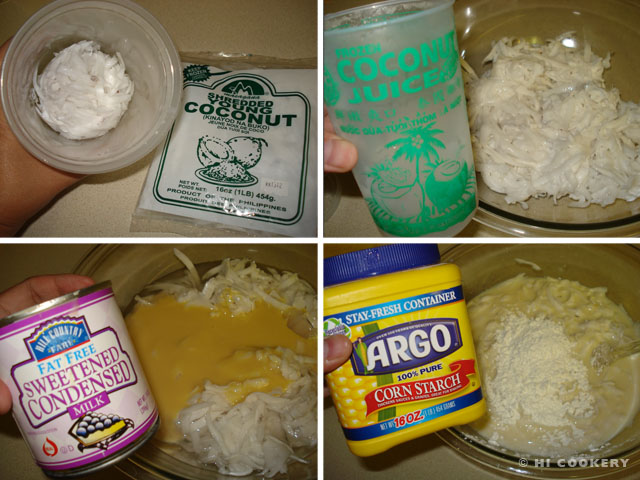
Defrost packages of frozen buko and squeeze out excess water (this may be used in the recipe instead of the one bought in a bottle/jar/can) to measure four cups of young coconut meat. In a saucepan, combine the buko, coconut water, sweetened condensed milk and cornstarch. Mix slowly over low heat until thickened, being careful not to burn the bottom of the pan. Remove from the stovetop and place in another bowl to cool completely. Prepare the crust.

Buko Pie

For the crust

  • 2 cups flour
  • 1 teaspoon salt
  • 2/3 cup vegetable shortening (we used Crisco brand baking sticks)
  • 1 egg yolk
  • 1 teaspoon vinegar (we used sugar cane vinegar)
  • ¼ cup ice water

Directions

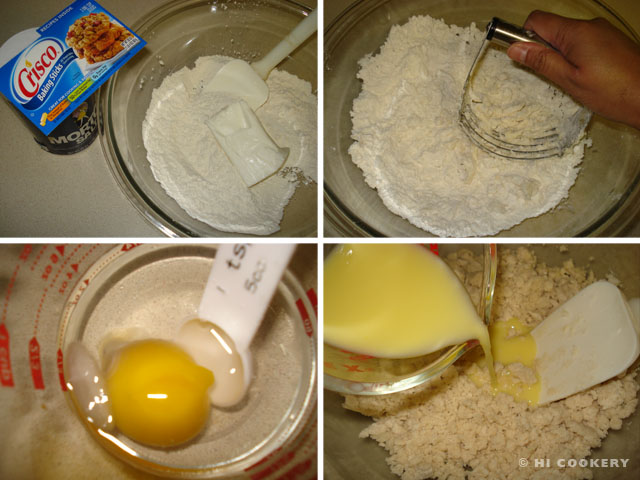
In a mixing bowl, combine the flour with the salt. Cut in the vegetable shortening and mix until it resembles coarse crumbs. In a small bowl or measuring cup, beat the egg yolk with the vinegar and ice water. Gradually add the liquid ingredients to the dry ones.

Buko Pie

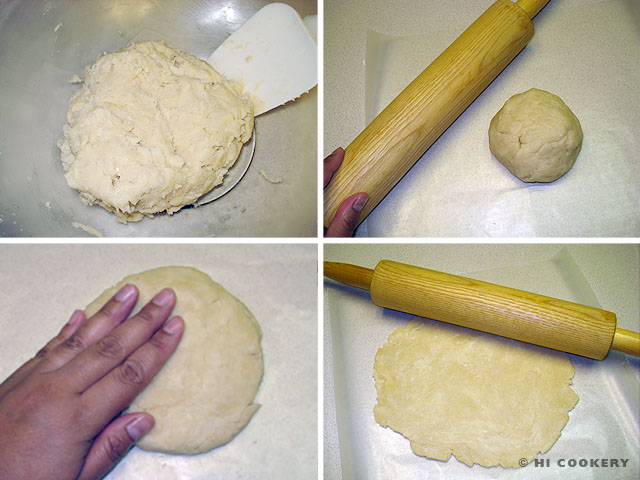
Gently mix until a sticky dough is formed. Divide the dough in half. Flatten one into a disc and roll out to 1/8-inch thick to cover the bottom of a pie plate. Repeat with the other half of the dough enough to cover the top of the pie. Set aside.

Buko Pie

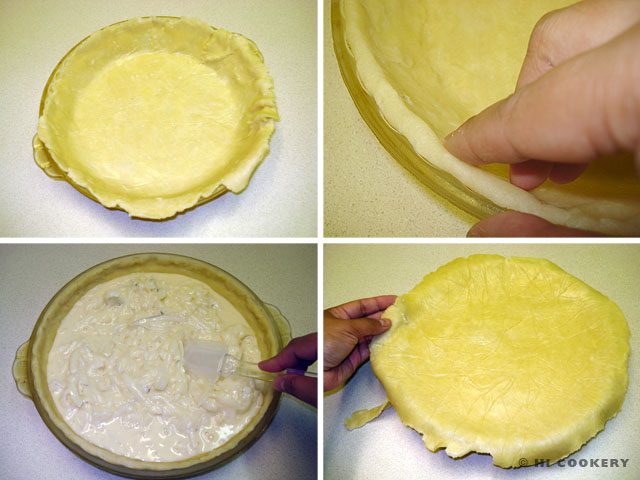
Spread the cooled buko filling on top of the bottom crust layer. Cover with the top crust layer.

Buko Pie

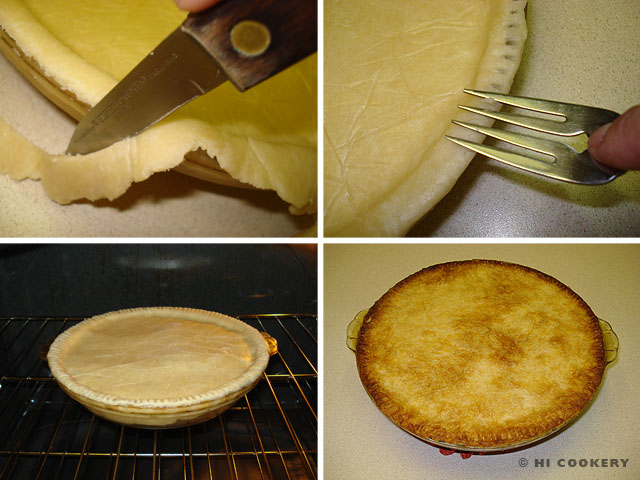
Trim excess crust. Flute or crimp or seal the edges with the tines of a fork. Bake in a preheated oven at 425 degrees F for 45-55 minutes. Remove from the oven and set on a wire rack to cool completely. Refrigerate to allow the flavors to blend and the coconut filling to solidify. Slice and serve (may be reheated in the microwave).

Buko Pie

Notes

  • Use only unsweetened “young” tender coconut meat for buko pie. “Old” coconut meat is hard and dry. Buy buko (sometimes shredded) in the freezer section of Asian grocery stores if unable to find fresh coconuts.
  • In addition to the Filipino buko pie, try the Hawaiian version of coconut cream pie and make mini haupia pies for National Coconut Cream Pie Day.