Ube Bibingka

(Filipino Purple Yam Sweet Sticky Rice Cake)

January 1: New Year’s Day

Islander’s Auntie Laarni C., who once had a small catering business in Hawaii, would sometimes drop by our house to wish us a Happy New Year in person. Fortunately for the family, she would also bring her signature pancit palabok (noodles are a lucky new year food as they represent long life), lumpia (egg rolls or spring rolls in the winter months mean hope for the coming spring season) and bibingka (sweet sticky rice cakes are also auspicious, symbolizing luck “sticking” around in the new year). 

One year, she showed up with ube bibingka instead of the usual butter mochi cake. Auntie Laarni’s favorite color is purple—and Filipino purple yam yields a vibrant hue in the batter of this dessert. Now that she has grandkids, she no longer caters or cooks as much. So HI Cookery is continuing her tradition of making bibingka (sometimes with ube flavoring) for the new year. Happy New Year! Manigong Bagong Taon!

Recipe

(From Auntie Laarni C.)

Ingredients

  • 4 eggs
  • 2 cups milk
  • 1 can (13.5 ounces) coconut milk
  • 1 teaspoon vanilla
  • 2 teaspoons ube flavoring or extract
  • 1 box (16 ounces) sweet rice flour (mochiko)
  • 2 teaspoons baking powder
  • ½ teaspoon salt
  • 1 ½ cups sugar, granulated white
  • ½ cup unsalted butter, melted

Directions

In a medium bowl, stir together the eggs, milk, coconut milk and vanilla. 
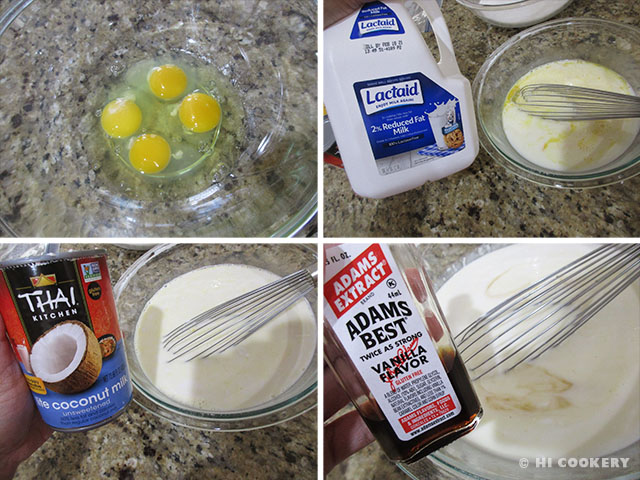
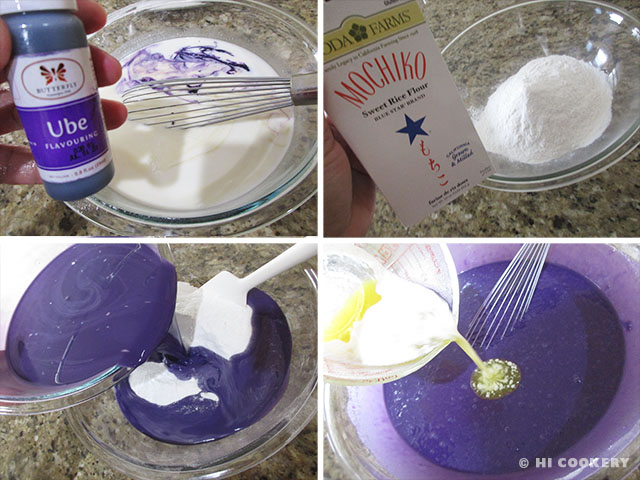
Add the flavoring/extract. In a large bowl, combine the mochiko, baking powder, salt and sugar. Pour the egg mixture into the flour mixture. Stir well until it is evenly bright purple. Add the melted butter. Mix well.
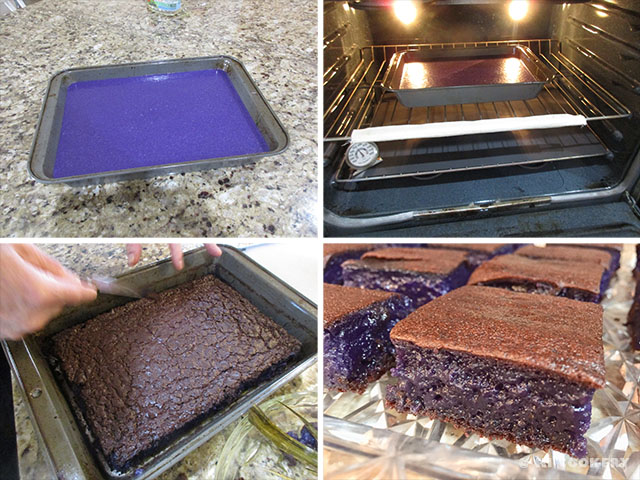
Pour into a 9×13 baking pan lined with parchment paper or oiled banana leaf. Bake in a preheated oven at 350 degrees F for 50-60 minutes or when the top is browned. Remove from the oven and let cool completely. Invert onto a cutting board. Peel off the parchment paper or banana leaf. Slice into squares and serve.
Notes

  • We sometimes line our baking pan with a clean banana leaf to give it a distinct flavor (Auntie L does this with her other Filipino baked goods).
  • Ube bibingka is similar to our baked poi mochi. Though both are made from root vegetables, ube is purple yam and poi is from taro. 
  • Search our blog for other New Year’s foods by clicking on the Theme Menus tab.

Mochi Matcha Bundt Cake

January 1: New Year’s Day/National Hot Tea Month

Most Asians have a tradition to eat mochi (glutinous rice flour) desserts on New Year’s Day. The sticky chewy texture of the food symbolizes that luck will stick around all year long while the “rice” spelling resembles the word “rich” for prosperity ahead. We have eaten mochi-based Filipino bibingka and Chinese gau many times before. But here now is our double take on this Japanese-inspired mochi matcha bundt cake recipe. The chocolate cake contains mochi for keeping the new year food tradition while the matcha green tea is for commemorating the month-long food holiday. The two-tone color of this mochi matcha bundt cake is a visual representation of celebrating both New Year’s Day and National Hot Tea Month.

Recipe

(Adapted from PopSugar)

Ingredients

  • 1 box (1 pound) mochiko (sweet rice flour)
  • 2 teaspoons baking powder
  • ½ teaspoon salt
  • 1 cup (2 sticks) butter, melted
  • 2 cups sugar
  • 1 can (12 ounces) evaporated milk
  • 1 ½ teaspoons vanilla
  • 4 eggs
  • 2 tablespoons cocoa powder
  • 3 tablespoons matcha green tea powder
  • ¼ cup mini chocolate chips

Directions

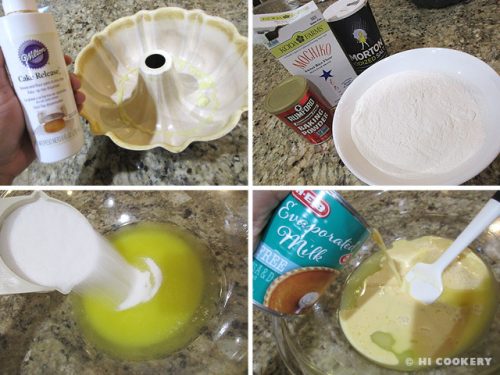
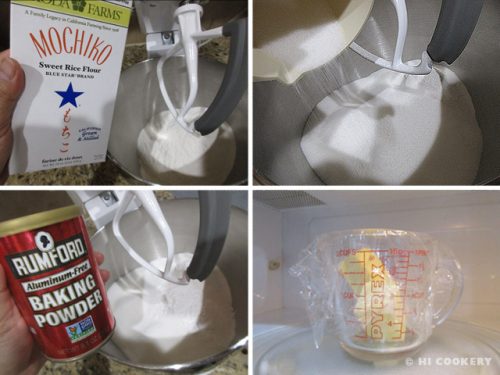
Grease a bundt pant and set aside. In a medium bowl, combine the mochiko, baking powder and salt. In a large bowl, mix the melted butter with the sugar. Stir in the evaporated milk.

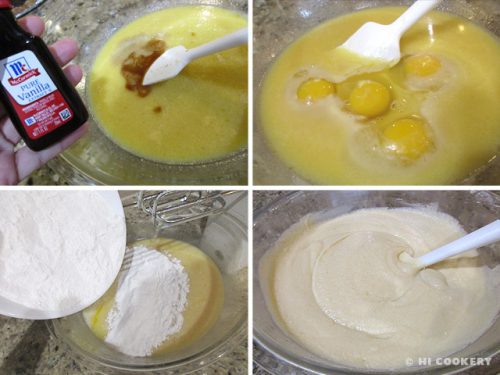
Add the vanilla. Beat in the eggs. Gradually mix in the dry ingredients and stir until smooth.

Divide the batter in half into two bowls. To the first bowl, mix in the cocoa powder. To the second bowl, mix in the matcha green tea powder. Stir in the mini chocolate chips into the cocoa powder mixture.

Pour the chocolate batter into the bundt pan first and smooth it out with a spatula. Next, pour the matcha batter on top of the chocolate batter. Bake in a preheated oven at 350 degrees F for 45-50 minutes, testing for doneness with a toothpick or wooden skewer. Remove from the oven and let cool in the pan for 10 minutes.

Invert the pan onto a wire rack to cool completely. Slice to reveal the two-tone colored cake. Sprinkle powdered sugar over the slices before serving (optional)

Notes

  • This mochi matcha bundt cake bakes up a dull green but photographs okay in the light. Feel free to add a few drops of green food coloring in the matcha batter and mix well to make the hue brighter when baked.
  • Search our blog for other traditional New Year’s and hot tea recipes.

Lilikoi (Passion Fruit)

Butter Mochi Cake

April: Easter Season (Palm/Passion Sunday)

On the last Sunday of Lent, a week before Easter, we attend Palm/Passion Sunday mass and listen to scriptural readings about Jesus’ triumphant entry into Jerusalem. With a symbolic palm leaf that we receive at church, Highlander would make a cross for Islander to decorate our dining area. She usually prepares a Hawaiian or tropical meal for dinner with a dessert featuring lilikoi as an ingredient. These are our little Palm/Passion Sunday traditions.

Lilikoi is the Hawaiian word for passion fruit. It is aromatic and tart and grows abundantly on the islands. When we do find them on the mainland, the lilikoi is overpriced and overripe. So we settle for the much cheaper passion fruit pulp in the frozen section of our grocery store. It works fine as an ingredient for our Palm Sunday desserts and adds a fragrant and flavorful twist to a regular butter mochi cake.

For a Palm/Passion Sunday-inspired food, start a little tradition and make something with passion fruit, like lilikoi butter mochi cake.

 Recipe

(Adapted from Hawaii Magazine)

Ingredients

  • 1 box (1 pound) mochiko flour
  • 3 cups sugar, granulated white
  • 1 tablespoon baking powder
  • ½ cup (1 stick) butter, melted
  • 5 eggs
  • 1 tablespoon vanilla extract
  • 1 can (12-14 ounces) coconut milk
  • 4-6 tablespoon lilikoi puree (we substituted defrosted passion fruit pulp)

Directions

In a mixing bowl, combine the mochiko flour, sugar and baking powder. Melt the butter. Cool slightly.

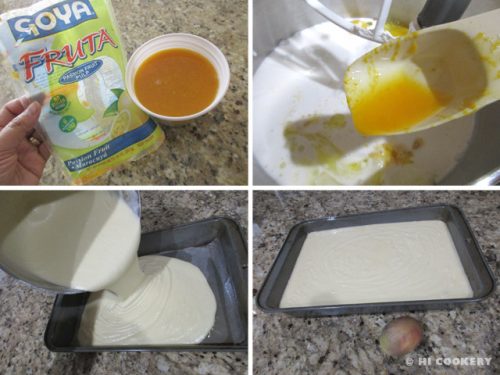
Pour the melted butter into the mixing bowl. Add the eggs, vanilla and coconut milk.

Stir in the lilikoi puree. Blend well. Pour into a greased 9×13-inch baking pan.

Bake in a preheated oven at 375 degrees F for 40-50 minutes, testing the cake with a toothpick for doneness. Remove from the oven. Cool slightly and spread glaze on top (optional—see Notes). Slice with plastic knife to prevent from sticking to the blade. Yield: 2 dozen.

Notes

  • Glazing the top of the cake is optional. To do so, mix together 1-2 cups powdered sugar with 2-4 tablespoons of lilikoi puree. Stir until it is a smooth consistency. Spread on top of the cake while still warm.
  • Try our regular butter mochi cake and poi mochi cake recipes.
  • Our final food photo of the lilikoi butter mochi cake above is set on a red tablecloth. Red is the liturgical color for Palm/Passion Sunday.