Eneksa Agaga (Micronesian Red Rice)
September: National Rice Month

When Islander used to teach a group of international students for summer school in Hawaii, some of them included young adults from Micronesia (Guam, Yap, Palau, Chuuk, Pohnpei and Marshall Islands). They adapted to the Hawaiian culture and climate very well as they came from similar backgrounds.

Everyone looked forward to the last day of class, not only because they would have completed their studies. But it gave everyone an opportunity to taste each other’s foods at a potluck party. The Micronesian students often shared eneksa agaga (red rice) as it contained affordable ingredients to feed a crowd. 

Annatto is what gives the rice (the recipe originated in Saipan) its vibrant hue as well as a subtle flavor. Annatto seeds are often soaked with water to cook the rice. But the powder (also known as atsuete or achuete in the Pacific Rim and achiote in Latin America) is more convenient, according to Islander’s students. Red rice is the perfect accompaniment to island barbecues and buffets.

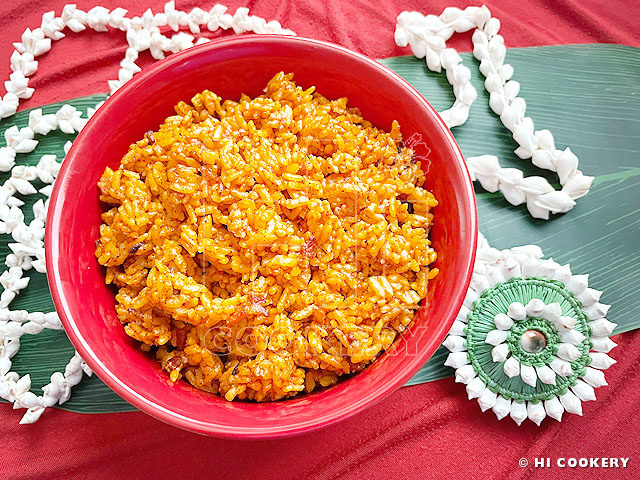
One of her students from Pohnpei presented her with a shell medallion as a teacher appreciation gift. It is one of Islander’s most treasured cultural items and is pictured with the eneksa agaga she cooked to honor her students during National Rice Month.

Recipe

Ingredients

  • 1 cup uncooked rice, rinsed and drained
  • 1 cup onion, chopped
  • 2 strips of uncooked bacon, chopped
  • 1-2 cloves garlic, minced
  • 2-3 teaspoons annatto/achiote/atsuete powder
  • 2 cups water
  • Salt and pepper to taste

Directions

Rinse and drain the rice. Chop the onions and bacon. Heat a pan over the stovetop and saute the bacon to render out the oil (about 2 minutes). 
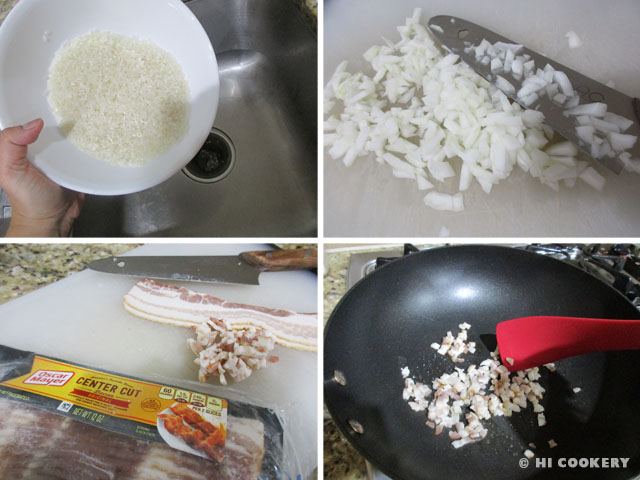
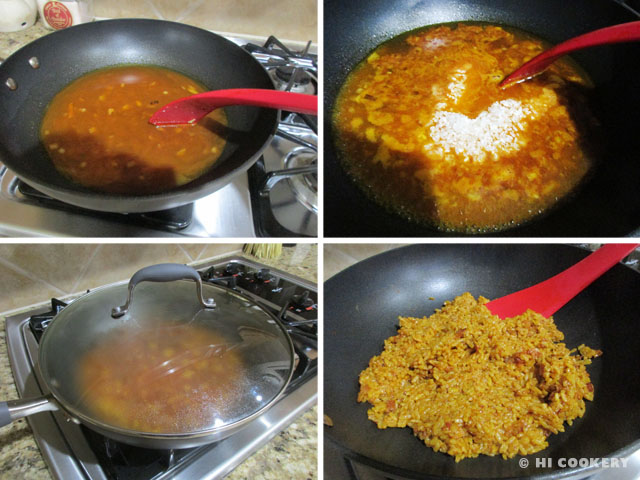
Add the onions and garlic and stir-fry until the onions are softened. Sprinkle the annatto powder over the onions and stir well. Add the water and bring to a boil. 
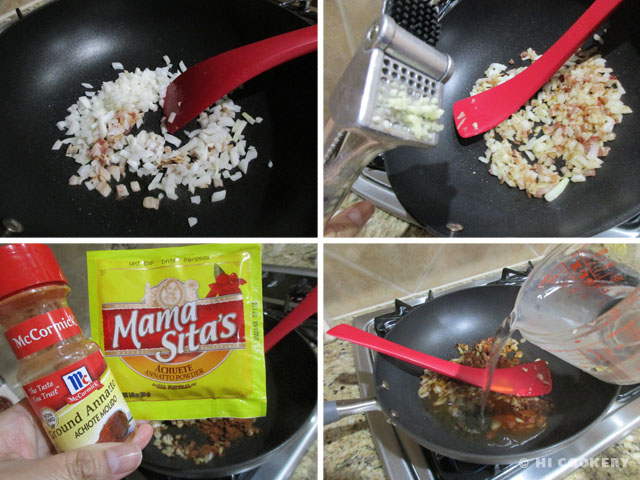
Stir in the rice. Lower the heat to medium low and cover the pan. Simmer for 10 minutes, checking no more than twice to see if the rice has absorbed all the water. Stir to blend the red color evenly and prevent the rice from sticking to the bottom of the pan. Season with salt and pepper. Cover the pan and cook for another 10 minutes. Remove from heat. Stir again and adjust seasonings. Let the rice rest for 5 minutes in the pan before transferring on to a serving platter.
Notes

  • Adjust the amount of annatto/achiote/atsuete powder for desired deepness of color. Annatto powder in the spice jar is darker than achiote/atsuete powder in the packets.
  • Search our blog for more rice recipes.
Beef Empanadas (Argentinean-Style)

April 8: National Empanada Day

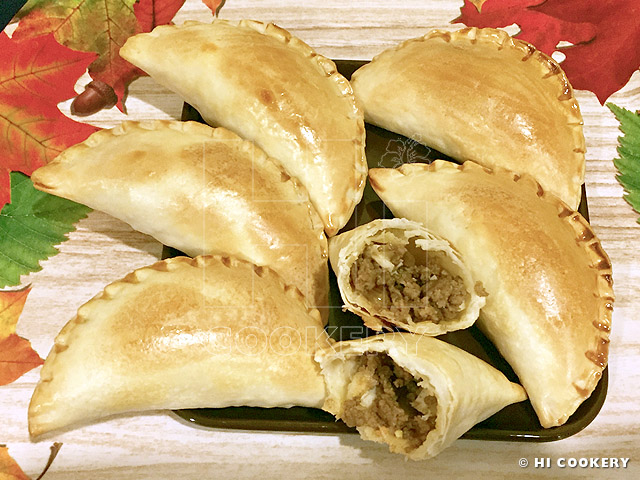
We have blogged before about Filipino empanadas. Now here is something similar from Argentina. Their common colonial country—Spain—influenced this recipe. The seasonings and additional fillings are slightly different (the Filipino empanada has potatoes and this one has boiled eggs). But these portable pockets of pastry filled with beef make the perfect snack, appetizer or light lunch. For National Empanada Day, try these Argentinean-style beef empanadas.

Recipe
(Adapted from Goya)

Ingredients

  • 2 tablespoons extra virgin olive oil
  • 1 cup onion, chopped
  • 4 cloves garlic, minced
  • 2 teaspoons paprika
  • 1 teaspoon cumin
  • Pinch of crushed red peppers
  • 1 pound of ground beef
  • Adobo all-purpose seasoning
  • 2 eggs, hardboiled and chopped
  • ¼ cup raisins, soaked in hot water for a few minutes then drained
  • 1 egg + 2 teaspoons water, lightly beaten
  • 2 packages puff pastry dough for turnovers, thawed (we used Goya brand)

Directions

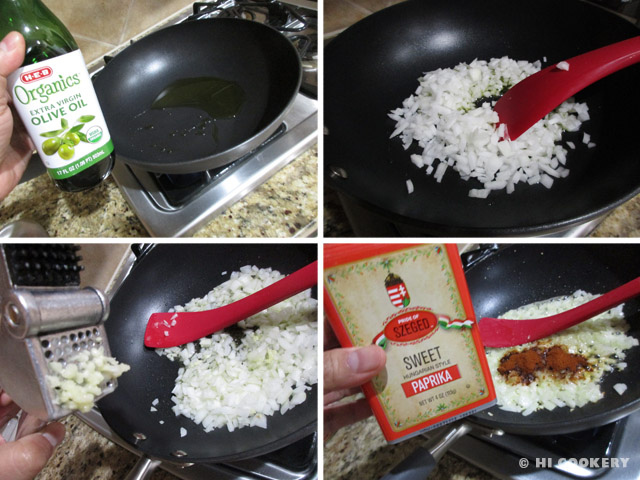
In a large skillet, heat the olive oil over medium high heat. Sautee the onions until soft and translucent (around 7 minutes). Add the garlic and paprika.

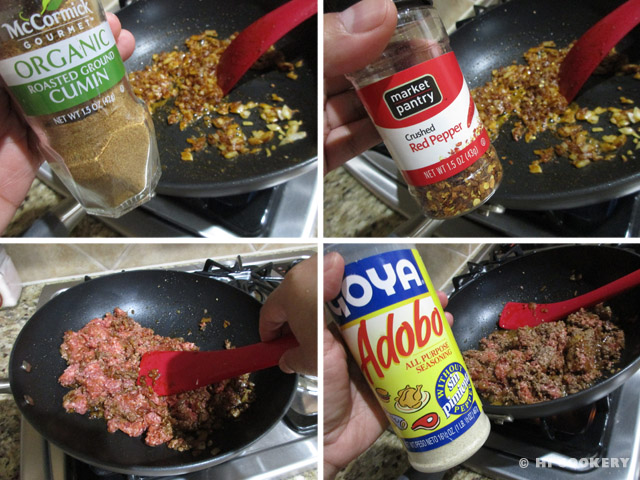
Stir in the cumin and crushed red pepper. Add the ground beef and cook until no longer pink. Season with adobo to taste.

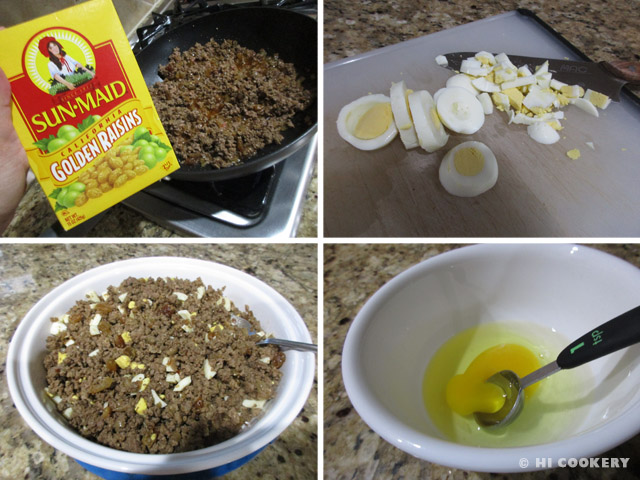
Mix in the raisins. Remove the ground beef mixture and transfer to a bowl. Chop the boiled eggs and add to the mixture. Meanwhile, beat together the egg wash (1 egg + 2 teaspoons of water). 

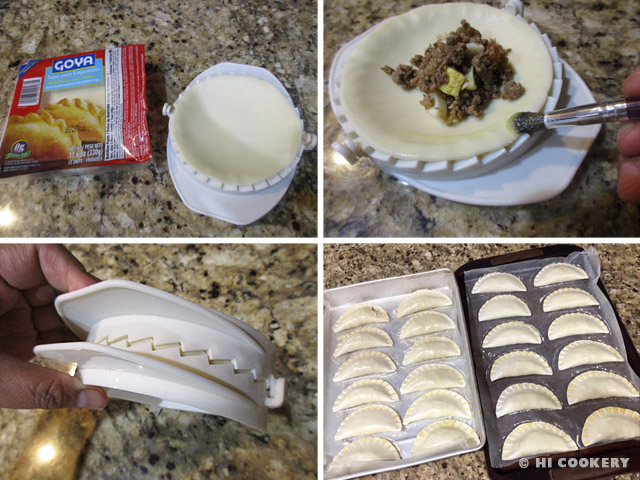
Place the dough on the pastry press. Fill with the meat mixture. Brush the edges with the egg wash. Press to seal.  Carefully remove the empanada and place on a waxed paper-lined tray. Brush the tops with egg wash (optional). Finish assembling all the other empanadas. At this point, they may be frozen.

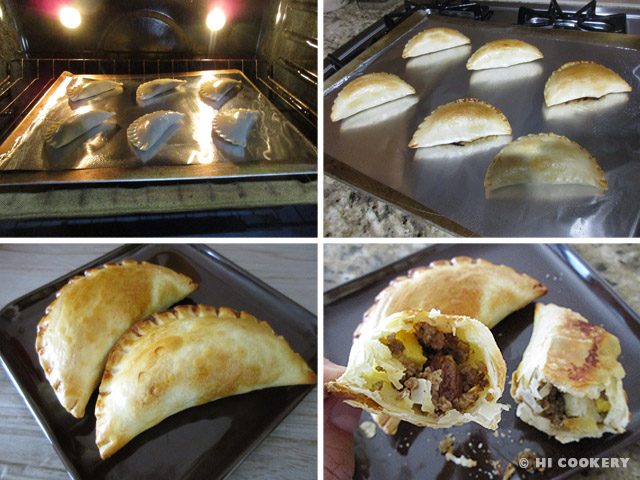
Place empanadas a baking sheet about 2 inches apart. Bake in a preheated oven at 375 degrees F for around 20 minutes or until golden brown and the filling is hot and cooked through. 

Notes

  • Latino adobo seasoning (spices) is completely different than the Filipino adobo (braised meat stewed in a soy-vinegar sauce) dish.
  • It is optional to add ¼ cup chopped manzanilla olives stuffed with minced pimientos in this Argentinean-style beef empanada recipe to enhance its Latin flavor and flair.

Mini Meat (Forfar) Bridies

Meat Bridies April 8: National Empanada Day

Twa bridies, a plen ane an an ingin ane an a.

(Two meat pasties, a plain one and an onion one as well.)

~Scots Dundee Dialect

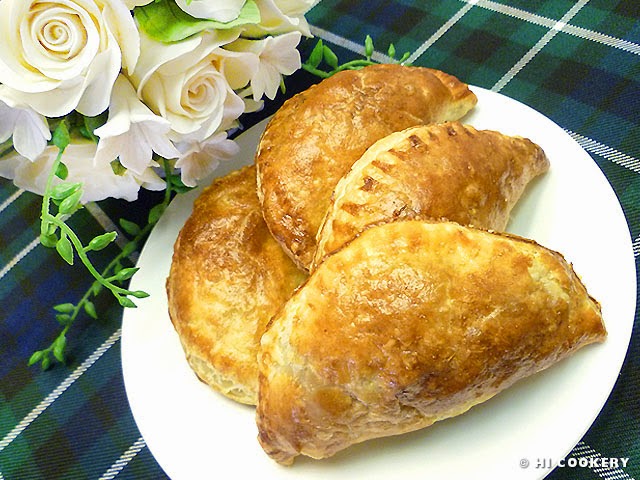
We have blogged before about empanadas, pierogis, turnovers and dumplings from different cultures. This particular post focuses on the Scottish savory version—a meat bridie.

We usually snack on meat bridies at the Scottish festivals that we attend across North America. Those portable pies are convenient and filling while roaming around the fairgrounds. Though they look like a casual cuisine, meat bridies are also served at weddings, as they are appropriately named for the “bride” (a word possibly derived from the Celtic Saint Brigid). Moreover, its horseshoe shape is considered lucky—especially if it is in the up or U position—and is symbolic of the woman’s womb (bridal fertility).

We also make and serve mini meat bridies to the brides and grooms we sponsor from our church during marriage preparation meetings with them. They appreciate the trivia of this traditional treat associated with the Scottish snack from Highlander’s heritage.

Make some mini meat bridies for bridal showers, teatime, picnics and National Empanada Day.

Recipe

(Adapted from Chef James Martin/BBC)

Ingredients

  • 2 tablespoons olive oil
  • 1 small onion, finely chopped
  • 3 sprigs fresh thyme leaves, finely chopped
  • 12 ounces lean ground beef
  • 1 teaspoon mustard powder
  • 3 tablespoon beef stock
  • salt and pepper to taste
  • 2-3 packages frozen puff pastry, thawed (we used Pepperidge Farms brand)
  • 1 egg, beaten

 Directions

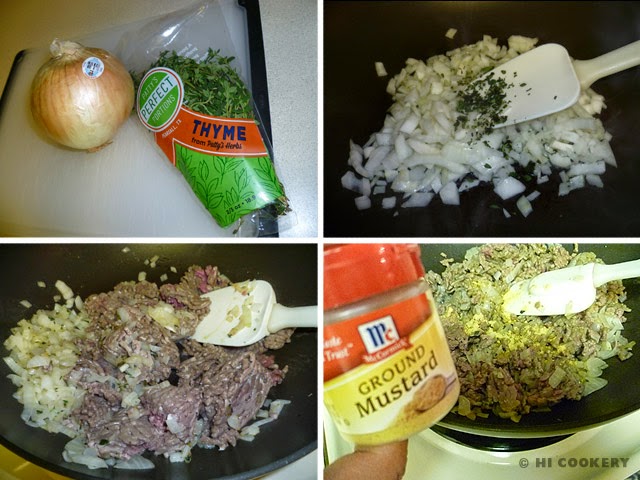
In a skillet, heat the oil and brown the onions with thyme leaves for about 2-3 minutes or until the onions are soft and golden. Add the ground beef and cook until no longer pink. Mix in the mustard powder.

Meat Bridies

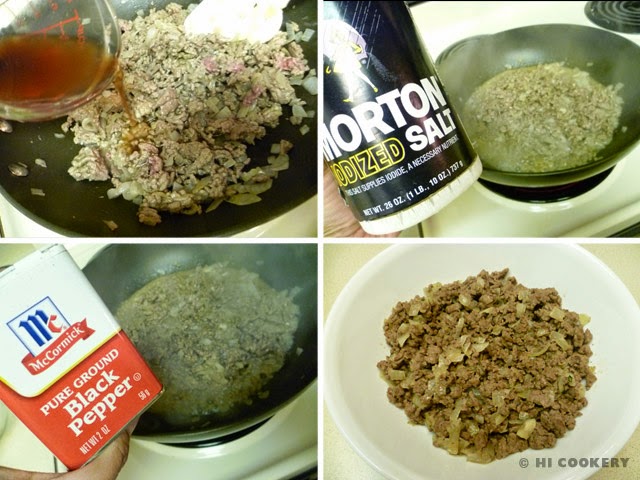
Stir in the beef stock and cook until the liquid is absorbed. Salt and pepper to taste. Remove from the stovetop, drain any grease and allow the mixture to cool.

Meat Bridies

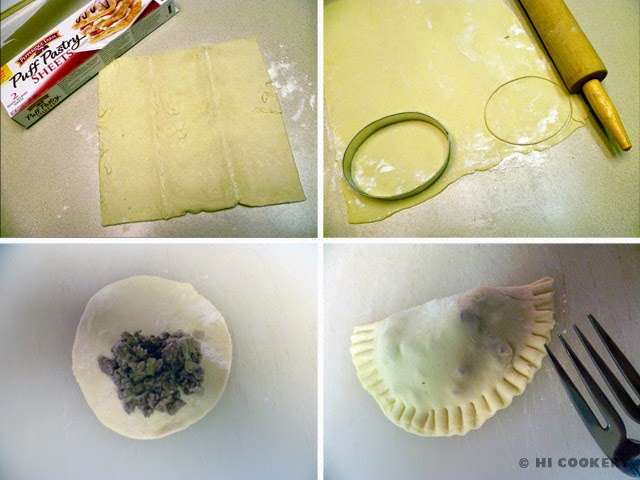
On a clean, lightly floured surface, unroll the thawed puff pastry sheets. Flatten to 1/4-inch to smoothen out the seam of the folds. Cut into 3-inch rounds. Flatten into a horseshoe shape (optional). In the middle of the pastry, place a spoonful of filling. Moisten the edges with a little water. Fold over and press the edges together. Use the tines of a fork to crimp and seal.

Meat Bridies

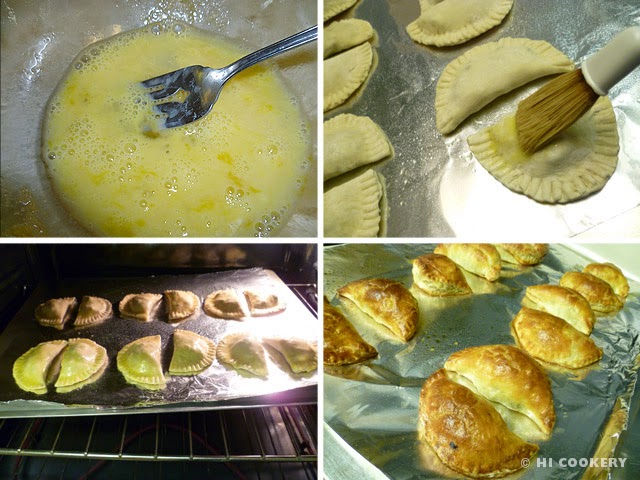
Place on a lightly greased baking sheet, leaving a few inches apart to allow the pastry to puff up and expand in the oven. Continue making the rest of the mini meat bridies. Beat the egg(s). Brush the tops of each meat bridie with the egg wash. Bake in a preheated oven at 350 degrees F for 20-30 minutes, or until they are golden brown. Carefully remove from the oven. Place on a platter and serve hot.

Meat Bridies  

Notes

  • Similar to the meat-and-potato-filled Cornish pasties, Forfar bridies are traditionally made with minced steak, with or without onions, encased in a shortcrust pastry, although flaky (puff) pastry is preferred nowadays. The original recipe uses raw meat before filling the dough, but we sauté our ground beef in seasonings to make sure the filling is cooked through, which saves baking time and prevents the pastry from overbrowning.
  • Some bakers mark the bridies with a hole before baking to indicate the filling—one hole for plain (meat only) and two holes for meat-and-onions; hence, the Scots Dundee dialect statement above.
  • Unbaked meat bridies may be frozen first, then baked at a later time.
  • The origins of meat bridies are uncertain. But one account is that they originated in Forfarshire (now Angus County) and are called Forfar bridies. Another story is that they were named after Margaret Bridie, also from Forfarshire (then Glamis, Scotland), who sold them at the Buttermarket in the 1850s.
  • J.M. Barrie, author of “Peter Pan”, mentioned Forfar bridies in “Sentimental Tommy”. He was born in Kirriemuir near Forfarshire.