Calamansi Juice

calamansijuice

January 15: National Fresh Squeezed Juice Day

Islander grew up with a calamansi tree in the backyard of her childhood home in Hawaii. When the tree bore a lot of fruit, her Daddy would pick a bunch of the “Philippine lime” and squeeze out the juice, making the whole kitchen smell so citrusy! Canned calamansi juice just isn’t the same—it tastes tinny—and doesn’t have that labor of love from Daddy for the family.

Following the theory of the “Proust Effect” that certain scents trigger memories, calamansi juice is definitely a delicious reminder of Islander’s small kid time “hanabata days” in Hawaii and of her Filipino heritage.

Don’t be fooled by the fruit, though. Calamansi looks like a mini tangerine when ripe. But it tastes super sour (like a lime) on its own and really needs to be juiced, diluted with water and sweetened with sugar. The recipe is quite simple and calamansi juice is very healthy and refreshing.

For a tart and tasty beverage for National Fresh Squeezed Juice Day, make calamansi juice.

Recipe

Ingredients

  • 1 cup calamansi juice, fresh squeezed
  • 4 cups water, divided use
  • ½ – ¾ cup sugar, granulated white (or other sweetener to taste)

Directions

Wash the calamansi well and let dry. Cut the calamansi from the top to avoid slicing through the seeds. Squeeze the fruit in a strainer to make 1 cup of juice, discarding the seeds.

calamansijuicesteps1

Place the juice in a large bowl or pitcher. In a small pot, bring 1 cup of water to a boil. Stir in the sugar until it dissolves. Let cool completely. Add to the calamansi juice mixture. Stir in the remaining 3 cups of water. Cover and refrigerate until cold. Pour into glasses and serve with or without ice.

calamansijuicesteps2

Notes

  • Sugar dissolves better in hot water. That is why we boil them together to make a simple syrup to sweeten the fresh squeezed calamansi juice.
  • Use less water when diluting the juice if serving with ice cubes.
  • Calamansi is also known as calamondin. Learn more about its health benefits and culinary uses from Wikipedia.


Fire Cakes

Fire Cakes 

January 14: U.S. Ratification Day (1784)

Children everywhere most likely learn about their nation’s roots in school. Highlander, a Canadian who grew up in the United States, and Islander, who was born in the Philippines and became a naturalized citizen, also learned about American history through the popular Schoolhouse Rock television segments that were broadcast in between the Saturday cartoons. Those educational tunes were so catchy!

As today is U.S. Ratification Day, which commemorates the end of the American Revolutionary War/War of Independence, we remember one of the popular Schoolhouse Rock videos, “The Shot Heard ‘Round the World”.

We also marked this day by making “modern” fire cakes, a simple staple cooked by the early American soldiers to sustain them while out on the battlefields. Original fire cakes were prepared by mixing flour, salt and water to form a flat dough which was baked over a campfire, hence the name. They taste bland and are kind of hard and chewy. Historical re-enactors at colonial sites still make them and teachers and parents sometimes show children how to make fire cakes to learn about life during colonial times. A cooking component for a history lesson is a great idea for an edible education!

Try this fire cake recipe in observation of U.S. Ratification Day.

Recipe

Ingredients

  • ½ cup flour
  • generous pinch of salt
  • ¼ cup water

Directions

In a mixing bowl, combine the wheat flour and salt. Pour water and mix until everything sticks together. Roll the dough into a ball.

firecakessteps1

Divide into two disks. Flatten on a baking sheet lined with parchment paper. Bake in a preheated oven at 450 degrees F for 30 minutes. Remove from the oven and serve warm. Wrap any leftover fire cakes in plastic film and keep at room temperature.

firecakessteps2

Notes

  • We used wheat flour in this recipe to mimic what the militia and minutemen may have eaten during the Revolutionary War. White, refined flour was not available to them at the time.
  • We also used tap water in this recipe. We imagine that the soldiers used water from streams or wells (unlike our filtered water) to make fire cakes.
  • This recipe is not suitable for those who are gluten-sensitive.

Epiphany Jam Tart

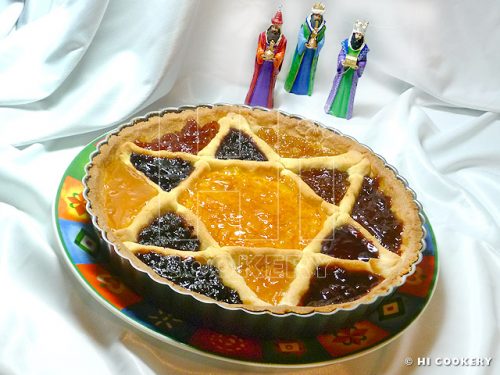
epiphanytart

January 6: Epiphany/Feast Day of the Three Kings

When he was in elementary school, Islander’s brother, K, was in the cast of our church’s Christmas pageant in Hawaii. In the first grade, he was one of the little angels. In the sixth grade, he was one of the three kings! For both occasions, Islander and her Mommy made his costumes. NOT buying the convenient, ready-made costumes in the store allowed the family to create one-of-a-kind designs for K—including the styrofoam ramen/instant noodles bowl that became the base of his crown!

Islander continues her creativity through cooking. For the Feast Day of the Three Kings, she made a Victorian-style Epiphany jam tart, inspired by one of her favorite food blogs, Catholic Cuisine. Traditionally, the tart consists of 13 different jams, which represent Jesus and His Apostles. The Star of David design symbolizes that “star of wonder, star of night, star of royal beauty bright”, which the wise men followed to find the King of Kings (Baby Jesus). The beautiful baked dessert looks like a church stained glass window.

Make a colorful and creative Epiphany jam tart and indulge in this festive food on the Feast Day of the Three Kings.

Recipe

(Adapted from Catholic Cuisine)

Ingredients

  • 1 ½ cup flour
  • ½ cup powdered sugar
  • ¼ teaspoon salt
  • 1 stick + 1 tablespoon (9 tablespoons) cold butter, cut into pieces
  • 1 egg yolk
  • 13 different jams

Directions

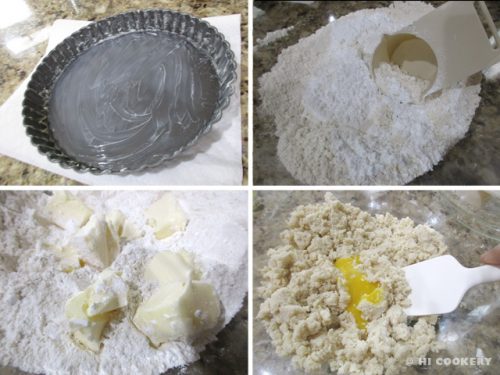
Grease or generally butter a 8- or 9-inch tart tin. Set aside. In a large bowl, combine the flour, powdered sugar and salt. Cut in the cold butter and egg yolk and mix until moistened and a dough ball is formed.

epiphanytartsteps1

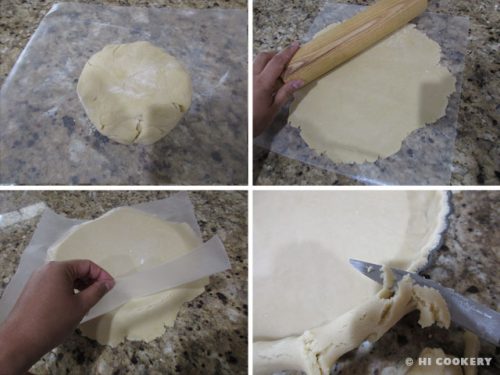
Place the dough ball on a floured wax paper. Flatten into a disc. Roll out with rolling pin to fit the pastry into the tart tin, allowing for overhang. Invert into the tart tin and press on the bottom and up the sides. Trim the excess pastry from the edge.

epiphanytartsteps2

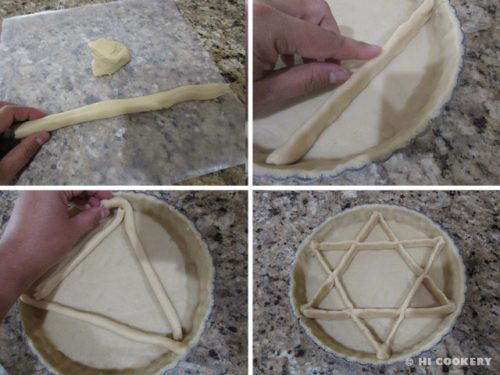
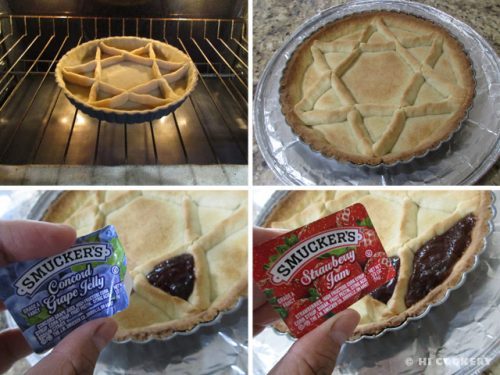
Using the excess pastry, roll out strips to form the star shape in the middle. Press the strip into the pastry, starting with a large triangle. Add the other strips to complete the star shape. Freeze the pastry for 30 minutes.

epiphanytartsteps3

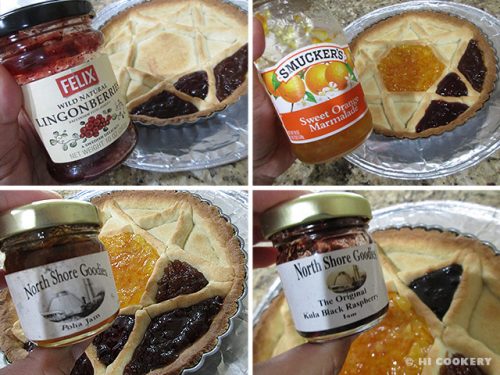
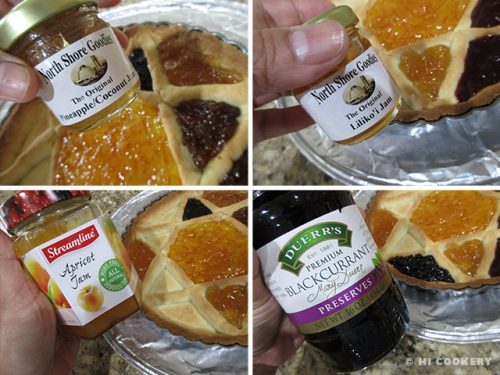
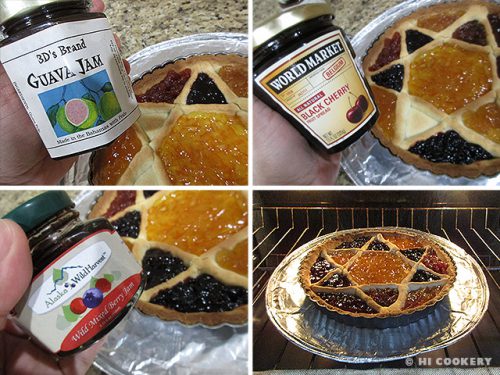
Remove the pastry from the freezer and bake in a preheated oven at 375 degrees F for 20-25 minutes. Remove from the oven. Stir the jams and spoon a different one in each section.

epiphanytartsteps4

epiphanytartsteps5

epiphanytartsteps6

epiphanytartsteps7

Return to the oven and bake for another 10 minutes or until the jams have set. Remove from the oven and cool on a wire rack. Slice and serve.

Notes

  • The 13 jams/jellies/preserves we used for this recipe included: Concord grape jelly, strawberry jam, lingonberry jam, sweet orange marmalade, Hawaiian poha (Big Island cape gooseberry) jam, Kula (Maui) black raspberry jam, pineapple-coconut jam, liliko’i (passion fruit) jam, apricot jam, Scottish blackcurrant preserves, Bahamian guava jam, black cherry fruit spread and Alaskan wild mixed berry jam.
  • Thanks to our friends for bearing gifts from afar: Phyllis S. (formerly from Hawaii but now lives in South Texas) for the three kings ornament, pictured in the final food photo above, which she gave to us as a Christmas gift; and Janet A. (from The Bahamas) for the guava jam she sent to us from her island.
  • Feast on other Epiphany foods on the Feast Day of the Three Kings: brown sugar shortbread stars and galette de rois (king’s cake).
  • January 6 signals the end of the Christmas season as it is the 12th day of Christmas or Twelfth Night. The Christian calendar then returns to Ordinary Time in the liturgical year.