Ginataan Bilo-Bilo

ginataanbilobilo

December 22: Winter Solstice

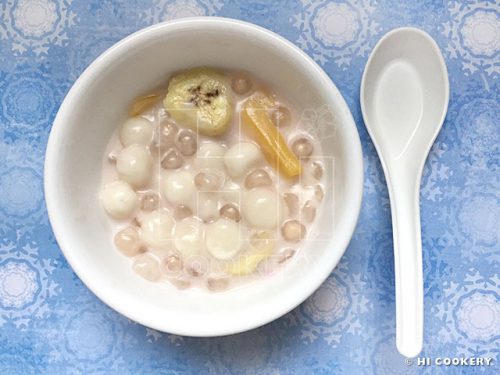
As the days grow shorter and the nights get colder, keep warm on the Winter Solstice with a sweet Asian soup consisting of small sticky rice balls. In China, during the Dōng Zhì Festival, the clear soup is called tangyuan—the rice balls may be plain or stuffed with a sweet bean, black sesame or peanut paste. The Filipinos have a similar sweet soup, ginataan bilo-bilo—the rice balls are stewed in a sweetened coconut milk mixture. Other Asian countries have their own versions of a sweet sticky rice ball soup (for example, Thai bua loi is similar to ginataan bilo-bilo). The round shape is auspicious and also symbolizes families gathering ‘round the holidays—as in “coming together full circle”.

Islander’s Mommy used to make ginataan bilo-bilo as a snack for the family when it was cooler weather in Hawaii (brrrr…low ‘70s!). Because it is labor intensive to roll the sticky rice balls, it represents a heart-warming food for all of us as well. Sometimes, tubers such as taro, sweet potato or ube (purple yam), are added to the soup to make it heartier. Because as kids, Islander and her brother called this dish “snowballs” due to its milky-white color, she prefers to add white taro to keep its wintery color (ube gives the dish a vibrant violet hue).

Welcome winter with a warm bowl of ginataan bilo-bilo and enjoy this dish through the holidays and the coming new year.

Recipe

Adapted from Mommy

For the mochi balls

  • 1 lb. (1 box) mochiko (sweet rice) flour
  • water
  • flour

Directions

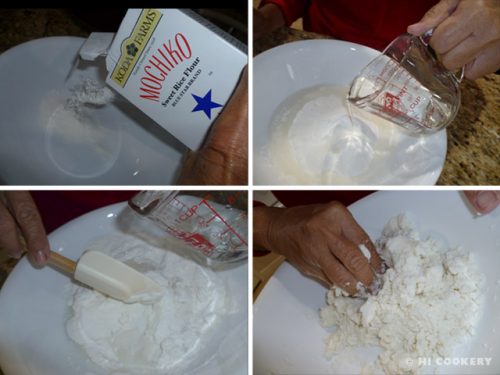
In a large bowl, put the mochiko and make a well. Gradually add water a few drops at a time. Stir until the dough sticks together.

ginataanbilobilosteps1

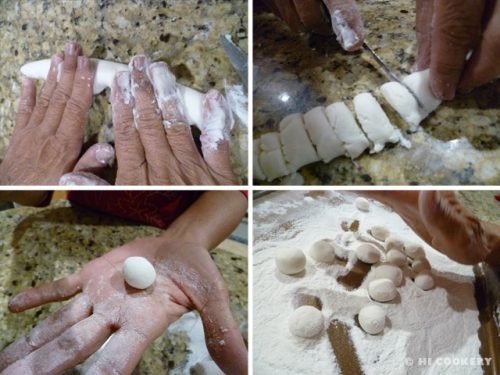
On a clean, floured surface, roll a palm-size ball of dough into a long strip around ¾-inch thick. Slice into ¾-inch pieces. Roll each piece into a ball. Place the balls on a flat container filled with flour to prevent the dough balls from sticking. While the dough balls rest, make the sweet stew.

ginataanbilobilosteps2

For the sweet stew

  • 1 cup cooked large tapioca pearls (or mini tapioca, if desired)
  • 1 cup yam/taro/sweet potato, peeled and sliced into bite-sized chunks, par-boiled (semi-cooked)
  • 2 cans coconut milk
  • 1 cup water
  • ½ cup sugar (or to taste)
  • 1 can jackfruit slices (reserve ¼ cup liquid syrup from the can to sweeten and flavor the stew—optional); cut into smaller strips
  • 1-2 sweet plantain bananas, peeled and sliced into 1 inch chunks
  • ¼ teaspoon anise seed

Directions

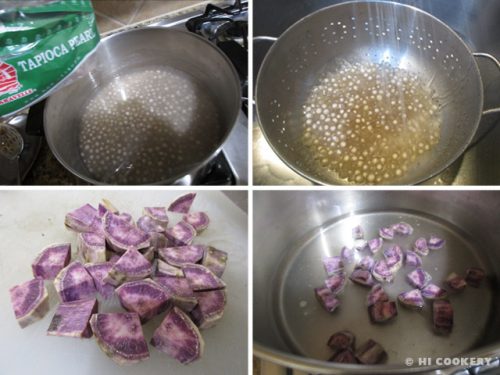
Cook the tapioca according to the package instructions. Drain and rinse. Set aside. Slice the yam/taro/sweet potato. Parboil, drain and set aside.

ginataanbilobilosteps3

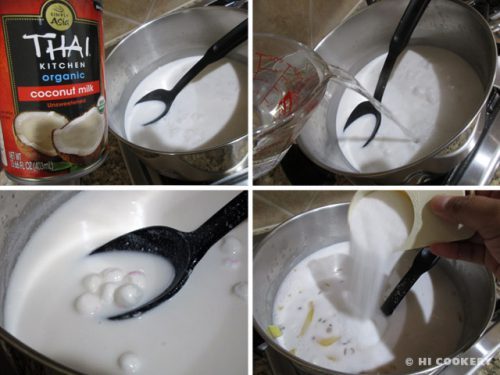
In a large pot, stir the coconut milk with water. Bring to a boil over medium-low heat as to not scald the coconut milk. Remove each mochiko ball from the flour and add to the milk mixture. Gently stir to prevent the balls from sticking to each other. Simmer on low heat for 15-20 minutes or until the balls float slightly to the top. Add the sugar (and jackfruit syrup, if extra flavoring is desired).

ginataanbilobilosteps4

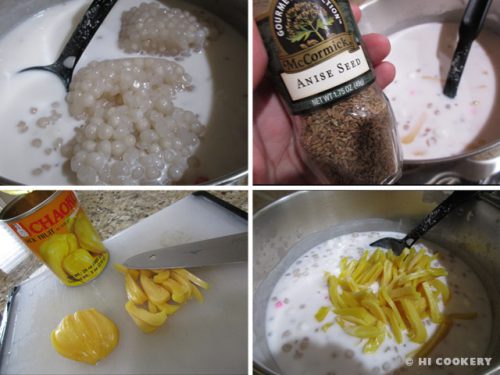
Add the cooked tapioca pearls and stir to separate them. Sprinkle the anise seed. Stir in the jackfruit slices.

ginataanbilobilosteps5

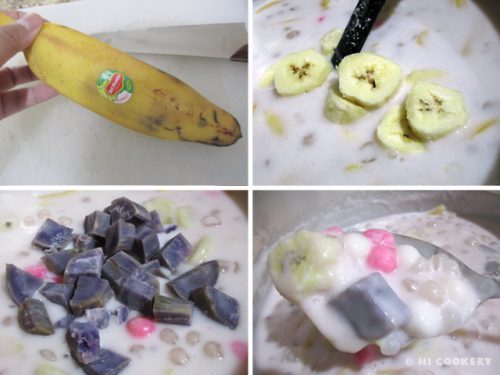
Add the plantain banana slices and taro/yam/sweet potato. Serve warm so the balls are still chewy and not hard. Store in an airtight container. If serving leftovers, ladle into soup/dessert bowls and add a little water to liquefy the stew. Microwave for a minute or two until the mochiko balls have softened.

ginataanbilobilosteps6

Notes

  • Depending on the location and lunar calendar, the Winter Solstice date can fall between December 21-23.
  • Thanks to Mommy, Daddy, Auntie Letty and Auntie Finey for making the rice balls for this blog post recipe when they visited us in Texas from Hawaii and the Philippines.
  • Frozen sticky rice balls may be found in Asian grocery stores and could be used as a shortcut to the homemade version. Make sure the balls are cooked through so they are soft and chewy instead of hard and flour-y.
  • If using ube (purple yam), there will be a violet tint to the sweet stew.
  • The addition of round tapioca pearls increase the luck factor and provide more chewy textures to ginataan bilo-bilo (and bua loi), making this dish appropriate for new year’s celebrations as well.


Calamansi Cupcakes

calamansicupcakes

December 15: National Cupcake Day

Highlander’s co-worker, Luchie A., has invited us to her house in the Gulf Coast of Texas to pick calamansi from the tree in her backyard. We have gathered grocery bags full of the fruit for ourselves and for friends. We typically squeeze all the little Philippine limes to make delicious fresh squeezed fruit juice. We also reserve a bit of the liquid to make calamansi cupcakes for Luchie and the other co-workers. The cupcakes are always a big hit with everyone in Highlander’s office.

National Cupcake Day occurs during the holiday season when cookies are frequently exchanged. But cupcakes are a sweet choice to share, too. If calamansi juice is available, use it to make this terrific and tart treat.

Recipe

For the calamansi cupcakes

  • 1 cup butter, softened
  • 1 cup sugar, granulated white
  • 4 eggs
  • 1 teaspoon vanilla extract
  • 1/3 cup calamansi juice, fresh squeezed or bottled/boxed/canned
  • 2 cups flour
  • 1 tablespoon baking powder

Directions

In a large mixing bowl, cream the butter with the sugar. Beat in the eggs. Stir in the vanilla.

calamansicupcakessteps1

Pour in the calamansi juice. In a separate bowl, combine the flour and baking powder. Add this mixture gradually to the other ingredients. Blend until the batter is smooth (it will be thick).

calamansicupcakessteps2

Scoop into cupcake papers and place in muffin tins. Bake in a preheated oven at 350 degrees F for 20 minutes or until done. Remove from the oven and transfer to a wire rack to cool completely before frosting the calamansi cupcakes.

calamansicupcakessteps3

For the calamansi buttercream frosting

  • ½ cup butter, softened
  • ½ teaspoon vanilla extract
  • 3 cups powdered sugar
  • 2+ tablespoons calamansi juice

Directions

In a large bowl, cream the butter with the vanilla. Gradually add the powdered sugar. Thin to a spreadable consistency with the calamansi juice. Use Wilton tip 1M in a piping bag and decorate the top of each cupcake with swirls.

calamansicupcakessteps4

Notes

  • Squeeze more juice from many calamansi fruits for a refreshingly tart drink. See our easy recipe for calamansi juice for National Fresh Squeezed Juice Day on January 15.
  • Maraming salamat (thank you very much in Pilipino/Tagalog) to Luchie A. for the calamansi!


Pearl Harbor Cocktail

pearlharborcocktail

December 7: Pearl Harbor Remembrance Day

Islander is a Pearl Harbor girl. Her Daddy, who is retired from the U.S. Navy, was stationed at Pearl Harbor twice. Her Mommy still works as a civilian for MWR Joint Base Pearl Harbor-Hickam and had offices in Pearl Harbor and on Ford Island. The family lived in military housing and Islander went to Pearl Harbor Kai Elementary School. Like her parents, she eventually worked on base, too. So Pearl Harbor holds a special place in her heart.

Many remember Pearl Harbor for the Japanese surprise attack on Dec. 7, 1941, launching the United States into World War II.

But Islander also remembers one of the old Hawaiian legends about Wai Momi (translated as “water of pearl” because the harbor was home to a lot of pearl oysters in the 1800s). Wai Momi was also home to a shark goddess and her family (brother or son) and they protected the entrance to the harbor. When the U.S. Congress approved the expansion of a naval base on Oahu in the early 1900s, construction began on the kapu (“forbidden”) area. But after much work had already been done, the dry dock collapsed. The natives had warned that it was because appropriate offerings were not made to the shark goddess in the first place. The skeptical builders followed Hawaiian traditions to appease her and, as work began again, they found the bones of a 15-foot shark lodged below the harbor. A kahuna (priest) performed all the necessary rites, construction went smoothly thereafter and the dry dock finally opened in 1919.

Today, Pearl Harbor is the home of the U.S. Pacific Fleet. There are several historical sites we have visited as well as hosted tourists: Arizona Memorial, USS Bowfin, Battleship Missouri and the Pacific Aviation Museum. In 2016, several events are planned to commemorate the 75th anniversary of the attack on Pearl Harbor.

HI Cookery remembers Wai Momi with a classic cocktail. Toast this tropical drink on Pearl Harbor Remembrance Day. Aloha!

Recipe

(Adapted from About.com – Cocktails)

Ingredients

  • 2 ounces vodka
  • 1 ounce melon liqueur (like Midori)
  • pineapple juice
  • maraschino cherry and pineapple chunk, optional garnishes

Directions

In an old fashioned glass, fill with ice. Then add the vodka and melon liqueur. Fill with pineapple juice. Garnish with a maraschino cherry and pineapple chunk.

pearlharborcocktailsteps

Notes

  • Try a pineapple vodka for a fruitier flavor in this cocktail.
  • Eat Hawaiian food to celebrate Pearl Harbor Day. Search our blog for recipes.