Chicken Cordon Bleu

Chicken Cordon Bleu

April 4: National Chicken Cordon Bleu Day

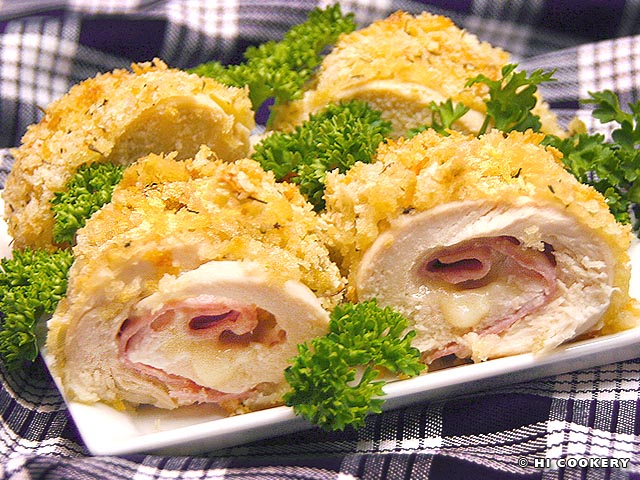
At a get-together with our Ukrainian friend, Olga W., we sampled regional Russian cuisine, such as pierogi, borscht and Chicken Kiev. She mentioned that by adding ham and cheese to the rolled chicken cutlets, Chicken Kiev becomes Chicken Cordon Bleu. While the recipe sounds French in origin, this “blue ribbon” dish is actually a 20th century American invention inspired by European roulades and breaded meats. We baked instead of fried our version of Chicken Cordon Bleu and coated it in panko for a crunchier texture. It is a nice change for a chicken meal and most appropriate to make on National Chicken Cordon Bleu Day.

Recipe

(Adapted from WiseGeek)

Ingredients

  • 4 chicken breasts, thinly sliced and pounded to ¼-inch thick
  • 4 slices ham
  • 4 slices Swiss or Gruyère cheese
  • ¼ cup flour seasoned with salt and pepper
  • 1 egg beaten with 1 tablespoon water
  • 1 cup panko (Japanese bread crumbs)
  • 2 teaspoons thyme
  • 1 teaspoon garlic powder
  • olive oil

Directions

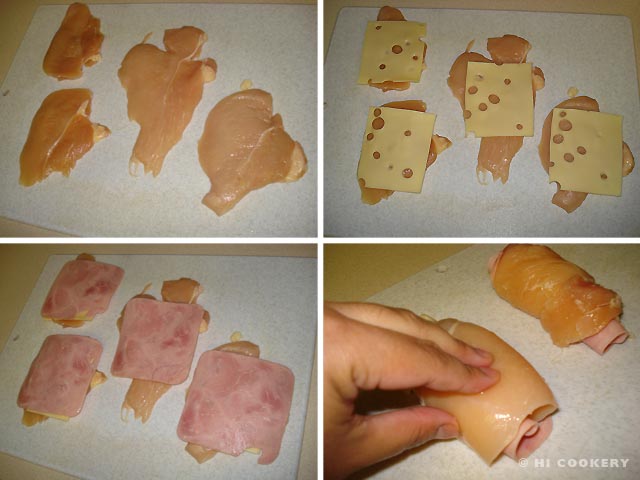
Prepare the chicken. Place the ham and cheese on top of each slice of chicken. Tightly roll them up, securing with a toothpick.
Chicken Cordon Bleu

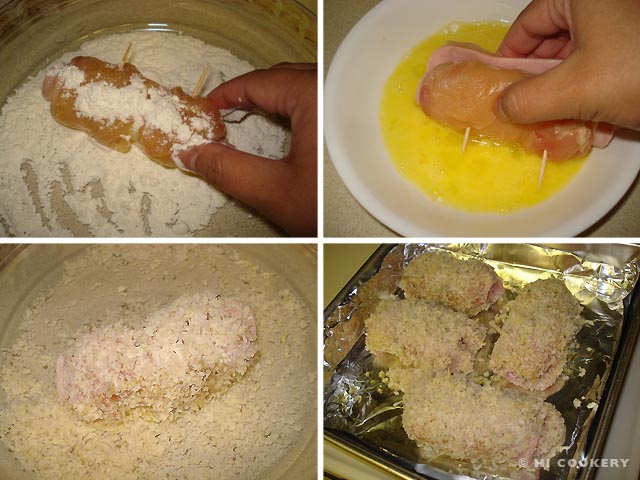
Make an assembly line of flour, egg and panko (pre-mix the panko with thyme and garlic powder). Dredge the chicken in the flour, then egg and finally panko. Place in a baking pan with the seams side down. Drizzle some olive oil over the chicken.
Chicken Cordon Bleu

Bake in a preheated oven at 350 degrees F for 30-45 minutes or until the chicken is cooked through, the juices run clear and the meat is no longer pink inside. Remove from the oven. Discard the toothpicks before serving. Serve whole or slice in half to expose the ham and melting cheese.
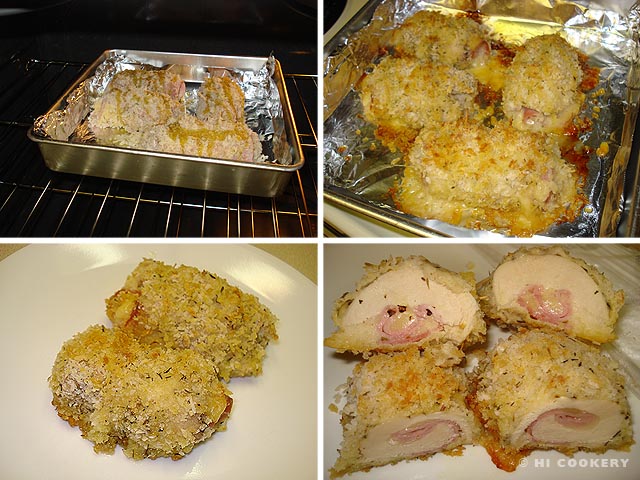
Chicken Cordon Bleu

Notes

  • Sometimes a little gravy is poured over the chicken before serving. To make the gravy, bring ½ cup chicken broth to a boil in a suacepan. Reduce the heat and whisk in 1 cup heavy cream. Season with salt, pepper, garlic powder and a little dried oregano to taste. Stir until the gravy is thickened. Spoon over the Chicken Cordon Bleu.
  • Read about the background of Chicken Cordon Bleu on the eHow and Food Timeline websites.
Peanut Butter and Jelly Sandwich

Peanut Butter and Jelly Sandwich

April 2: National Peanut Butter and Jelly Day

The peanut butter and jelly (PB&J) sandwich is the quintessential school lunchbox meal. It is quick and easy to prepare, transports well in a paper sack or lunchbox, is affordable and environmentally-friendly. PB&J sandwiches are so popular that one survey says that the average American will have eaten 1,500 of PB&J sandwiches before graduating from high school!

Highlander ate PB&J sandwiches often as a kid. And once in a while, Islander did, too, as a break from her bento boxes. Sometimes, we still pack PB&J sandwiches for picnics and road trips or make them when we are lazy to cook a lunch on the weekends.

For some North American nostalgia and for National Peanut Butter and Jelly Day, make and eat a PB&J sandwich.

Recipe

  • Two slices of bread (white or wheat)
  • Peanut butter
  • Jelly (grape, strawberry or another favorite flavor)

Directions

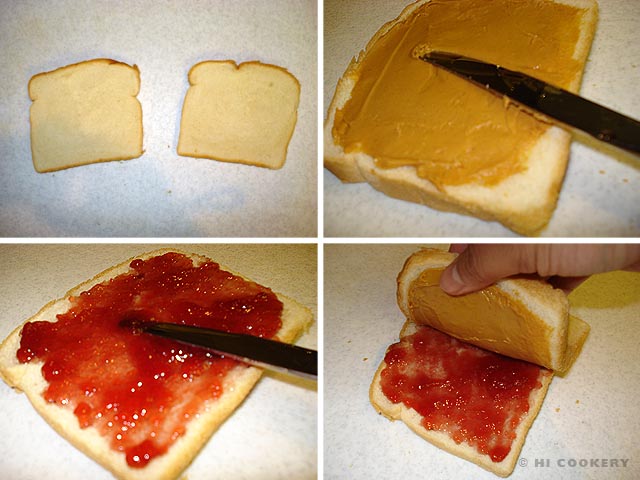
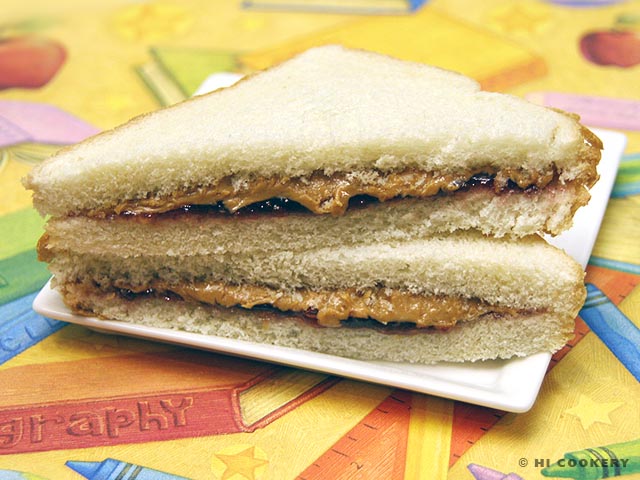
Spread peanut butter on side slice of bread. Spread jelly on the other.  Sandwich together. Slice diagonally or cut off the crusts, if desired.

Peanut Butter and Jelly Sandwich

Notes

  • Learn more about the history of the peanut butter and jelly sandwich from The Food Timeline website.
  • Peanut butter and jelly is a classic combination on many snacks besides sandwiches, such as cookies, cakes, bars, tarts and candies.

Capirotada

Capirotada

April: Lent

Now that we live in Texas, we are fortunate to be able to sample some of the most special South-of-the-Border Catholic cultural cuisine during holy days. Latino ingredients are abundant and readily available at local grocers for us to try cooking a meaningful Mexican meal.  For Lent, we learned how to make a traditional bread pudding called capirotada.  Our Tex-Mex friends explained to us that the bread represents the body of Jesus Christ; the syrup is His precious blood; the cinnamon sticks are the wood of the cross; the raisins are our sins and the nails of the crucifixion; and the cheese symbolizes the church that binds all of the faithful together. Capirotada exemplifies edible evangelism at its best!

Recipe

(Inspired by Gregorio y Sylvia P. and adapted from HEB)

Ingredients

  • 4 bolillos (white or wheat rolls) or 1 large loaf of French bread
  • ½ cup butter or margarine
  • 5 cups water
  • 3 sticks cinnamon
  • 1 teaspoon anise seeds
  • 3 cones piloncillo (or 1 ½ cups brown sugar)
  • 1 teaspoon vanilla (we used Mexican vainilla)
  • 1 cup raisins
  • 2 cups shredded cheddar cheese (we used Mexican blend of shredded cheeses, such as Sargento brand Classic 4 Cheese Mexican)

Directions

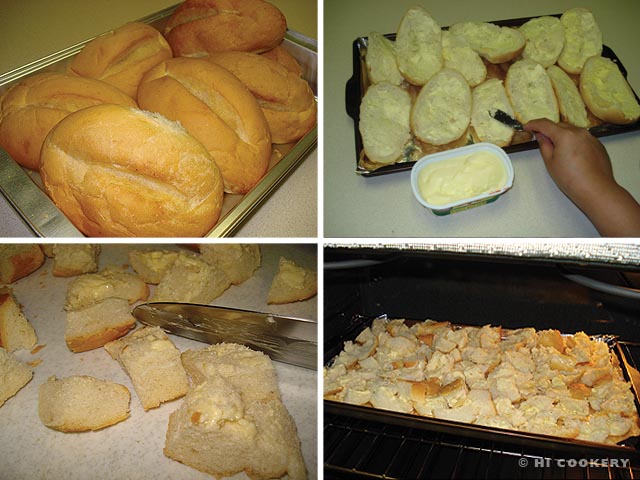
Slice the bread and butter them. Toast in the oven at 350 degrees for 10-15 minutes. Remove from the oven and cut the sliced, buttered bread in to 2-inch pieces. Arrange them in a large casserole or baking pan.

Capirotada

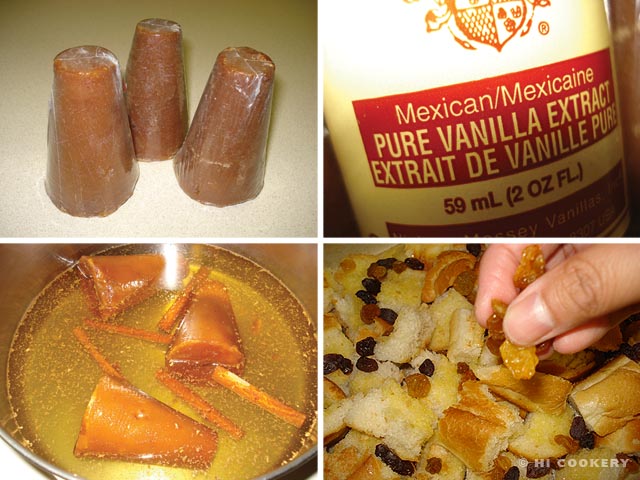
Make a syrup by boiling the water with cinnamon, anise seeds, piloncillo/brown sugar and vanilla for 30 minutes, mixing well to dissolve the piloncillo/brown sugar.  Strain the residue and retain the liquid. Sprinkle half the raisins on top of the bread.

Capirotada

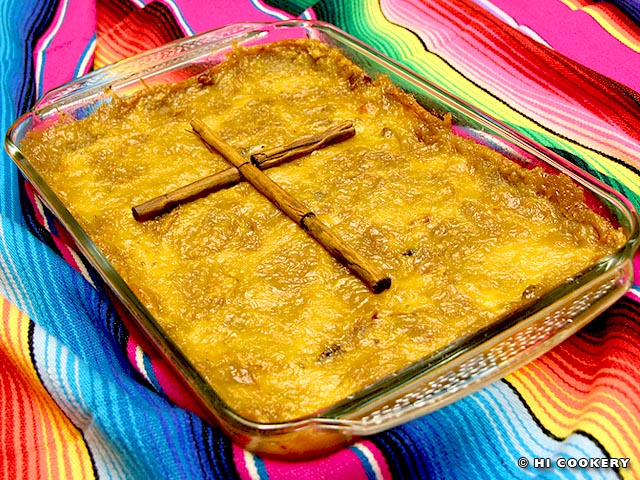
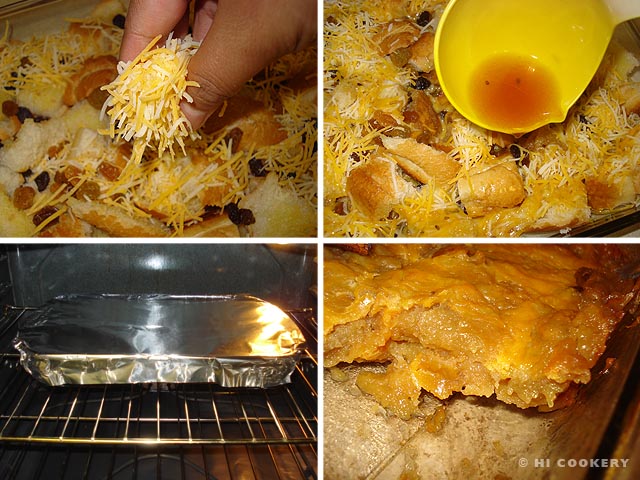
Sprinkle one cup of the shredded cheese on top of the bread. Ladle the syrup over the bread until it is half soaked. Sprinkle with the remaining raisins and cheese. Ladle more syrup until it is well absorbed in the bread mixture. Cover with foil and bake in a preheated oven at 350 degrees F for 40-45 minutes. Remove from the oven. Decorate the top with cinnamon sticks in the form of a cross (optional). Capirotada may be served warm or cold.

Capirotada

Notes

  • Sprinkle a cup of chopped pecans in the mix before baking to add a crunchy texture to the dish.