03 March


Johnny Appleseed Cake

Johnny Appleseed Cake

March 11: Johnny Appleseed Day

In elementary school, we enjoyed “movie mornings” when we learned about legendary people of the American frontier like Johnny Appleseed. Formally known as John Chapman (September 26, 1774-March 18, 1845), he was an eccentrically-dressed man who was famous for planting apple trees and establishing orchards across the Midwest. While planting apple seeds, the New Church missionary was also planting seeds of his faith by living simply, touting the health benefits of his fruits, caring for animals and showing kindness wherever he traveled. Johnny Appleseed is also associated with this hymn:

“Oh, the Lord is good to me,

and so I thank the Lord for giving me the things I need,

the sun and the rain and the appleseed.

The Lord is good to me.

Amen, Amen, Amen, Amen, Amen.”

There are many tales about Johnny Appleseed as there are variations of the Johnny Appleseed cake. Some recipes are made from scratch using fresh-diced apples, while others use shortcut ingredients like canned apple pie filling or jarred applesauce. We chose the easiest one because 1) a child can participate in making this delightful dessert during a teachable moment and 2) we had a coupon for “buy a cake mix and get a can of pie filling for free”.

Celebrate Johnny Appleseed Day and bake an easy Johnny Appleseed Cake.

Recipe

(Adapted from Mr. Food)

Ingredients

  • 1 box yellow cake mix (may use sugar-free)
  • 1 can (21 ounces) apple pie filling (may use sugar-free)
  • 4 eggs (may use egg substitute)

Directions

Mist a 9×13-inch baking pan with cooking spray. In a large bowl, combine the cake mix, apple pie filling and eggs. Mix until smooth.
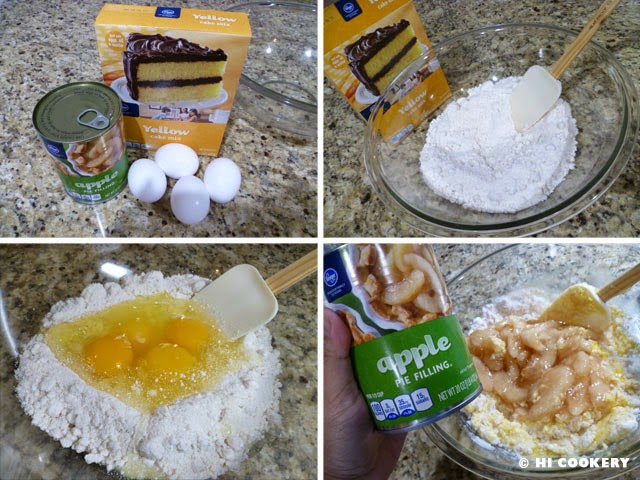
Johnny Appleseed Cake

Pour the batter into the prepared ban. Bake in a preheated oven at 350 degrees F for 30 minutes, testing with a toothpick for doneness. Remove from the oven and cool completely. Slice into squares and serve with whipped cream or vanilla ice cream sprinkled with a bit of cinnamon (optional) or enjoy plain with a cup of tea or coffee.
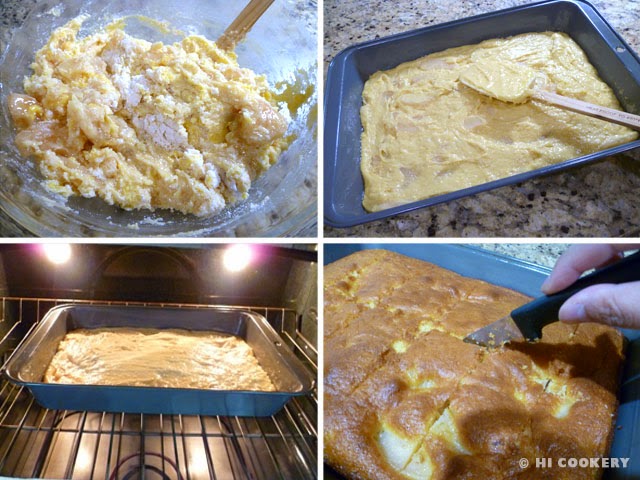
Johnny Appleseed Cake

Notes

Absinthe Cake

March 5: National Absinthe Day

As we were looking ahead to find green-colored recipes on the Internet to try for our upcoming St. Patrick’s Day festivities, we found a loaf cake made with “The Green Fairy”—also known as the alcohol Absinthe.

The legendary licorice/anise/fennel tasting spirit was a popular drink in Europe in the 18th century. The fluorescent green liquid’s strong flavor and aftereffects are believed to have inspired “creativity” in artists and writers like Ernest Hemingway, James Joyce, Pablo Picasso, Vincent van Gogh and Oscar Wilde.

Absinthe developed a reputation for causing hallucinations and was thus banned in a few countries such as France and America, especially during the Prohibition years. However, the crazy claim has been exaggerated, only adding to the alcohol’s mystique. It was just as recent as 2007 that America lifted its ban on the purchase and consumption of Absinthe.

Now we are legally able to try a recipe for Absinthe cake, the glaze topping of which follows the traditional style of serving the drink: place a sugar cube on a special slotted Absinthe spoon over a glass filled with a shot of Absinthe and slowly pour ice water over the sugar cube to dissolve and sweeten the beverage. The glaze itself is a mixture of sugar and Absinthe. Overall, it is definitely an adult dessert! Though the cake is not green, its ingredient “The Green Fairy” can give the leprechaun some serious competition this month. Go crazy and bake a boozy cake containing Absinthe on National Absinthe Day.

Recipe

(Adapted from “The Sweet Life in Paris” by David Lebovitz)

For the absinthe cake

  • 1 ¼ teaspoon anise seeds, ground fine
  • 1 ¼ cup cake flour
  • ½ cup stoneground yellow cornmeal (see Notes)
  • 2 teaspoons baking powder
  • ¼ teaspoon salt
  • ½ cup (1 stick/8 tablespoons) unsalted butter, room temperature
  • 1 cup sugar
  • 2 eggs
  • ¼ cup milk
  • ¼ cup Absinthe
  • orange zest

For the absinthe glaze

  • 1/3 cup sugar
  • 1/3 cup Absinthe

Directions

Grease a 9-inch loaf pan and line the bottom with wax or parchment paper. Set aside. Grind the anise seeds with a mortar and pestle or spice mill. Add the ground anise seeds to a bowl of cake flour, cornmeal, baking powder and salt. Combine well.

In a large mixing bowl, cream the butter with the sugar until light and fluffy. Beat in the eggs. In a small bowl, mix the milk and Absinthe. Stir in about a teaspoon of orange zest.

Beat the eggs into the butter mixture. Gradually add the flour mixture into the butter mixture, alternating with the milk mixture. Blend well but do not overbeat. Pour the batter into the prepared pan.

Bake in a preheated oven at 350 degrees F for 40 minutes, testing for doneness with a toothpick. Remove from the oven and let cool in the pan for 30 minutes. Transfer to a wire rack over a foil-lined lipped pan to catch any glaze drips. Use a toothpick or skewer to poke several holes in the warm cake.

Make the glaze by mixing the sugar and Absinthe in a cup but do not let the sugar dissolve completely. Spoon the glaze over the top of the cake, letting it drizzle down the sides. Sprinkle additional orange zest on top (optional). Let cool completely. Slice and serve.

Notes

  • Cornmeal adds a bit of a crunchy texture to this cake. Substitute with ½ cup plus 2 tablespoons of pistachio or almond meal, if preferred.
  • The green color from the Absinthe alcohol bakes out. So tint the batter with a tiny bit of green food coloring, if desired. Author David Lebovitz suggests adding chopped candied angelica (looks like green licorice sticks) to the batter before baking.
  • Learn more about Absinthe from Wikipedia

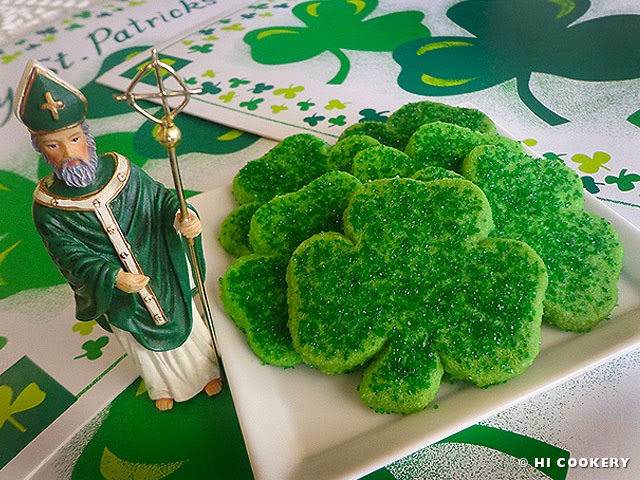
Shamrock Shortbread

Shamrock Shortbread

March 17: Feast Day of St. Patrick

How lucky and blessed are those who can taste some homemade shamrock-shaped shortbread on the Feast Day of St. Patrick. He used a three-leaf clover, which grows abundantly in Ireland, to teach the pagans about the Holy Trinity—God the Father, Son and Holy Spirit—and convert them to Christianity in the fifth century. Inspired by the sweet symbolism, we baked shamrock-shaped shortbread sprinkled with green sugar crystals that sparkle like emeralds from the isle of the Irish patron saint. Honor St. Patrick and his evangelistic efforts and make Celtic-style clover cookies.

May your blessings outnumber


The shamrocks that grow,


And may trouble avoid you


Wherever you go.


~Irish Blessing


Recipe

(Adapted from Irish Culture and Customs)

Ingredients

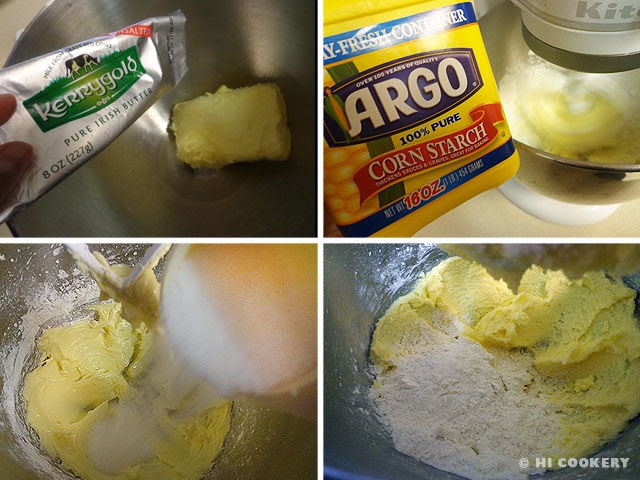
  • 1 cup (2 sticks) butter, softened (we used Kerrygold brand Irish butter)
  • 3 tablespoons cornstarch
  • 3/4 – 1 cup sugar, granulated white
  • 2 cups flour
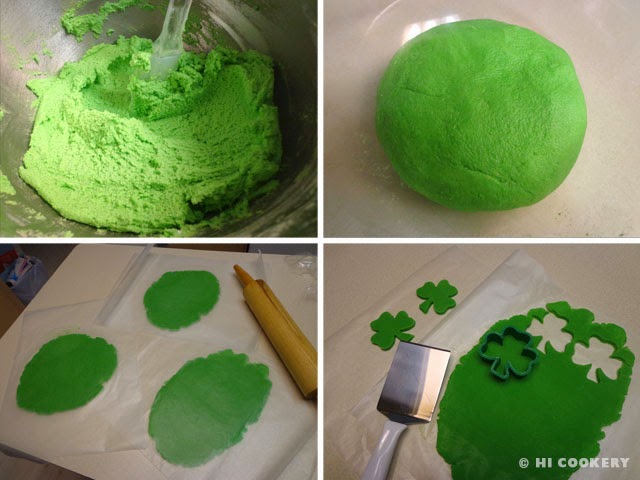
  • green food coloring (we used Wilton brand Leaf  Green icing color)
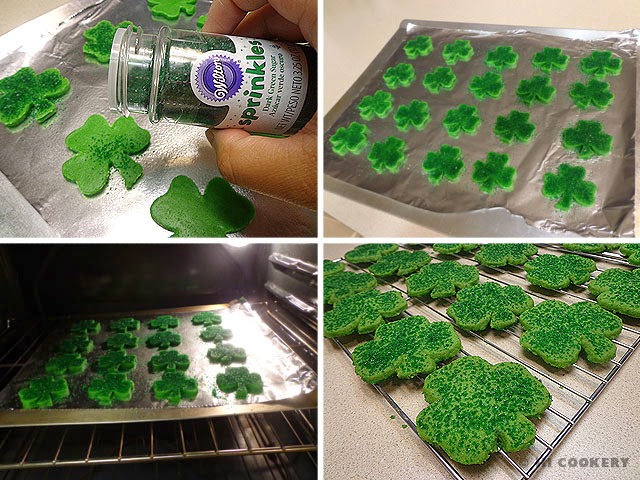
  • green sugar sprinkles (we used Wilton brand dark green colored sugar)

Directions

In a large mixing bowl, cream the butter until fluffy. Mix in the cornstarch and sugar and blend well. Gradually mix in the flour until a cookie dough is formed.

Shamrock Shortbread

Tint with green food coloring to the desired shade. Roll the dough into a ball, place in a covered bowl and refrigerate till firm (about an hour). Divide the dough into two or three smaller pieces. Place between sheets of waxed paper. Roll each to ¼-inch thickness. Cut with shamrock-shaped cookie cutters. Place on greased baking sheet at least an inch apart. Refrigerate for 15 minutes. Re-roll the dough scraps, place between sheets of waxed paper, roll to ¼-inch thickness and refrigerate for another 15 minutes or until firm. Continue cutting out shapes and refrigerating.

Shamrock Shortbread

Sprinkle the tops of the cookies with green sugar sprinkles. Bake in a preheated oven at 275 degrees F for 30-35 minutes. Remove from the oven and let cool on the baking sheet for 10 minutes. Transfer to a wire rack to cool completely.

Shamrock Shortbread

Notes

  • While this shortbread recipe is tasty, we prefer other sugar cookie doughs that are easier to handle. This one requires lots of chilling time and patience in order for the cookies to hold their shape. They do spread out a little in the oven but the puffiness goes down toward the end of the baking cycle.
  • Irish butter is creamier and more yellow than the domestic one. This may have affected the dough being more moist than other recipes.
  • Add a little flour to the work surface or waxed paper so the dough does not stick too much.
  • Baking time is longer for this recipe because it has a lower heat (275 instead of 350 degrees).
  • Search our blog for other shortbread, cookies and other Irish-inspired recipes for St. Patrick’s Day. We also recommended browsing for more feast day food ideas from Catholic Cuisine.

« Previous PageNext Page »