Bacon Cheddar Scallion Scones
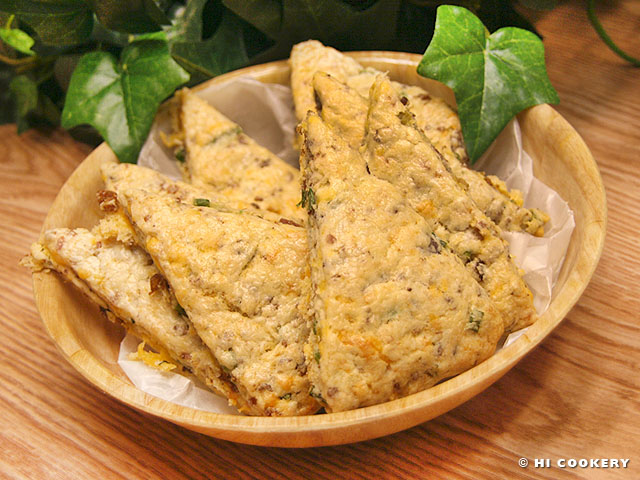
Bacon Cheddar Scones

May 30: National Scone Day

Our typical tea time tray includes sweet treats. But we decided to try something savory and substantial, such as bacon cheddar scallion scones, instead. Similar to bread-biscuits, they add balance to the sweet scones we normally have with our tea. For a fuller and formal tea time, add finger sandwiches, desserts and scones—sweet and savory—and make this meal a big deal! Or for a simple snack, bake bacon cheddar scallion scones on National Scone Day.

Recipe

(Adapted from King Arthur Flour)

Ingredients

  • 1 cup flour
  • ¼ teaspoon salt
  • ½ tablespoon baking powder
  • 1 teaspoon sugar
  • 2 tablespoons unsalted butter, cold and cut into small pieces
  • ½ cup cheddar cheese, grated
  • ½ cup bacon, cooked and crumbled
  • ¼ cup scallions, finely chopped (green part only)
  • 6 tablespoons heavy whipping cream or milk

Directions

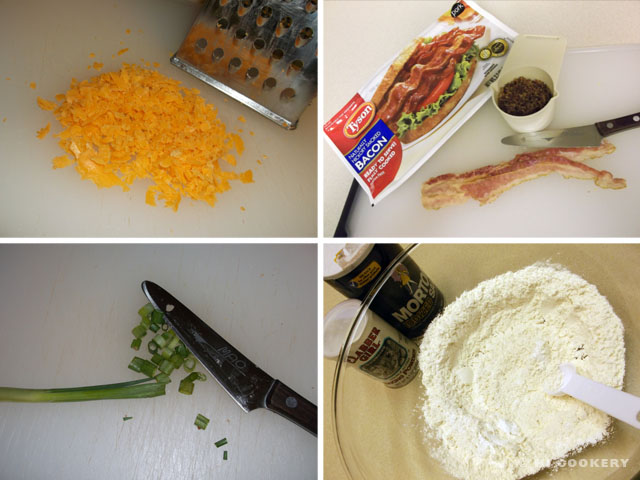
Grate the cheese, cook and crumble the bacon and chop the scallions. Set aside. In a separate bowl, combine the flour, salt and baking powder.
Bacon Cheddar Scones

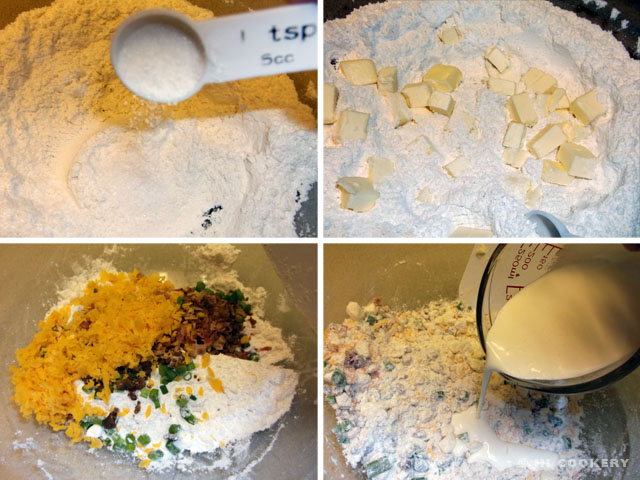
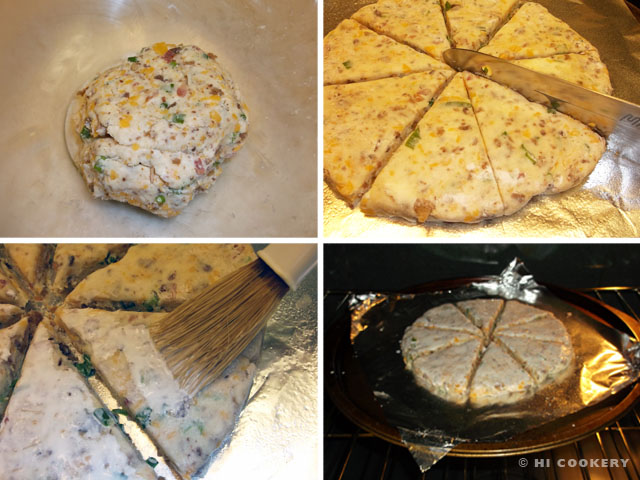
Add the sugar to the flour mixture. Cut in the butter pieces and mix until they resemble coarse crumbs. Stir in the grated cheese, bacon and scallions. Gradually add the cream or milk (more or less may be needed, depending on your kitchen temperature and humidity). The scone dough should be able to stick together. If it is too dry, add a little more milk. If it is too wet, add a little more flour.
Bacon Cheddar Scones

Form the dough into a ball. Transfer to a clean surface dusted with flour. Pat the dough ball into a disc. Gently flatten to ¾ inch thick. Place the disc on a lightly greased baking sheet. Use a sharp knife to cut into eight wedges. Spread them apart from each other so they do not stick together when they rise slightly while baking. Brush the tops with a little cream or milk. Bake in a preheated oven at 425 degrees F at 20-25 minutes or until golden brown. Remove from the oven. Cool on the pan. Separate the wedges. Arrange on a tea tray. Serve warm or at room temperature.
Bacon Cheddar Scones

Notes

  • National Scone Day is observed in Australia on May 30 but we join the mates Down Under by posting this recipe in the blogosphere and World Wide Web!
  • Bacon may be fried to a crisp, then chopped finely. We used fully-cooked bacon from the package and chopped it up. Real bacon bits (found in the salad section of the grocery store) may also be used.
  • Scallions/green onions may be substituted for snipped fresh chives.
  • Wedge-shaped scones are traditional but the dough may be cut in rounds as well.
  • Search our blog for other scone and tea time recipes.

Cactus Meringue Cookies

Cactus Meringue Cookies

May 5: Cinco de Mayo

When Islander and her brother were in Arizona for a work conference a few years ago, they took a break from some of the sessions and went sightseeing in Phoenix, Sedona and the Grand Canyon. They enjoyed the drive through the desert and imagined that the saguaro cacti were waving to them! The tour guide even stopped along the way and picked a prickly pear for us as a succulent snack.

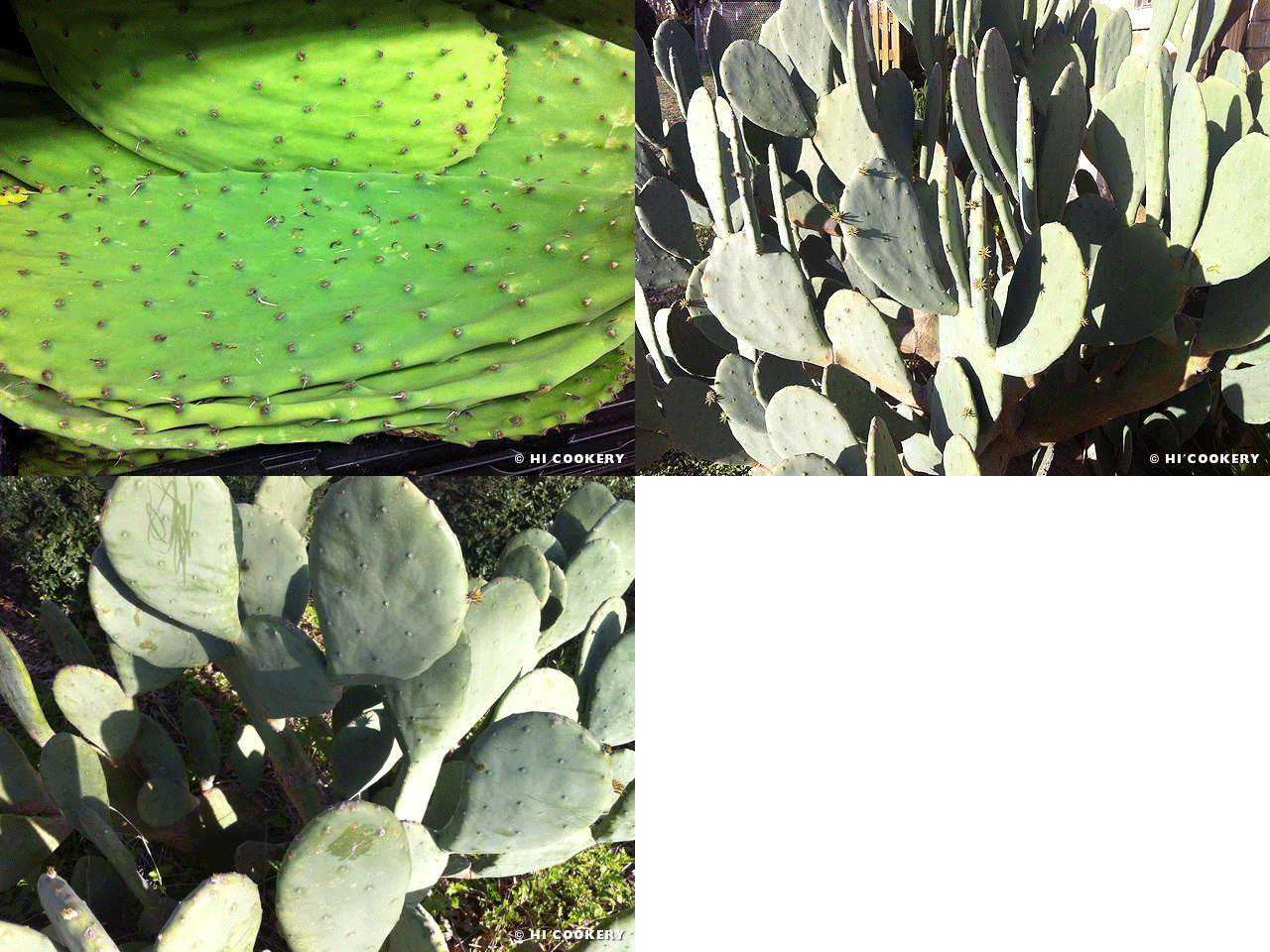
Some cactus plants are edible and are characteristic of Southwestern and Mexican cuisine. Below are a few nopales photographed outside of Islander’s brother’s house and some being sold at a grocery store in Texas.  

Nopales

However, it is the distinctive saguaro shape that inspired us to create cute cactus cookies for a fiesta. We also make cactus meringue cookies for Cinco de Mayo celebrations! Olé.

Recipe

(Based on our Meringue Skeleton Bones post)

Ingredients

  • 3 egg whites
  • ¼ teaspoon cream of tartar
  • pinch of salt
  • 2/3 cup sugar (granulated white)
  • ½ teaspoon vanilla (we used Mexican vainilla)
  • green food coloring
  • green sugar sprinkles
  • pink fondant flowers (see a similar tutorial here or here)
  • pink tube frosting
  • yellow tube frosting

Directions

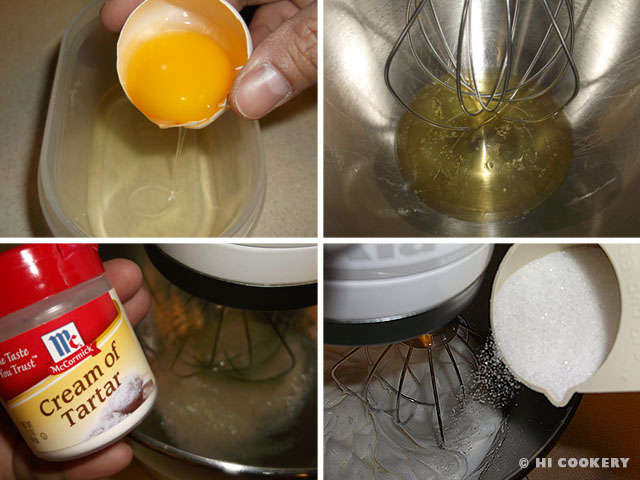
With a handmixer or in a stand mixer, beat the egg whites with the cream of tartar and pinch of salt until fluffy. Gradually add the sugar and continue to beat until shiny.

Cactus Meringue Cookies

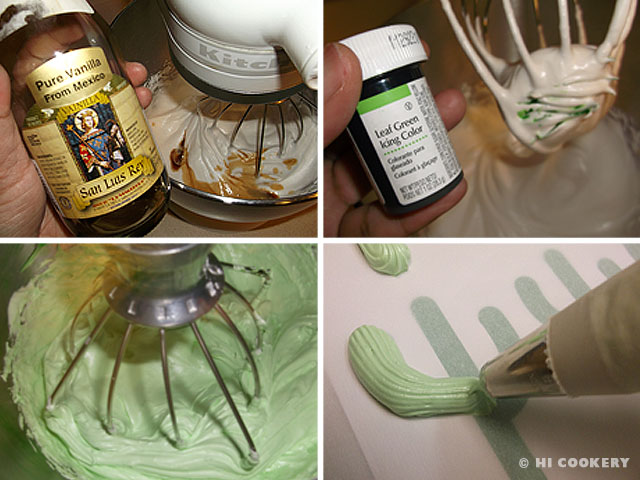
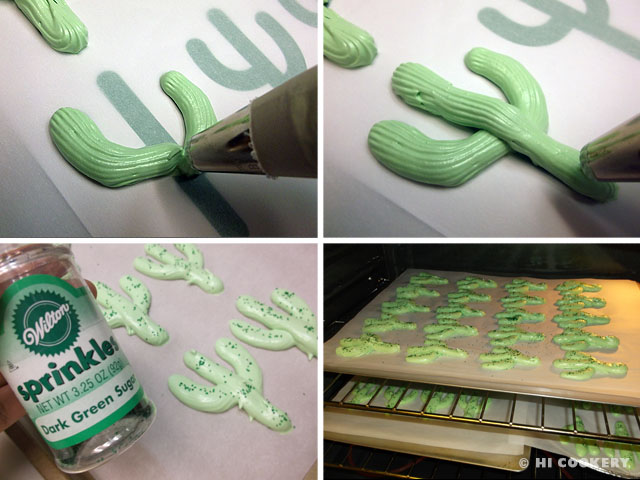
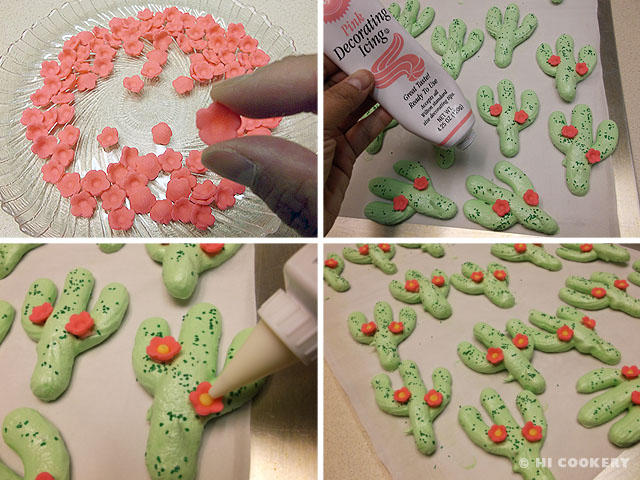
Stir in the vanilla. Mix in the food coloring. Fill a pastry bag fitted with a medium star tip with the meringue. Trace the cactus pattern on top of a parchment paper-lined cookie sheet. Start tracing with the cactus’ left arm, then the right arm and finish off with a downward middle stroke.

Cactus Meringue Cookies

Remove the pattern from underneath the parchment paper. Sprinkle with green sugar. Bake in a preheated oven at 200 degrees F for an hour. Turn off the oven and leave the meringues to dry for another hour. Remove from the oven and carefully peel off the meringues from the parchment paper.

Cactus Meringue Cookies

Make the fondant flowers and let dry. Attach to the meringues with a dab of pink frosting. Finish by piping a small round center with yellow frosting. Seal in an airtight container in a single file. When ready to serve, arrange in single file on a platter. Avoid stacking them or the meringues might stick to each other. Yield: Approximately 2 ½-3 dozen cactus meringue cookies.

Cactus Meringue Cookies

Notes

  • Download our cactus pattern here.
  • Saguaro cactus flowers, when in bloom at night, are white and yellow. But we colored our fondant flowers in the shade of prickly pear pink.
  • Humidity affects this recipe. Leave the cactus meringue cookies in a warm oven for a dry, crisp dessert. Otherwise, our friends have told us that the soft meringues still taste delicious as they melt in your mouth like a marshmallow.
  • Muchas gracias to Phyllis S. for helping to make the fondant flowers for our cactus meringue cookies. For a review of making fondant flower cutouts, please see our posts here or here.

In Ovis Apalis

(Roman Boiled Eggs)

Roman Eggs

April 21: Birthdate of Rome (753 BC)

Highlander chose to spend his 50th birthday in Italy (Rome, Florence and Venice) a few years ago as a most memorable milestone trip. We went all over The Eternal City (churches, piazzas, the Colosseum, Trevi Fountain, Roman Forum, the Vatican, cafes and more) and were awed by the history, art, architecture and culture!

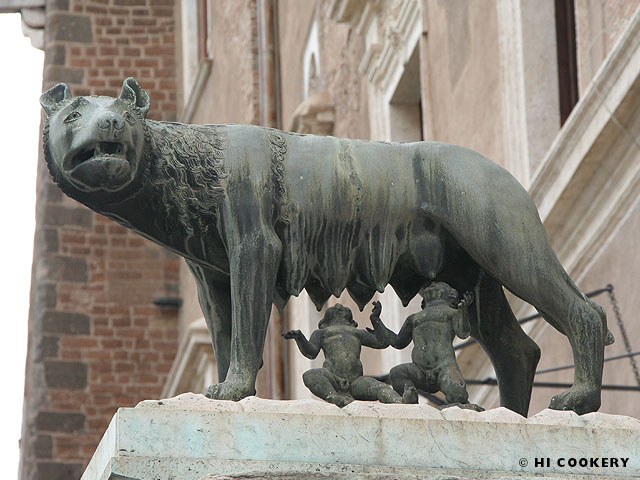
On Capitoline Hill, we saw the famous statue of the she-wolf suckling twins Romulus and Remus, the mythological symbol of the founding of Rome. According to the popular legend, the unwanted twin sons of the war god Mars and a Vestal “virgin” were cast off into the River Tiber. A she-wolf found the babies and nursed them as her own, until a shepherd came and raised them. When the brothers grew up, they fought over a site where they were to establish a city. Romulus killed Remus and became king of the Italian capital that bears his name.

Romulus and Remus

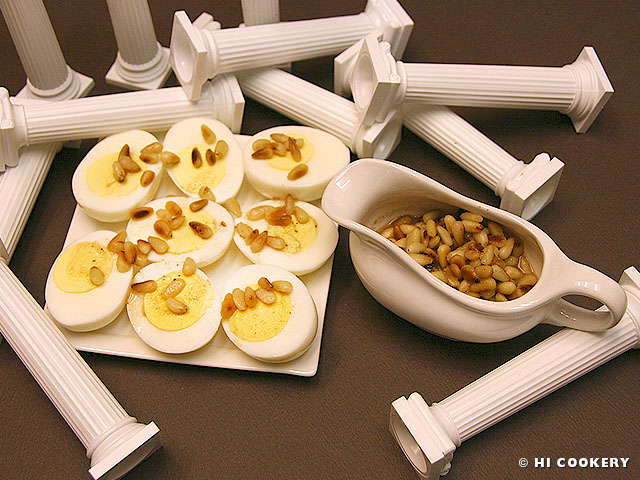
In observance of the birthdate of Rome, we ate an ancient appetizer called In Ovis Apalis (boiled eggs with a pine nut sauce). There is an old Latin saying “ab ovo usque ad malum” which translates to “from the egg to the fruit,” suggesting the courses of an Italian meal from the beginning to the end (or from antipasti, primi, secondi and all the way to dolci).

Do as the ancient Romans did and eat In Ovis Apalis to celebrate Rome’s birthday!

Recipe

(Adapted from PBS)

Ingredients

  • 4 boiled eggs
  • 2 ounces stone pine kernels (pine nuts)
  • 2-3 tablespoons vinegar (we used white wine vinegar)
  • 1-2 teaspoon honey
  • pinch of ground black pepper

Directions

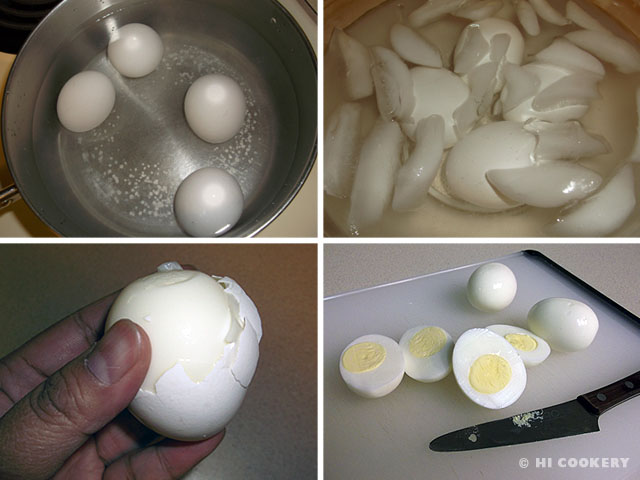
Boil the eggs. Cool down. Remove the shells. Cut them in half lengthwise. Set aside to make the sauce.

Roman Eggs

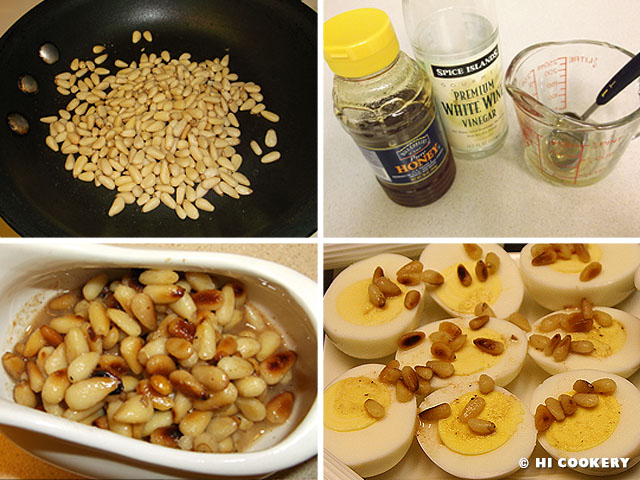
Toast the pine nuts by sautéing them in a pan till lightly browned (about 5 minutes or less). Remove to cool. In a measuring cup or little bowl, combine the vinegar, honey and pepper. Stir in the pine nuts. Place the sauce in a small dish or serving boat to accompany the boiled eggs. Pour the sauce on the eggs and eat immediately to avoid making the yolks soggy.

Roman Eggs

Notes

  • In Ovis Apalis is also a good recipe to use up leftover boiled Easter eggs.
  • Ancient Romans added a pinch of lovage (celery leaf) to the sauce recipe.
  • We toasted the pine nuts to accentuate its flavor. Soaking them in the sauce somewhat tones down the acid in the vinegar.
  • Highlander’s birthday is on April 20. Our trip to Italy for his 50th year coincided with Roman (and national) celebrations around the week of April 21. Several museums and public events were free or discounted then, allowing us to take advantage of what the country’s tourism industry had to offer.
  • Search our blog for other Italian recipes.