Alfajores

(Caramel Sandwich Cookies)

Alfajores

April 5: National Caramel Day

We often got invited to party with our Peruvian friend, Tina P., at her house during the holidays when we lived in Oklahoma. Our energetic hostess would proudly share some samples of Inca Kola and roasted corn nuts that she or her family members had brought back after visiting their country. Her sister, Odilia, would also prepare other Peruvian snacks at home, such as alfajores (caramel sandwich cookies). She would actually boil a can of condensed milk for hours to make the caramel, although manufacturers have warned against this cooking method as the can might explode. Nowadays, dulce de leche is readily available in a can or jar, and we use this safer, more convenient caramel as a filling between buttery yet brittle biscuits (cookies). Prepare a popular Peruvian and South American sweet treat—make alfajores for National Caramel Day.

Recipe

(Adapted from About.com)

Ingredients

  • 1 ¾ cups cornstarch
  • 1 cup flour
  • ½ teaspoon baking powder
  • 1 teaspoon salt
  • 1 cup (2 sticks) butter, unsalted
  • ½ cup powdered sugar
  • 1 teaspoon vanilla
  • 2+ tablespoons Brandy (traditionally Pisco)
  • 1 cup caramel/dulce de leche
  • ½ cup coconut flakes, toasted

Directions

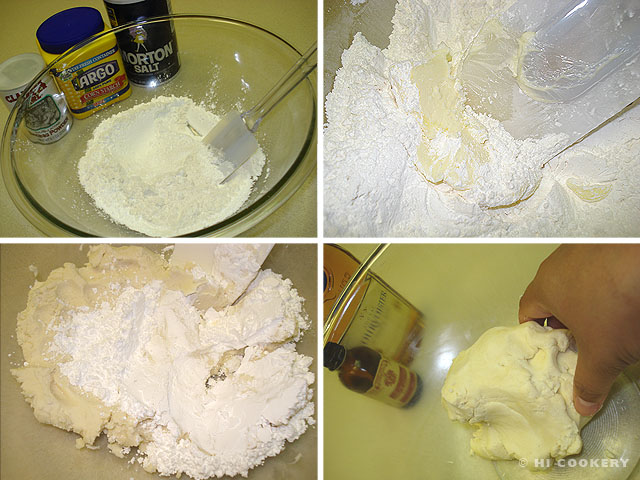
In a bowl, combine the cornstarch, flour, baking powder and salt. Set aside. In another bowl, cream the butter and sugar. Stir in the vanilla. Gradually add the dry ingredients and knead to form a cookie dough. Add Brandy to make the dough hold together and not crumble (add more Brandy, if necessary). Form into a ball.
Alfajores

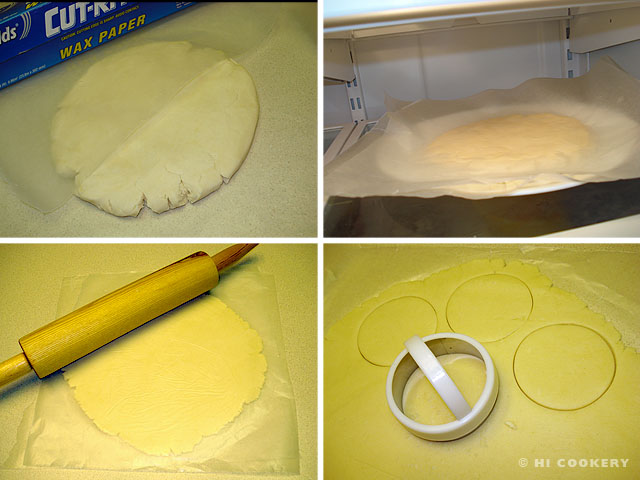
Flatten the ball between two sheets of waxed paper. Refrigerate for half an hour to firm up the dough. Roll out to to ¼-inch thick. Cut circles with a round cookie-cutter (2-inches for regular-sized alfajores or 1- 1 ½-inches for mini alfajores).
Alfajores

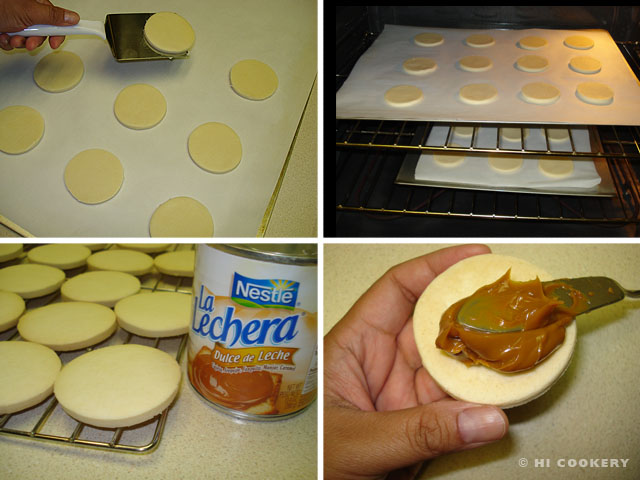
Place the cut circles on a baking sheet lined with parchment paper. Bake in a preheated oven at 350 degrees F for 15-20 minutes or pale brown (do not over bake). Remove the cookies from the oven and let them sit out for about five minutes. Carefully transfer them to a wire rack to cool completely. Gently spread caramel/dulce de leche on the flat side of one cookie.
Alfajores

Lightly press another cookie on top of the caramel/dulce de leche to sandwich them. Roll the sides of the cookies in coconut to stick to the filling. Refrigerate to set.
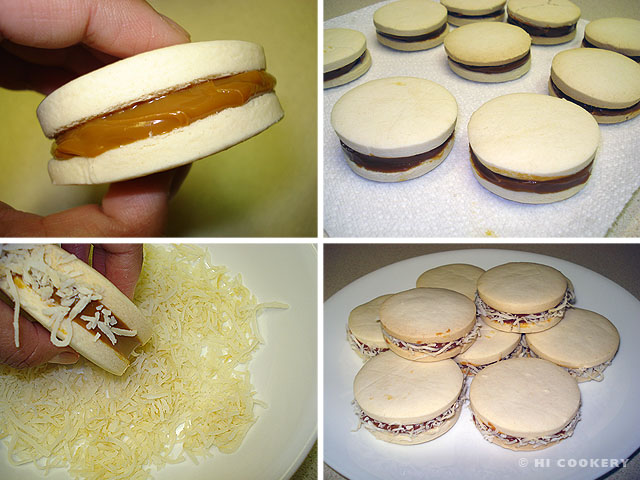
Alfajores

Notes

  • Manjar blanco is the traditional filling for alfajores. However, dulce de leche is an acceptable substitute.
  • Powdered sugar is typically sprinkled on surface of the alfajores before serving. But we opted not to do so to focus on the already-sweet flavor of the dulce de leche.
  • Muchas gracias to Tina P. for the woven Peruvian blanket that we used for the final photo backdrop above.

Chocolate Tofu Mousse

Chocolate Tofu Mousse

April 3: National Chocolate Mousse Day

We saw several moose on the loose around Maine’s countryside and the Moosehead Lake area when visiting our kumare Cherlyn B. and her family a few years ago. Moose is the official state animal and is a proud symbol on many Maine memorabilia. Our kumare has a moose bobblehead on her minivan’s dashboard. There are moose statues on the roadside (“totem poles” and even a flying moose mascot for a camp and lodge). And we caught glimpses of a calf in the woods.

Chocolate Tofu Mousse

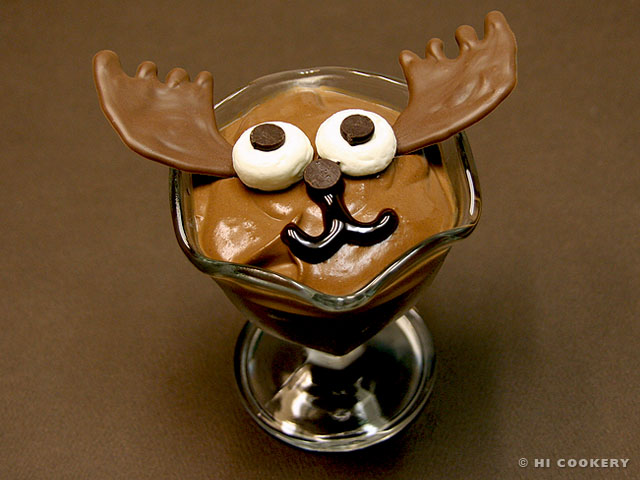
Our little goddaughters in Maine pronounce chocolate pudding like “chocolate moose” or “chocolate mush.” So we decorated our chocolate tofu mousse with chocolate antlers and a funny face. As a plain pudding, this is a healthy treat that is made with tofu. But kids will enjoy the taste of “chocolate moose,” especially the cute candy antlers.

Make a moose out of chocolate tofu mousse and have fun on National Chocolate Mousse Day.

Recipe

(Adapted from Health magazine, April 2012)

For the chocolate tofu mousse

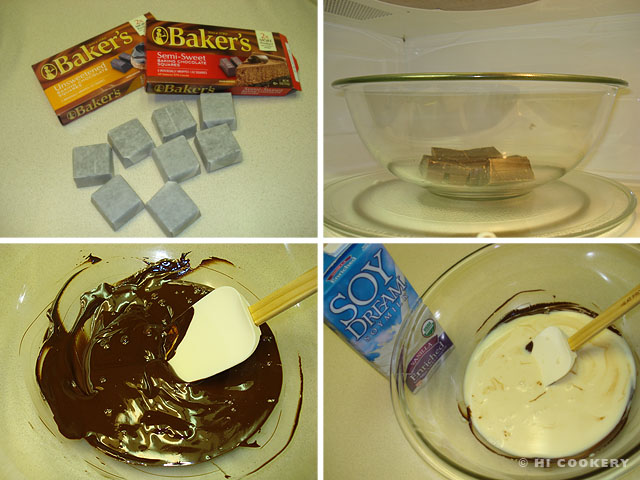
  • 8 squares (8 ounces) of unsweetened and semi-sweet chocolate (we used a combination of Baker’s brand)
  • 1 cup vanilla or plain soy milk
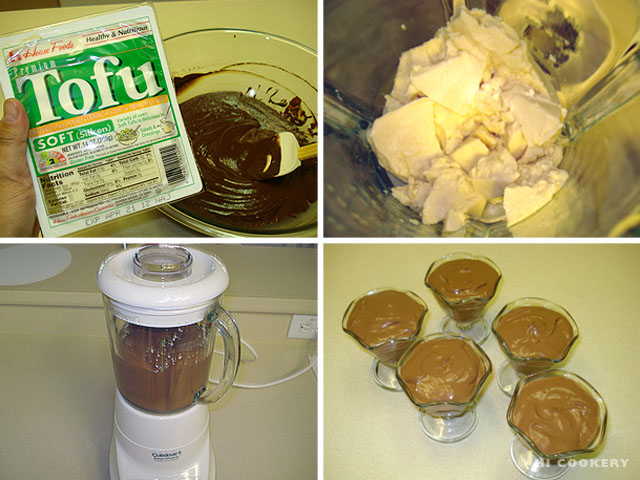
  • 10 ounces silken/soft tofu, drained
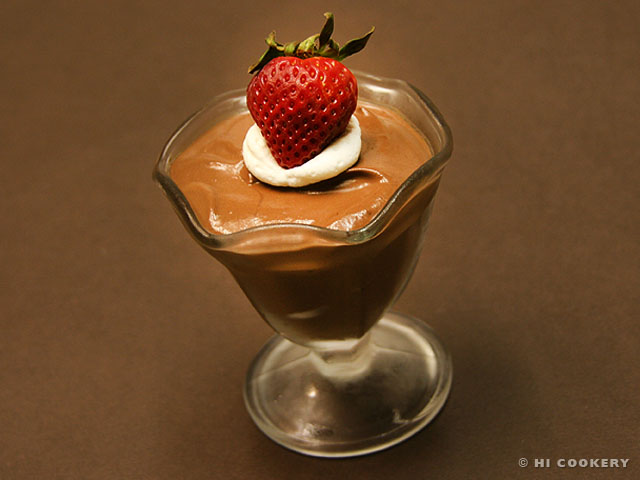
  • fresh berries (strawberries, raspberries and/or blueberries) to garnish (optional)
  • whipped cream to garnish (optional)

Directions

In a microwave-safe bowl, melt the chocolates. Stir in the soy milk until smooth. Set aside.

Chocolate Tofu Mousse

In the container of a blender, put the drained tofu. Blend until smooth. Add the chocolate ganache and blend until well mixed together. Pour into dessert cups. Chill in the refrigerator for at least an hour or until firm.

Chocolate Tofu Mousse

Garnish with fresh berries and/or whipped cream. Or decorate with chocolate antlers like we did.

Chocolate Tofu Mousse

For the bull moose decorations

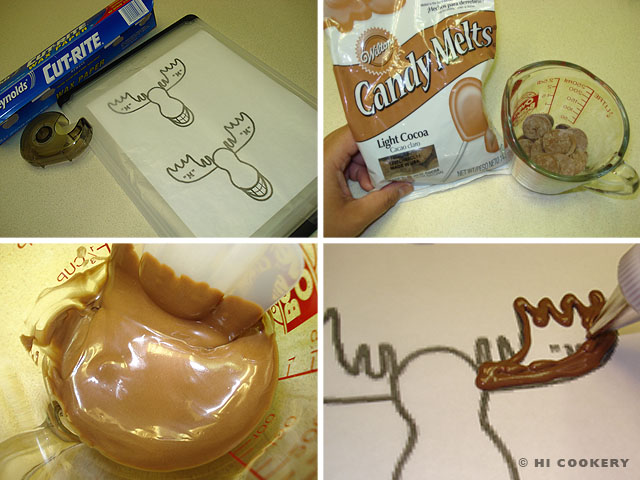
  • melted chocolate (for the antlers)
  • whipped cream (for the eyeballs)
  • chocolate chips (for the pupils and nose)
  • chocolate gel tube frosting (we used Wilton brand)

Directions

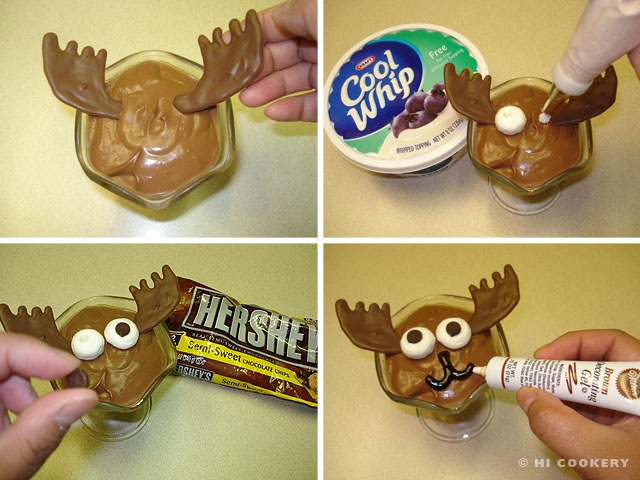
Tape waxed paper over a clip art template on a cutting board or flat surface. Melt some chocolate and place in a pastry/plastic bag. Use a small round tip or snip off the corner of the bag and trace the shape of the antlers and flood with the melted chocolate. Refrigerate the chocolate antlers until hardened.

Chocolate Tofu Mousse

Carefully peel the chocolate antlers from the wax paper and position them on the mousse cups.  Add whipped cream eyes and mini chocolate chip eyeballs. Finish the facial features by drawing in the mouth with chocolate gel and topping it with a chocolate chip nose.

Chocolate Tofu Mousse

Notes

  • The original recipe calls for 8 ounces of bittersweet chocolate, which was a bit too bitter for our tastes. So we balanced the tofu mousse with a combination of unsweetened and semi-sweet chocolates.
  • For additional flavor, add 1 teaspoon vanilla extract or paste.
  • Beware of moose! While working in Alaska, Highlander also saw a calf up close and personal in the parking lot! Mama moose was not far either. The other time we saw bull moose were as trophy heads.

Greek Red Easter Eggs

(κόκκινα αυγά)

Greek Red Easter Eggs

April: Easter Season

Christos Anesti! Christ is risen! This is a beautiful Greek greeting on Easter morning exclaiming that our Lord and Savior Jesus Christ is alive in our hearts!

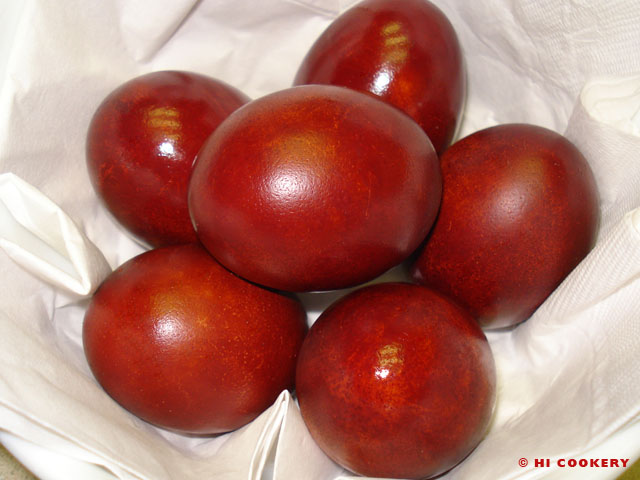
Eggs are a popular symbol for the spring and Easter season because they represent rebirth and resurrection. Many are dyed in vibrant hues but traditional Greek eggs (kokkina avga) are red as a reminder of His Precious Blood shed for all.

We used natural instead of commercial dyes to color our eggs—by boiling them with the liquid extracted from red onion skins! Red eggs may be placed in a pretty basket, hidden for an egg hunt, used to decorate a braided bread or simply eaten on Easter.

The Greeks sure got a great idea to use red eggs for evangelization! Happy Easter!

Recipe

(Adapted from About.com – Greek Food)

Ingredients

  • red or yellow skins from 5-8 onions
  • 3 -4 cups water
  • 1 tablespoon vinegar
  • 6 eggs
  • vegetable or olive oil (for polishing the red eggs)

Directions

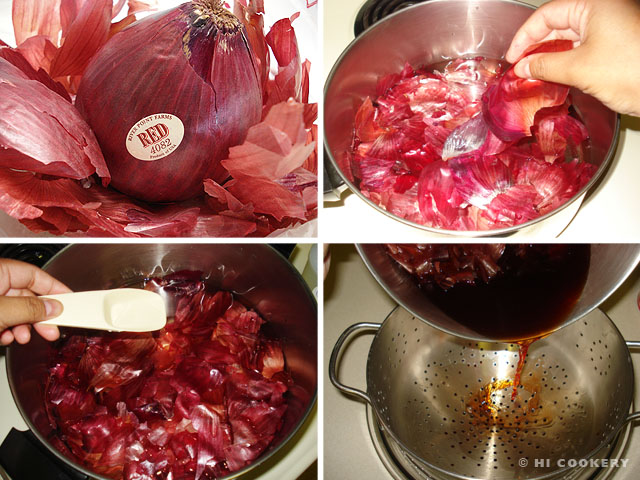
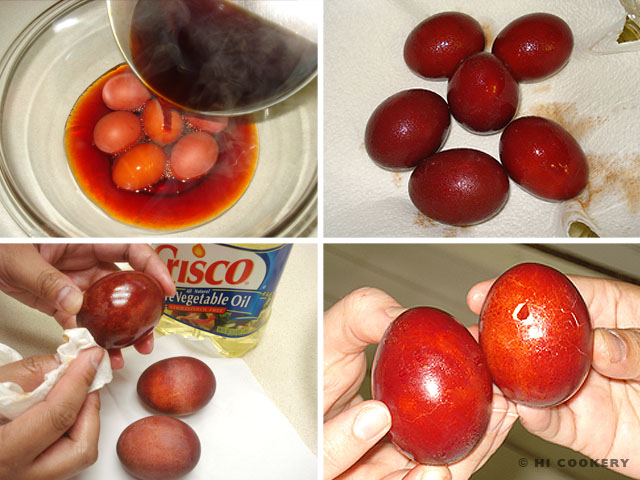
Peel off the skins from the onion and place in a large stainless steel pot full of water. Add the vinegar and bring to a boil. Lower the heat, cover the pot and simmer for half an hour. Strain the red liquid into a glass bowl.

Greek Red Easter Eggs

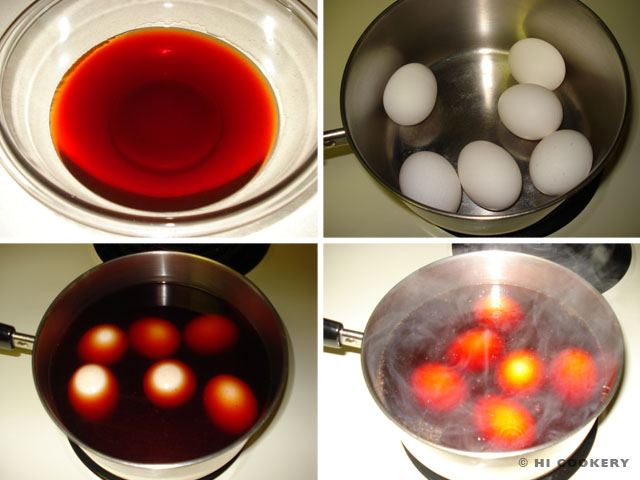
Allow the red liquid to cool. In a pot, place the clean eggs in one layer. Pour the red liquid over the eggs to cover them. Boil the eggs for 10-15 minutes but no longer than 20 minutes.

Greek Red Easter Eggs

Carefully transfer the red boiled eggs to a glass bowl. Pour the remaining liquid over them and cool to room temperature. Gently dry the eggs on paper towels. Lightly polish the shells with a little oil. Refrigerate the eggs until ready to use.

Greek Red Easter Eggs

Notes

  • We acquire extra onion skins that fall off in the bins at the grocery store and place them in the plastic bag with our onions.
  • For deeper color eggs, cover the bowl with plastic wrap and refrigerate the eggs in the red liquid for a few days. We recommend dyeing the eggs on the day Jesus died (Good Friday). Then refrigerate in the red liquid. On the third day, the red eggs are ready when the Lord rose (Easter Sunday).
  • The natural dye will stain plastic or wooden utensils and plates. Use stainless steel or glass when coloring the eggs and paper towels when wiping spills or polishing with oil.
  • When our friend Olga W. came to celebrate Easter with us, she and Islander played a Greek game with the red eggs. Although she was influenced by the Russian Orthodox Church, she is familiar with some Greek Orthodox traditions, such as tsougrisma. Two players tap each other’s red egg in an attempt to crack it. The winner whose egg did not crack first is believed to be blessed throughout the coming year. (By the way, Olga won.)
  • Olga brought over braided bread and decorated it with red eggs for an edible Easter tradition in both Russian and Greek Orthodox churches.
  • Eastern (Greek, Russian, etc.) Orthodox Easter is celebrated on a date different than Western Christian churches; sometimes the dates coincide with the Julian and Gregorian calendars. Check the chart for future dates of Easter.
  • Easter eggs may be naturally dyed in other colors using a variety of vegetables, fruits, spices, herbs, etc. See the “ingredients” list on About.com – Chemistry site.
  • Search our blog for other Easter and egg recipes.