Bublanina

(Czech Fruit Bubble Sponge Cake)
June: National Fruit and Veggies Month

During the coronavirus quarantine, Islander and two of her foodie friends, Karen B. and Yukiko H., tried a Zoom session and baked a cake “together apart” (even though they live within 30 minutes of each other). Since Karen is a Czech-Texan, they decided to bake bublanina, a type of sponge cake with summer fruit “bubbling” on top (hence, the name). Not having all the same ingredients on hand at the time, they made do with what they each had in their pantry. From one recipe, they got three different yet interesting results! They are noted below. Bake a bublanina during National Fruit and Veggies Month—the fun is in seeing how your results might be different from theirs, too! Dobrou chuť!

Recipe

(Adapted from Tres Bohemes-Everything Czech)

Ingredients

  • 2-3 cups fruit (such as pitted cherries, strawberries, blueberries)
  • 2 cups flour (or 1 cup cake flour plus 1 cup all-purpose flour=pastry flour)
  • 1 teaspoon baking powder
  • 6 tablespoons butter, melted
  • 1 teaspoon vanilla
  • 1 cup powdered sugar, plus more for sprinkling on top
  • 3 eggs
  • ¾ cup plus 3 tablespoons plain kefir, sour cream or yogurt

Directions

Wash and dry fruit; if using cherries, pit them, and toss in a little bit of flour right before using in the recipe (optional). In a small bowl, combine the flour(s) with the baking powder. Set aside.
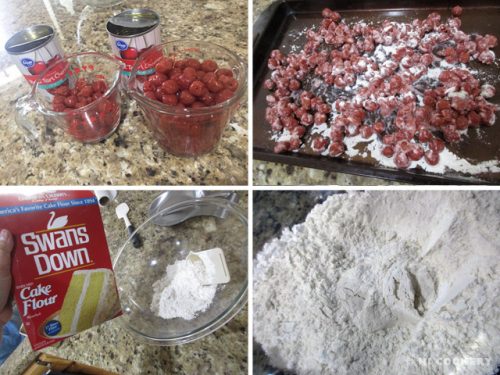
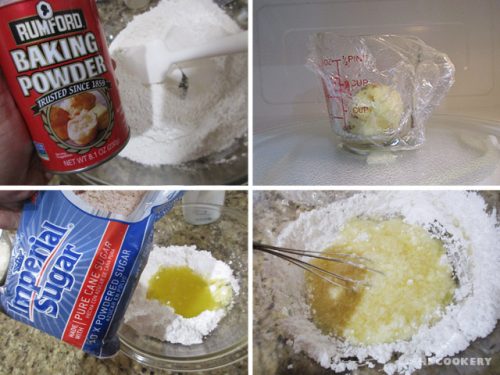
Melt and lightly cool the butter. Mix in vanilla. Combine the butter-vanilla mix into a large bowl of powdered sugar. Stir until smooth.
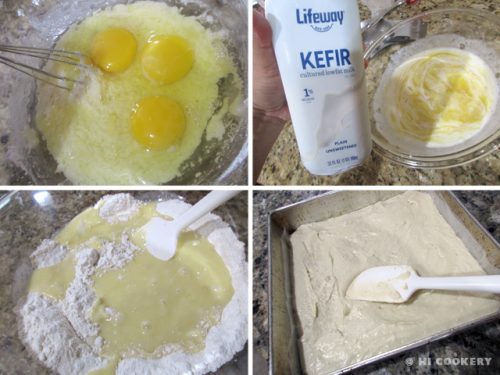
Add the eggs and kefir/sour cream/yogurt and stir until smooth. Gradually fold in the flour mixture with a rubber spatula until the batter is well combined and moist (there may be lumps but do not overmix or the dense cake will not bake up as light). Pour into a greased baking pan.
Sprinkle fruit on top of the pan. Bake in a preheated oven at 350 degrees F for 30-35 minutes, testing for doneness (the cake bakes up pale and not really brown on top). Remove from the oven and let cool completely. Slice and sprinkle powdered sugar on top before serving.

Notes

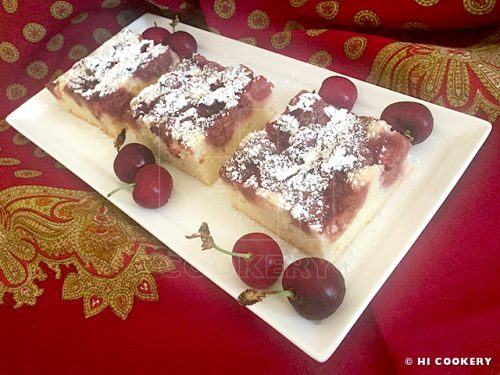
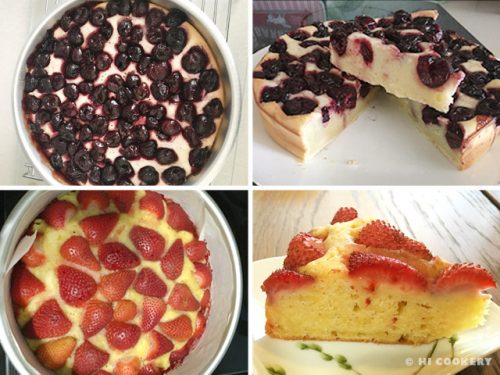
  • On using and choosing the fruit for this recipe: Islander used canned tart cherries in water (dull colored, soft and mushy and too sour); Karen used frozen defrosted dark sweet cherries and tossed them in a little bit of powdered sugar and flour; and Yukiko used fresh whole strawberries. Verdict: fresh fruit is best to enjoy the natural sweetness and flavor. At the time we all made this bublanina in May, fresh cherries were just starting to be in season; they were overpriced and not as sweet. But Islander bought one small bag and used a few cherries for the final photograph above.
  • On using flour: Islander and Karen used equal parts cake and all-purpose flour and Yukiko used only all-purpose flour because she did not have cake flour. Verdict: Mix cake flour and all-purpose flour to make this dense cake lighter. But it is still fine to use all all-purpose flour.
  • On using eggs: Islander and Karen used regular large eggs while Yukiko used organic eggs. Verdict: Yukiko’s cake turned out more naturally yellow in color.
  • On using kefir, sour cream or yogurt: Islander used kefir, Karen used sour cream and liquefied ¾ cup of it with three tablespoons of milk and Yukiko used yogurt. Verdict: it was easier to stir the batter with kefir while sour cream and yogurt were thicker to mix.
  • On using different pans: Islander used a 10×10 inch square pan; Karen used a 10×10 inch round pan; and Yukiko used an 8×8 inch round pan. Verdict: use larger baking pans so the fruit is not so concentrated. A 9×13 inch pan also may be used.
  • Islander’s bublanina final food photo was shot on top of a 100% wool vintage Czechoslovakian scarf.
  • Here are what Karen and Yukiko’s cakes looked like after our Zoom baking session.
Sundried Tomato, Basil

and Feta Cheese Scones

May 30: National Scone Day

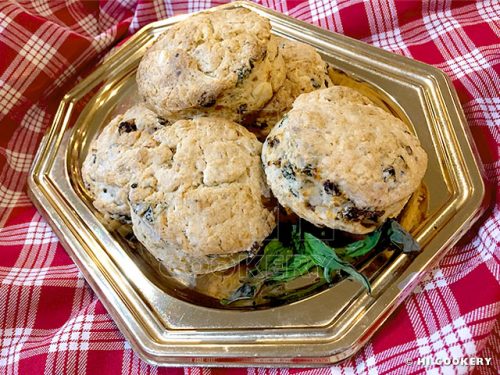
Most of the scones recipes we feature on our blog have been sweet ones. But we are slowly adding more savory scones recipes on our list, such as this one with sundried tomatoes, fresh chopped basil, crumbled feta cheese and black olives (optional). They look like tender American biscuits with a subtle Italian flavor—a testimony to the international impact of the humble Scottish scone! For National Scone Day, mix up something savory—make tomato, basil and feta cheese scones.

Recipe

(Adapted from RecipeLand)

Ingredients

  • 1½ cups flour
  • 1 tablespoon baking powder
  • ¼ teaspoon baking soda
  • 1 teaspoon sugar
  • ½ teaspoon salt
  • pinch of black pepper
  • ¼ cup very cold unsalted butter, chopped into small pieces
  • ½ cup + 2 tablespoons buttermilk
  • ¼ cup sundried tomatoes, drained of oil and chopped finely
  • ¼ cup fresh basil leaves, chopped
  • ½ cup feta cheese, crumbled
  • ¼ cup black pitted olives, drained and chopped (optional)

Directions

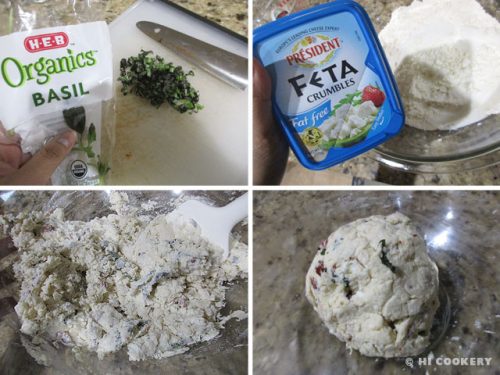
In a large mixing bowl, combine the flour, baking powder, baking soda, sugar, salt and pepper.

Cut in the butter and mix until the flour resembles large peas. Stir in the buttermilk and gently mix until the dough is moistened. Avoid overmixing the dough or the scones will be hard instead of tender. Add the chopped sundried tomatoes.

Stir in the basil leaves and feta cheese. Mix well until the dough comes together. Add a little buttermilk if it is too dry; add a little flour if it is too wet.

Turn out the dough on a clean, floured surface. Roll out to 1-inch thickness. Cut into 2-inch rounds (or triangle shapes). Place on greased baking sheet lined with foil. Brush tops with a little buttermilk. Bake in a preheated oven at 400 degrees F for 20-25 minutes or until browned on top. Remove from the oven. Serve warm with butter. Yield: Approximately 9 scones.

Notes

  • Islander is not fond of olives so she omitted them in this recipe. But Highlander likes them so she adds them to these savory scones on occasion.
  • Search our blog for more scones (both sweet and savory) recipes.

Midori (Japanese Melon

Liqueur) Cake

April 29/May 4: Greenery Day (Japan) [みどりの日Midori no Hi]

We missed Greenery Day in Japan by just one day when we flew into the “Land of the Rising Sun” in 2019 for Highlander’s belated kanreki. But we arrived in time for Boys’ Day (May 5) and the culmination of Golden Week.  As spring has already sprung, the pink cherry blossoms have given way to all the natural green beauty of the country.

Greenery Day in Japan began on April 29, 1948, to celebrate the birthday of the emperor. In 1989, the Emperor’s Birthday was renamed as Greenery Day. In 2007, the date was moved from April 29 to May 4. The whole week includes holidays commemorating the Emperor’s Birthday, Constitution Day, Greenery Day and Boys’ Day (also known as Children’s Day).

We celebrated our own Greenery Day at home in Texas and reminisced about our trip to Japan by making a green cake. We even used a Japanese melon liqueur called midori to give it a little culture and color! And we ate a few slices of midori cake while we drank green (matcha) tea.

Make a midori cake for tea time and on Japanese Greenery Day.

Recipe

(Adapted from Food.com)

Ingredients

  • 1 box yellow cake mix
  • 1 small (3 ½ ounce) instant pistachio pudding mix
  • 4 eggs
  • ½ cup plain yogurt
  • ½ cup vegetable oil
  • ¾ cup Midori (melon liqueur)
  • ½ teaspoon coconut extract or flavor

Directions

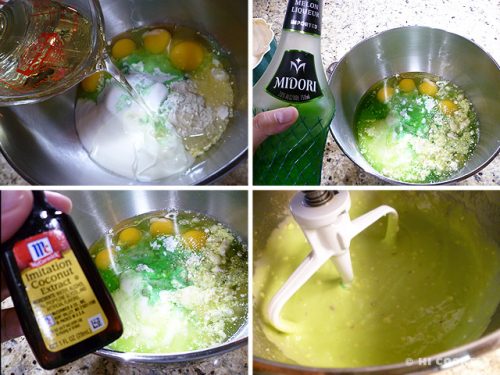
In a mixing bowl, combine the cake mix, pudding mix, eggs and yogurt.

Stir in the oil, Midori and coconut flavor. Mix until smooth.

Pour into a greased bundt pan. Bake in a preheated oven at 350 degrees F for 40-45 minutes. Remove from the oven and cool completely. Overturn cake onto a plate or cutting board. Slice and serve.

Notes

  • Feel free to add a few drops of green food coloring to the batter to boost the hue of the Midori cake.
  • Sprinkle the top of the bundt cake with powdered sugar for a prettier presentation (optional).